What if the most photographed geothermal spa in Iceland isn’t the only place to find that ethereal blue-water magic? While
Key Takeaways
- Discover why savvy travelers are choosing serene alternatives to the Blue Lagoon to escape overwhelming crowds and premium pricing.
- Explore handpicked geothermal sanctuaries like Secret Lagoon and Krauma that offer authentic Icelandic experiences without the tourist masses.
- Learn the insider secrets of timing your visit and essential packing tips to maximize comfort during your geothermal adventure.
- Compare amenities, costs, and booking requirements to make informed decisions about Iceland’s most enchanting hot springs.
- Access curated travel resources from The Nordic Travel to unlock exclusive geothermal experiences tailored to your preferences.
Why Consider Alternatives to the Blue Lagoon?
Iceland’s Blue Lagoon is undoubtedly a breathtaking destination, but it often falls prey to overcrowding, high costs, and a lack of unique experiences. By considering alternatives to the Blue Lagoon, travelers can enjoy a more serene and authentic Icelandic adventure.
The Crowds and Costs of the Blue Lagoon
The Blue Lagoon attracts approximately 1.2 million visitors annually, with peak times during the summer months and holiday seasons creating long queues and crowded facilities. Entry fees typically start at around ISK 8,500 ($60) for standard admission, but additional costs for amenities, such as towel rentals or premium access packages, can quickly escalate the price. The booking process can also be cumbersome, with limited availability, especially during peak tourist seasons.
Seeking Authentic Icelandic Experiences
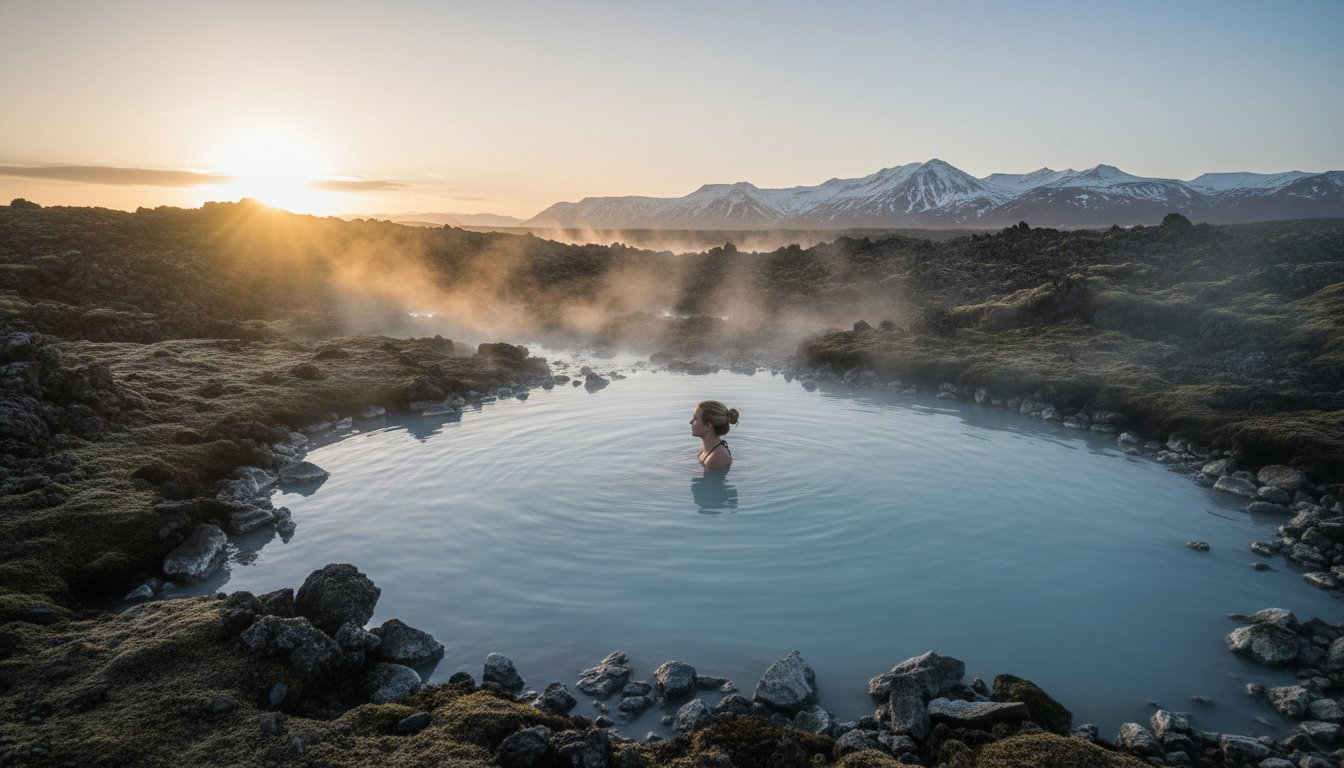
In contrast to the commercialized atmosphere of the Blue Lagoon, many alternatives offer a more intimate connection with nature and Icelandic culture. Places like the Secret Lagoon and the Myvatn Nature Baths provide stunning landscapes and authentic geothermal experiences without the throngs of tourists. These hidden gems allow travelers to immerse themselves in the rugged beauty of Iceland’s untouched landscapes while enjoying a tranquil soak in naturally heated waters.
Choosing these lesser-known spas not only enriches your travel experience but also supports sustainable tourism. Many alternatives prioritize eco-friendly practices, helping preserve the pristine environment that makes Iceland so special. By exploring alternatives to the Blue Lagoon, visitors contribute to a more sustainable tourism model while enjoying the luxury of fewer crowds, lower costs, and enriching cultural experiences.
In summary, while the Blue Lagoon might be iconic, it’s essential to consider the alternatives available. Less commercialized options provide unique experiences that are often more affordable and environmentally friendly. By venturing beyond the Blue Lagoon, you can discover the true essence of Iceland’s natural beauty and cultural heritage.
Top Alternatives to the Blue Lagoon
While the Blue Lagoon is an iconic destination, Iceland boasts a variety of equally enchanting spas that offer unique experiences. From tranquil geothermal pools to breathtaking ocean views, these alternatives to the Blue Lagoon provide a serene escape into nature. Here are some of the finest options available.
Secret Lagoon: Iceland’s Oldest Pool
Nestled in Flúðir, the Secret Lagoon is a treasure trove of authenticity. This geothermal pool, established in 1891, is surrounded by natural beauty, featuring bubbling hot springs and vibrant landscapes. The water temperature hovers around a soothing 38-40°C, making it ideal for relaxation. Unlike the more tourist-heavy Blue Lagoon, the Secret Lagoon offers a less crowded atmosphere, allowing visitors to unwind in peace while soaking in the rich geothermal history of Iceland.
Krauma: A Fusion of Nature and Modern Comfort
Located near the geothermal area of Deildartunguhver, Krauma combines the best of both worlds. This spa features five hot tubs filled with natural hot spring water, as well as a cold plunge pool for invigorating contrast. Its eco-friendly design harmonizes with the rugged landscape, creating an ethereal atmosphere that invites reflection and relaxation. Visitors can also enjoy a steam bath infused with local herbs, enhancing the rejuvenating experience.
Geosea: Geothermal Baths with Ocean Views
Perched in Húsavík, Geosea offers a breathtaking experience with its stunning saltwater pools overlooking the North Atlantic Ocean. The unique composition of the water is rich in minerals, promoting skin health and relaxation. Modern facilities provide seamless comfort, allowing guests to enjoy luxurious amenities while being immersed in the untamed beauty of Iceland. As you soak, the mesmerizing views of the ocean create a serene backdrop that enhances the overall experience.
Mývatn Nature Baths: A Distinct Atmosphere
Located by Lake Mývatn, this spa offers a different vibe compared to its counterparts. The mineral-rich waters are known for their healing properties and are particularly soothing for skin ailments. The surrounding volcanic landscape adds a rugged charm, making it an ideal spot for nature lovers. The peaceful ambiance encourages relaxation and reflection, allowing visitors to connect with Iceland’s dramatic scenery.
Reykjadalur Hot Springs: Embrace Nature’s Warmth
For those who appreciate a bit of adventure, Reykjadalur Hot Springs offers a picturesque hike leading to natural hot springs. Set against a backdrop of rolling hills and lush valleys, the journey culminates in a series of warm pools tucked away in nature. This setting provides a truly rustic experience, where you can soak while surrounded by the untouched beauty of the Icelandic landscape.
These alternatives to the Blue Lagoon showcase the diverse and captivating thermal experiences that Iceland has to offer. Whether you seek tranquility, stunning vistas, or a unique atmosphere, these spas promise unforgettable moments. To explore more curated experiences in Iceland, consider visiting The Nordic Travel for tailored recommendations.
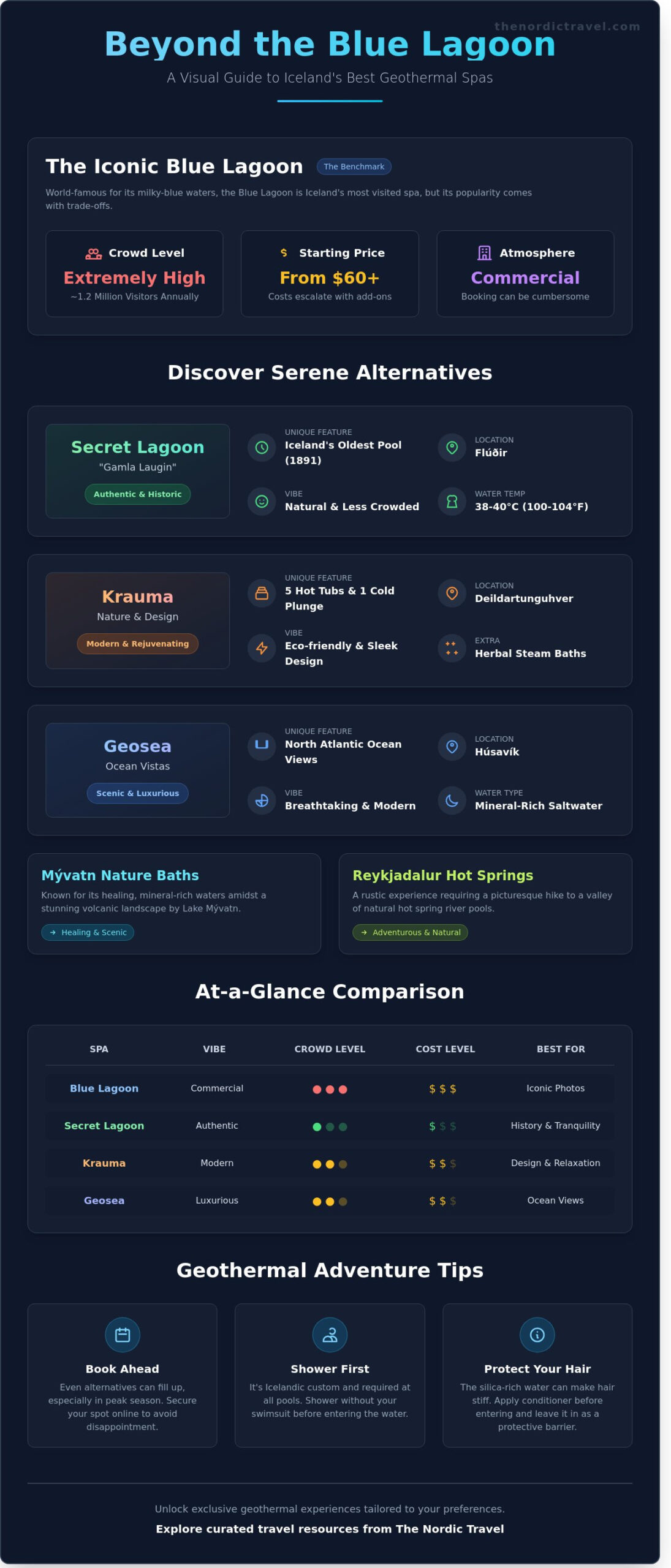
Comparing Amenities: Blue Lagoon vs. Alternatives
When evaluating the amenities of the iconic Blue Lagoon against its alternatives, a nuanced comparison reveals a spectrum of experiences that cater to varying preferences and budgets. Understanding entry fees, facilities, atmosphere, and unique offerings can significantly enhance your spa journey in Iceland.
Facilities and Services
At the Blue Lagoon, entry fees start at 10,000 ISK for adults, with advance booking strongly recommended due to its popularity. In contrast, many alternatives to the Blue Lagoon, such as Laugarvatn Fontana and the Secret Lagoon, tend to have lower entry costs, often averaging around 5,000 to 6,000 ISK. This price difference allows for a more budget-friendly experience without sacrificing quality.
Facilities vary widely. The Blue Lagoon features luxurious changing rooms equipped with showers, lockers, and hair dryers. Its on-site café offers a range of refreshments, from light bites to gourmet meals. Alternatives, like the Mývatn Nature Baths, also provide changing facilities but may have more rustic options. For instance, while Mývatn has basic lockers, its café focuses on local flavors, offering a unique culinary experience.
In terms of cleanliness, the Blue Lagoon maintains a high standard, with regular maintenance and staff trained in hygiene protocols. However, other locations can be equally pristine, often reflecting the surrounding natural beauty. Visitors frequently praise the cleanliness at the Secret Lagoon, known for its charming and less commercialized setting.
Atmosphere and Environment
The Blue Lagoon boasts a vibrant atmosphere, drawing large crowds, especially during peak tourist seasons. This bustling energy is ideal for those seeking social interaction. In contrast, alternatives like the Reykjadalur Hot Springs offer a more serene experience. Tucked away in the mountains, this location allows visitors to soak in natural hot springs amidst stunning landscapes, providing a tranquil escape.
Natural surroundings play a crucial role in defining the ambiance. While the Blue Lagoon is famous for its ethereal blue waters surrounded by lava fields, places like the Laugarvatn Fontana provide breathtaking views of nearby lakes and mountains, enhancing the overall experience. Special events, such as yoga sessions at some spas, can further enrich your visit, allowing for mindfulness in these serene settings.
In summary, while the Blue Lagoon offers a polished, high-energy experience, many alternatives to the Blue Lagoon present unique characteristics that cater to a range of preferences. From budget considerations to serene environments, Iceland’s spa scene is diverse and inviting, waiting to be explored.
Practical Tips for Visiting Iceland’s Hot Springs
Visiting Iceland’s hot springs is more than a mere activity; it’s an experience steeped in the tranquility of nature. To ensure you enjoy the best of these natural wonders-especially the alternatives to the blue lagoon-consider the following practical tips.
When to Visit for the Best Experience
The timing of your visit can significantly enhance your experience. Late spring (May to early June) and early autumn (September) are ideal, as the weather is mild, and crowds are thinner. Visiting during these shoulder seasons allows you to soak in the ethereal surroundings without the throngs of summer tourists.
For fewer crowds, aim to visit early in the morning or later in the afternoon. Many spas open as early as 8 AM, offering a serene atmosphere to start your day. Conversely, late afternoons often see a lull in visitors, providing a peaceful retreat as the sun begins to set.
Weather can be unpredictable, even in summer. Always check forecasts and be prepared for changes. Layered clothing is advisable, along with a waterproof jacket, especially if you plan to explore remote areas.
Getting There: Transportation and Accessibility
Transportation options vary based on your destination. Renting a car gives you the freedom to explore at your own pace, especially when visiting hidden gems. Ensure you choose a vehicle suitable for Iceland’s rugged terrain; a 4×4 is recommended for off-the-beaten-path locations.
Public transport is available but can be limited, especially in rural areas. Buses run between major cities and some hot springs, but scheduling may not align perfectly with your plans. If you opt for a bus, book your tickets in advance to secure your spot.
Road conditions fluctuate with the seasons. In winter, icy roads can pose challenges, so check the Icelandic Road and Coastal Administration website for real-time updates. Additionally, always have a map or GPS handy; remote areas may not have reliable mobile service.
- Pack a swimsuit and quick-dry towel.
- Bring water shoes for slippery surfaces.
- Consider a waterproof bag for valuables.
With these tips in hand, you’re ready to immerse yourself in Iceland’s stunning hot springs. For a curated experience that goes beyond the typical offerings, explore our exclusive packages tailored for your adventure.
Planning Your Icelandic Geothermal Adventure with The Nordic Travel
Your journey through Iceland’s extraordinary geothermal landscape deserves more than a rushed checklist of tourist destinations. The Nordic Travel curates handpicked experiences that transcend the ordinary, guiding you toward hidden sanctuaries where
Begin Your Icelandic Geothermal Journey Today
Iceland’s geothermal landscape offers remarkable diversity beyond the well-known Blue Lagoon.
Frequently Asked Questions
What are the best alternatives to the Blue Lagoon in Iceland?
Some of the best alternatives to the Blue Lagoon include the Secret Lagoon, located in Flúðir, and the Myvatn Nature Baths in North Iceland. The Secret Lagoon features a more traditional hot spring experience with natural surroundings, while the Myvatn Baths offer stunning views of the nearby volcanic landscape. Both provide a more serene atmosphere compared to the Blue Lagoon’s bustling environment.
Is the Blue Lagoon worth visiting despite the crowds?
Yes, the Blue Lagoon is worth visiting for its unique geothermal waters and stunning landscapes. However, if you prefer a quieter experience, consider visiting during off-peak hours or exploring the many alternatives to the Blue Lagoon. The Blue Lagoon’s facilities, such as the luxurious spa treatments and restaurant, add to its appeal, making it a memorable stop on your Icelandic journey.
How do the amenities at alternatives compare to the Blue Lagoon?
The amenities at alternatives like the Secret Lagoon and Myvatn Nature Baths vary significantly from the Blue Lagoon. While the Blue Lagoon offers a full range of spa services, upscale dining, and a more commercial atmosphere, alternatives typically provide more natural settings with fewer amenities. The focus at these spots is often on a genuine hot spring experience, allowing visitors to immerse themselves in nature.
What should I bring when visiting an Icelandic hot spring?
When visiting an Icelandic hot spring, it’s essential to bring a swimsuit, a towel, and flip-flops for comfort. Many hot springs require you to shower before entering, so consider bringing toiletries like shampoo and body wash. Additionally, sunscreen and a water bottle are recommended to stay hydrated and protect your skin from the sun’s rays while enjoying the outdoor experience.
Can I visit these alternatives all year round?
Yes, most alternatives to the Blue Lagoon, such as the Secret Lagoon and Myvatn Nature Baths, are open year-round. However, accessibility may vary depending on weather conditions, especially during winter months. It’s advisable to check local conditions and opening hours before your visit to ensure a seamless experience.
Are there free hot springs in Iceland worth visiting?
Yes, Iceland boasts several free hot springs worth visiting, such as the Reykjadalur Hot Springs, located near Hveragerði. This stunning location features natural hot river pools surrounded by breathtaking landscapes. Another option is the Landmannalaugar region, known for its geothermal hot springs amidst colorful rhyolite mountains, providing a unique outdoor experience at no cost.
How do I get to Reykjadalur Hotspring from Reykjavik?
To reach Reykjadalur Hot Springs from Reykjavik, you can drive approximately 45 minutes to Hveragerði. From there, park at the designated area and embark on a scenic hike that takes about 45 minutes to 1 hour. The trail is well-marked and leads you through beautiful landscapes, culminating in the relaxing hot springs waiting at the end of your journey.