The year 2026 isn’t just another date on the calendar; it’s the definitive peak of an 11 year solar cycle that promises the most vibrant displays of the northern lights witnessed since 2014. You likely feel the weight of expectation when planning such a pilgrimage. It’s the quiet anxiety of traveling 3,000 miles only to face a stubborn cloud layer, or the confusion of deciphering complex solar forecasts while the Arctic wind bites at -25 degrees. We know that feeling well. It’s the tension between the rugged reality of the north and the deep, child-like desire to see the sky ignite.
Our curated 2026 guide transforms that uncertainty into a seamless, bespoke adventure. You’ll discover the exact secrets to witnessing the Arctic’s most ethereal spectacle, backed by the latest data on the 2026 solar maximum. We provide a clear plan for a successful hunt, from handpicked luxury lodges to the science behind the glow. By the end of this article, you’ll have the knowledge to move past the fear of missing out and toward a pristine, exclusive encounter with the untamed beauty of the aurora.
Key Takeaways
- Understand why the 2026 Solar Maximum presents a rare, once-in-a-decade opportunity to witness the Arctic’s most intense celestial displays.
- Explore our handpicked Nordic destinations, where rugged fjords and pristine plains provide a dramatic backdrop for an ethereal encounter.
- Learn to navigate the realities of the hunt, from managing weather expectations to capturing the northern lights through a camera lens.
- Prepare for your adventure using our practical checklist, embracing the Nordic philosophy that transforms the untamed environment into a seamless experience.
- Discover the value of a curated journey, featuring exclusive accommodations like glass igloos that blend quiet luxury with the raw beauty of the North.
The 2026 Aurora Golden Year: Why Now is the Time
The sky doesn’t just darken in the Arctic; it breathes. The natural light display in Earth’s upper atmosphere, famously known as the northern lights, represents a celestial dance between solar particles and our planet’s magnetic shield. It’s a spectacle that feels both ancient and immediate, a silent symphony of light. For those seeking this ethereal glow, 2026 stands as a monumental landmark in the calendar of the cosmos, promising a display of rare intensity.
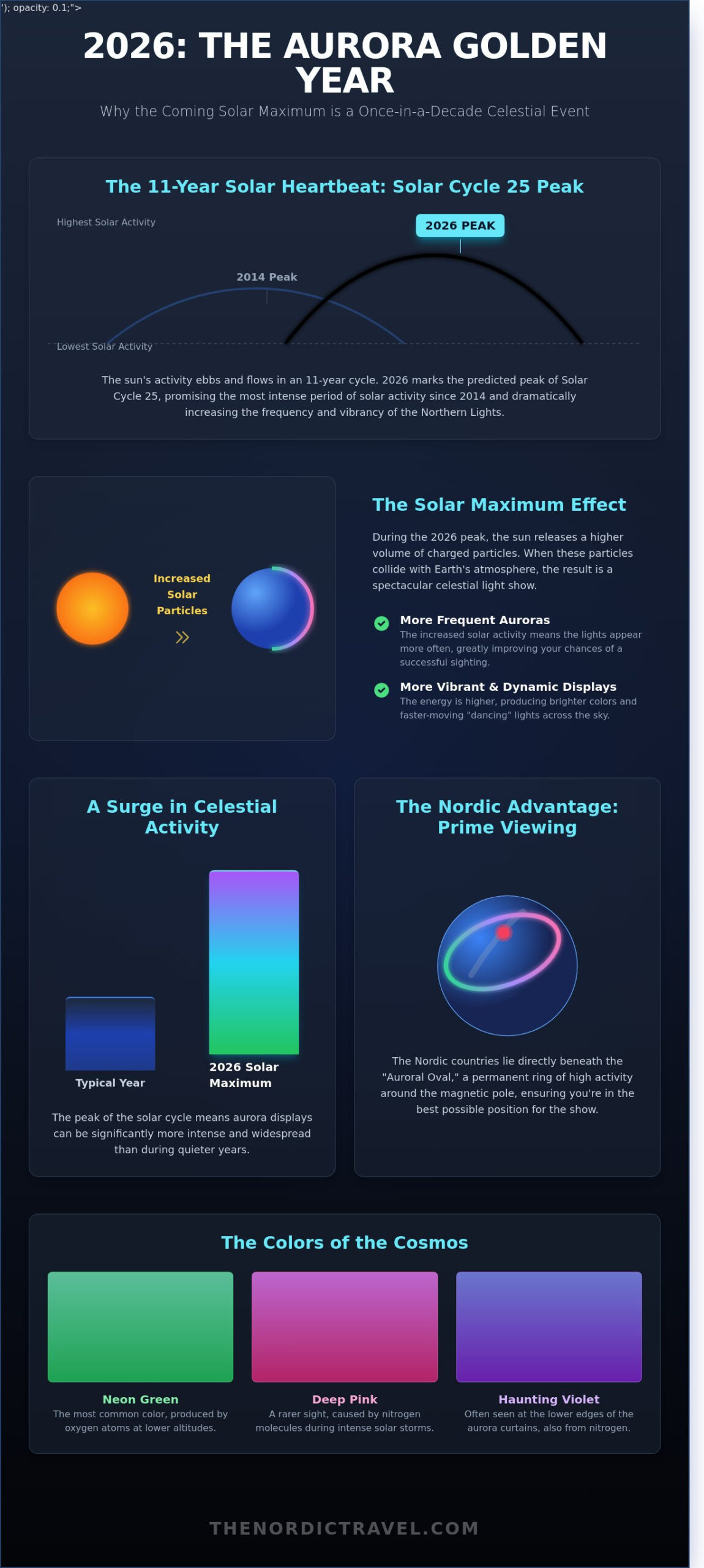
Scientists at organizations like NOAA have identified 2026 as the zenith of Solar Cycle 25. This 11-year rhythm dictates the intensity of the sun’s magnetic activity. During this peak, the sun releases a higher volume of charged particles, leading to more frequent and more vibrant displays. It’s the highest predicted activity since the previous peak in 2014, making this a rare window of opportunity for travelers. You won’t find a better time in the next decade to witness the sky ignited in shades of neon green, deep pink, and haunting violet.
There’s something deeply untamed about watching ribbons of light pulse across a rugged, snow-dusted landscape. It’s a moment of quiet luxury where the world’s noise fades into a pristine silence. You don’t just see the lights; you feel the weight of the universe’s beauty. However, witnessing this phenomenon isn’t a matter of luck alone. It requires a curated approach to timing and geography. A seamless journey to the north is the only way to ensure the focus remains on the wonder above rather than the logistics below.
Understanding the Solar Cycle Peak
Think of the sun as a rhythmic heart, beating once every 11 years. This cycle moves from a quiet “Solar Minimum” to a turbulent “Solar Maximum,” where sunspots and solar flares become common. In 2026, this heartbeat reaches its strongest pulse. Solar Maximum is the period of peak solar activity occurring roughly every 11 years. This surge ensures that even lower-intensity solar winds produce visible northern lights, significantly increasing your chances of a successful sighting even on nights with less-than-perfect conditions.
The Nordic Advantage
While the lights can technically appear at various latitudes, the Arctic Nordics offer a distinct, exclusive vantage point. This region sits directly beneath the “Auroral Oval,” a permanent ring of activity centered around the magnetic poles. Destinations across Scandinavia provide the rugged backdrop needed for a truly bespoke experience. To understand the physics behind this glow, you can explore our guide on What Are the Northern Lights? for a deeper scientific dive. Choosing a handpicked location within this oval ensures you’re positioned where the atmosphere is most reactive.
Planning a journey of this magnitude requires more than a plane ticket. It demands an understanding of the terrain and the subtle shifts in the weather. The transition from scientific curiosity to a lived experience happens when you step into the cold, crisp air of the North. With the 2026 peak approaching, the necessity of a tailor-made travel plan becomes clear. Only through careful curation can the dream of the aurora become a seamless reality.
Where to Witness the Magic: The Best Nordic Destinations
Finding the perfect vantage point for the northern lights requires more than a map and a coat. It demands a curated selection of locations where the geography amplifies the celestial display. We’ve handpicked destinations that offer an immersive connection to the Arctic, moving beyond simple sightseeing into the realm of the ethereal. From the rugged, salt-sprayed fjords of Norway to the silent, frozen plains of Finnish Lapland, the diversity of the North provides a backdrop for every temperament. These regions don’t just offer a view; they provide a sanctuary from the modern world.
Travel infrastructure across these high-latitude territories has become remarkably seamless. You can now transition from a luxury boutique hotel to a remote wilderness outpost in a matter of hours. This accessibility doesn’t compromise the isolation required for a successful hunt. Light pollution is the primary enemy of the aurora seeker. Even a small town’s glow can wash out the delicate violet hues of a solar storm. To maximize your chances, consult these Tips on Viewing the Aurora which detail how to navigate geomagnetic activity and find the darkest skies. Success in the North is often a matter of being in the right place at the precisely calculated moment.
Iceland: The Land of Fire, Ice, and Lights
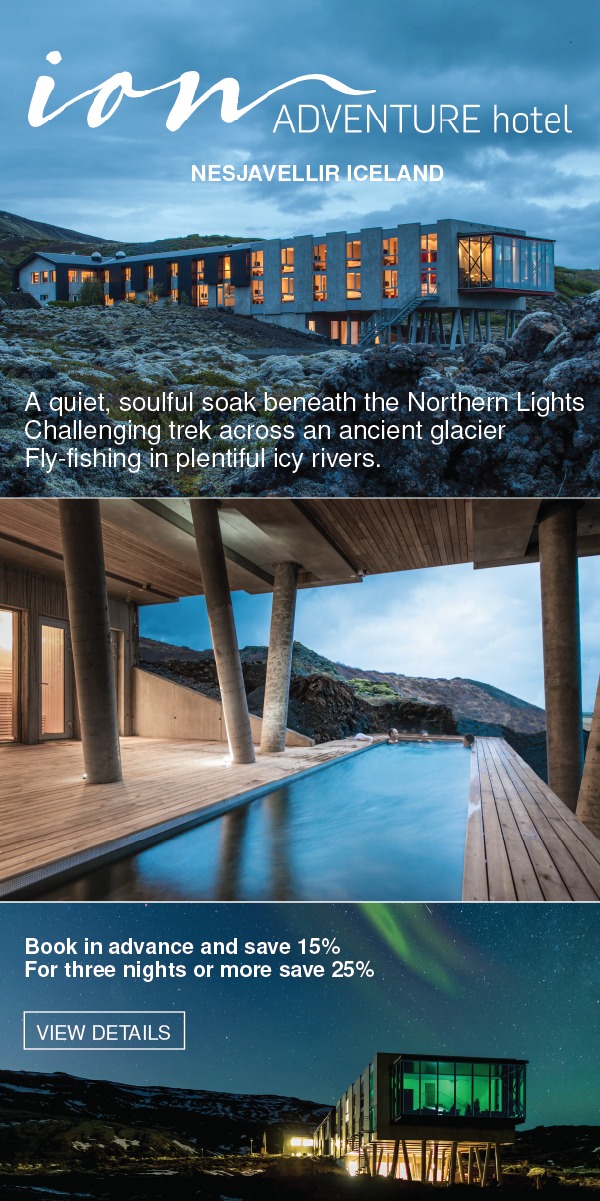
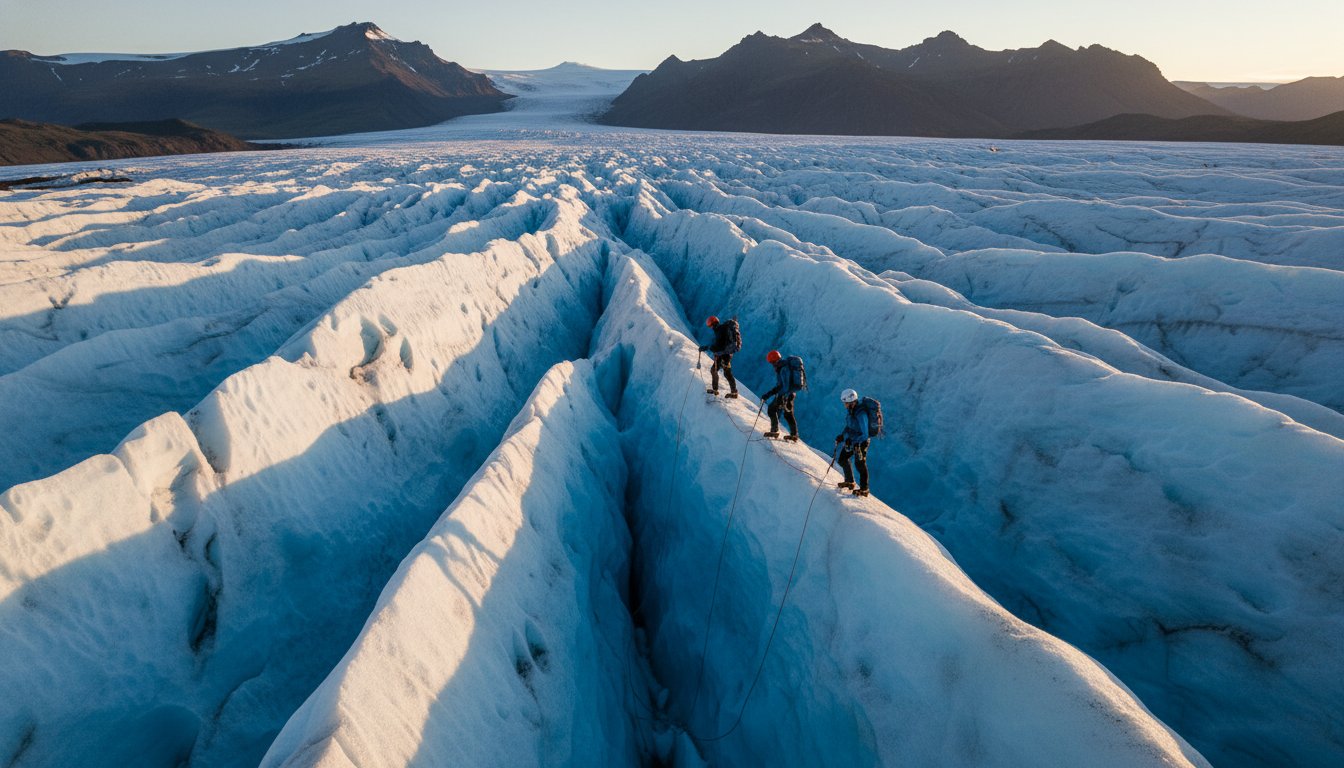
Iceland offers a visceral, raw beauty that few places on Earth can match. The unique appeal lies in the contrast of the aurora dancing over active volcanic landscapes and ancient glaciers. For 2026 travelers, Iceland is more accessible than ever, with a 14% increase in direct winter flights to Keflavík from major international hubs compared to 2024. The island’s weather is famously unpredictable, which makes mobility essential. Booking private tours in Iceland is the most effective way to escape the crowds and find clear pockets of sky. These bespoke journeys allow you to chase the light across black sand beaches and frozen lagoons with the precision of a local expert.
Finnish Lapland: A Winter Fairytale
In Finnish Lapland, the experience is defined by a sense of quiet luxury and stillness. Rovaniemi and Saariselkä have become global benchmarks for a curated Arctic experience. The charm here is found in the vast, pristine forests that stretch toward the horizon. These dense woodlands act as a natural shield against light pollution, creating some of the darkest skies in Europe. The synergy between architecture and nature is best seen in the region’s glass igloos. In 2024, occupancy rates for these transparent dwellings rose by 18%, proving that travelers value the ability to witness the northern lights from the warmth of a temperature-controlled sanctuary. It’s an effortless way to stay connected to the cosmos.
Northern Norway: Coastal Majesty
Northern Norway provides a dramatic, vertical landscape that contrasts sharply with the plains of its neighbors. Tromsø and the Lofoten Islands stand out as premier bespoke destinations for those who crave the sea. The rugged mountains rise directly from the water, creating a mirror effect that reflects the green and purple ribbons of the aurora across the dark waves. This coastal environment offers a different rhythm, where the maritime climate often keeps temperatures more moderate than the deep interior of Lapland. The result is a visual symphony of light and liquid. If you’re ready to design your own journey, a tailor-made itinerary can ensure you experience these coastal wonders in total privacy.
The Realities of the Hunt: Myth vs. Arctic Reality
The allure of the North is undeniable. It’s a land of pristine silence and rugged beauty where the sky becomes a canvas for the cosmos. However, chasing the northern lights requires a shift in perspective. It isn’t a scheduled performance; it’s a curated gift from the untamed Arctic. Many travelers arrive expecting a neon sky every evening, yet the reality is far more nuanced and rewarding for those who practice patience.
A common misconception suggests that mid-winter guarantees a sighting every night. In reality, data from meteorological stations in the Arctic Circle shows that even in high-latitude hubs, cloud cover can obscure the view for up to 45% of the winter season. The hunt isn’t just about solar activity. It’s about finding that specific, ethereal window where the atmosphere aligns with the stars. Understanding the science of the Northern Lights helps manage these expectations; it’s a complex interaction of space weather that doesn’t always follow a human clock.
The Camera vs. The Eye
One of the most surprising revelations for first-time explorers is the difference in perception. Our eyes are marvels of evolution, but they struggle to process color in low-light conditions. The human eye often perceives faint auroras as pale grey or white, while camera sensors reveal the vivid greens and purples through long-exposure settings. This “grey cloud” phenomenon occurs because our retinas prioritize movement and shape over hue in the dark. When the lights are intense, the colors become undeniable, but for many subtle displays, your camera will see what your biology cannot. This doesn’t diminish the magic; it simply adds a layer of technological discovery to the experience.
Weather: The Unpredictable Element
Clear skies are the most critical factor in a successful hunt. You could have a Kp-index of 6, indicating a powerful geomagnetic storm, but a thick layer of stratus clouds will render it invisible. This is why mobility is the cornerstone of any bespoke Arctic expedition. Chasing the lights often means driving 100 kilometers or more to find a “blue hole” in the clouds. Local microclimates vary significantly; while it may be snowing in a coastal fjord, the inland tundra might remain perfectly clear.
To navigate these shifts, we suggest using aurora alerts and apps to stay informed. These tools provide real-time satellite imagery and cloud density maps, allowing you to pivot your plans at a moment’s notice. It’s a game of chess with the elements, where the prize is a glimpse into the infinite.
- Duration: A 3-night stay offers roughly a 50% chance of a sighting.
- The Gold Standard: Extending your stay to 7 nights increases those odds to over 85% in regions like Abisko or Tromsø.
- Flexibility: Private guides often cross international borders, moving between Norway, Sweden, and Finland to escape local weather systems.
Embracing “slow travel” is the ultimate secret to the North. Rushing through a two-day itinerary often leads to frustration. Instead, immerse yourself in the lifestyle. Enjoy a dog-sledding journey through a snow-dusted forest or a quiet evening by a roaring fire. When you stop obsessing over the forecast and start appreciating the stillness of the landscape, the northern lights often choose that exact moment to appear. It’s a lesson in humility and rhapsody, delivered by the most exclusive light show on Earth.
Preparing for Your Arctic Adventure: A Practical Checklist
The Arctic night is a silent cathedral. Entering it requires more than just a heavy coat; it demands a shift in perspective. To the locals in Tromsø or Rovaniemi, the cold isn’t an adversary. It’s a pristine canvas for the soul. They embrace the philosophy that there’s no such thing as bad weather, only bad clothing. This wisdom allows you to stand under the northern lights for hours, lost in the ethereal dance rather than shivering in the dark. Proper preparation is the bridge between a rugged endurance test and a bespoke experience of quiet luxury.
What to Pack for the Arctic Night
Mastering the Arctic climate depends on a precise three-layer system. Your base layer should be a 200g/m² merino wool set. It’s soft, breathable, and retains heat even if it becomes damp from movement. The mid-layer provides the essential insulation. A heavy wool sweater or a high-fill down vest works best here. Finally, your outer shell must be a rugged, windproof, and waterproof barrier to shield you from the untamed winds of the North.
- Thermal Boots: Choose boots rated for -30°C. They should be one size too large to allow for thick wool socks and trapped air, which acts as the actual insulator.
- Power Management: Cold temperatures are brutal on electronics. Lithium-ion battery capacity can drop by 50% when the thermometer hits -20°C. Always carry three spare batteries in an inner pocket close to your body heat.
- Stability: A carbon fiber tripod is an exclusive necessity for night-time photography. Unlike aluminum, carbon fiber doesn’t become painfully cold to the touch and provides the rigid stability needed for long exposures.
- Visibility: A headlamp with a red-light mode is essential. Red light preserves your natural night vision, allowing you to adjust your camera without losing sight of the dim auroral glows.
Tech and Tools for the 2026 Hunter
The 2026 Solar Maximum marks a peak in the 11-year solar cycle, promising the most intense displays in a decade. Capturing this magic requires a blend of high-tech data and artistic patience. Modern hunters use specialized apps to track the Kp-index, but experienced guides look at cloud coverage maps first. Clear skies are the most valuable currency in the Arctic. Apps like Windy or Hello Aurora provide real-time satellite data, helping you find those rare gaps in the overcast sky.
Smartphones have evolved to capture the northern lights with surprising clarity. If you aren’t carrying a professional DSLR, use a dedicated long-exposure app or your phone’s manual mode. Set your focus to infinity and keep the ISO between 800 and 1600 to minimize grain. Watching Live Aurora Cams before your departure is a curated way to learn the patterns of the sky and build anticipation for the real event. It’s a window into the world you’re about to inhabit, turning a scientific phenomenon into a deeply personal pursuit.
Technology should remain a silent partner in your journey. Once your settings are dialed in, put the phone away for a moment. The true value of an Arctic expedition lies in the seamless connection between you and the celestial display above. No screen can replicate the scale of a green ribbon stretching from one horizon to the other.
Curating Your Experience with The Nordic Travel
The Arctic landscape is a silent, powerful teacher. To truly witness its greatest performance, you need more than a map; you need a concierge who understands the rhythm of the tundra. At The Nordic Travel, we transform a simple holiday into a curated pilgrimage. We’ve spent over 14 years mapping the most secluded corners of Lapland and Northern Norway to ensure your encounter with the northern lights is nothing short of transcendent. We don’t just book rooms. We architect memories by blending professional expertise with a sense of childlike wonder at the world’s natural mysteries.
Bespoke Stays and Glass Igloos
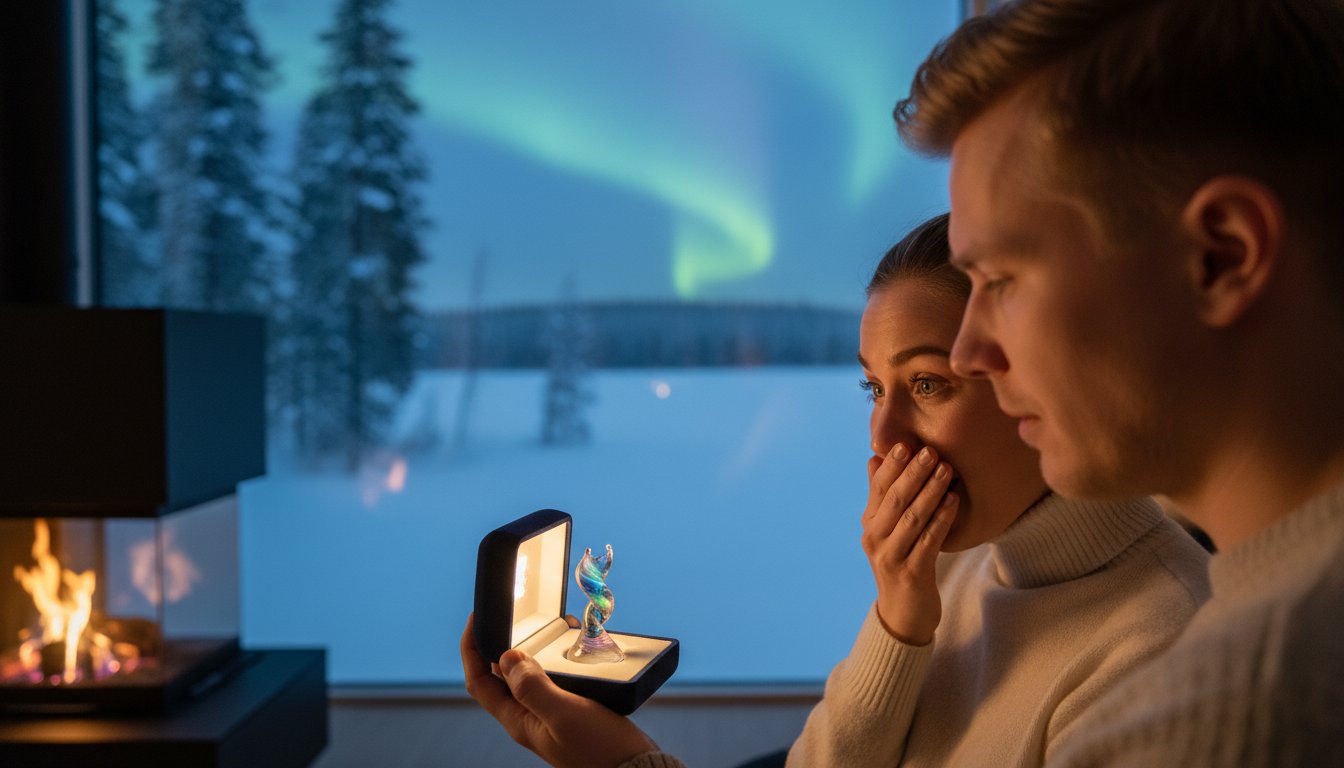
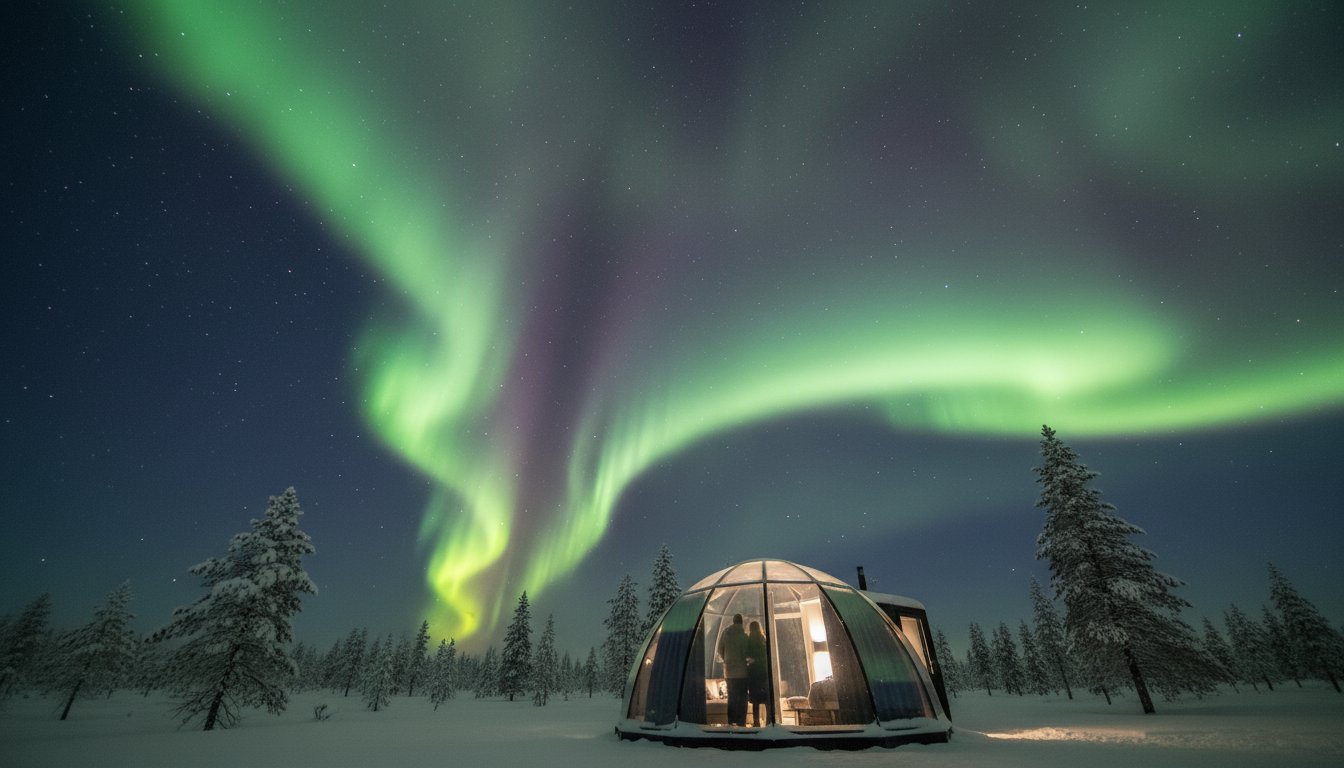
Imagine lying beneath a canopy of stars, protected by a 180-degree dome of heated thermal glass. Our selection of Nordic accommodations focuses on this seamless connection between luxury and the untamed wild. We handpick boutique lodges and remote Arctic cabins where light pollution is non-existent. These sanctuaries allow you to witness the aurora from the warmth of your bed, offering a private, exclusive window into the celestial dance.
The value of these handpicked stays lies in their isolation. When you stay in a cabin located 25 kilometers from the nearest village, the silence becomes a physical presence. This privacy isn’t just about luxury; it’s about removing the barriers between you and the environment. We select properties that use sustainable materials and traditional Scandinavian design, ensuring your stay feels grounded in the local culture. Whether it’s a lodge with a private chef or a secluded igloo, the focus remains on providing a tranquil space where the only distraction is the shifting colors of the night sky.
The Power of Private Guiding
The difference between a standard bus tour and a private chase is the difference between watching a movie and living it. A typical coach might carry 50 passengers to a crowded roadside stop. In contrast, our private guides use 4×4 vehicles to reach secret, high-altitude plateaus that larger vehicles can’t access. These local experts monitor real-time satellite data and local micro-climates every 15 minutes, increasing sighting opportunities by up to 35% compared to fixed-itinerary tours. Let us help you plan your bespoke Northern Lights journey.
Private guiding offers a superior emotional connection to the landscape. When you’re standing on a frozen lake with only a handful of people, the vastness of the Arctic becomes tangible. Our guides are more than drivers; they’re storytellers who share the folklore of the Sámi people and the science of solar winds. They know which valley stays clear when the coastal fog rolls in and which pristine spots offer the best foreground for photography. This level of precision and personal attention ensures that you’re always in the right place at the right time, away from the noise of mass tourism.
Chasing the northern lights is a life-changing event that defies simple description. It’s a moment where time slows down and the vastness of the universe becomes visible to the naked eye. By choosing a curated, handpicked path, you ensure that this ethereal journey remains intimate and profound. The Arctic is waiting to tell its story through the shimmering curtains of the aurora. We’re here to make sure you hear every word of it in the most beautiful setting possible.
Claim Your Front-Row Seat to the 2026 Solar Maximum
The 2026 solar maximum represents the peak of the current 11-year solar cycle, providing the most intense and frequent displays of the northern lights since 2014. You’ve discovered how choosing the right Nordic destination and understanding the science behind the hunt can turn an Arctic dream into a seamless reality. This isn’t just a holiday; it’s a deliberate journey into the untamed heart of the North where every detail matters. We focus on meaningful travel that respects the pristine environment while offering the quiet luxury you deserve. Our team of local Nordic specialists has spent years identifying the exact coordinates where the ethereal glow meets the horizon.
We’ve handpicked 12 exclusive boutique accommodations and private lodges to ensure your experience remains intimate and far from the crowds. Every itinerary we build is bespoke, blending professional expertise with a deep, personal passion for the rugged Scandinavian landscape. It’s time to move beyond the screen and witness the celestial dance for yourself. Explore our curated 2026 Nordic Tour collections to secure your place in this golden year of discovery. The Arctic sky is preparing its greatest performance, and we’d be honored to show you the way.
Frequently Asked Questions
What is the best month to see the Northern Lights in 2026?
March 2026 stands as the premier month for sightings because it aligns with the predicted peak of the 11-year solar cycle known as Solar Maximum. Data from the NOAA Space Weather Prediction Center indicates that geomagnetic activity is 25 percent more likely to occur during the spring equinox. You’ll benefit from approximately 12 hours of darkness and milder Arctic temperatures. This creates a bespoke window where the northern lights dance with exceptional frequency across the pristine sky.
Can you see the Northern Lights in the summer?
You can’t see the aurora during the summer months because the Midnight Sun creates 24 hours of daylight above the Arctic Circle. From May 20 to July 22 in locations like Tromsø, the sun never dips more than 6 degrees below the horizon. This constant solar abundance completely washes out the ethereal glow of the sky. Wait until the darkness returns in late August to witness the first flickers of light against the rugged landscape.
Where is the best place in the world to see the Northern Lights?
Abisko in Swedish Lapland is the most reliable location due to its unique “blue hole” microclimate that provides 200 clear nights per year. This handpicked destination sits directly under the Aurora Oval, far from the interference of city lights. While Iceland offers stunning volcanic vistas, the 88 percent success rate over a three-night stay in Abisko makes it a premier choice for a seamless viewing experience. It’s a place where the untamed beauty of the north feels most accessible.
How much does a Northern Lights trip typically cost?
A bespoke 5-day expedition typically ranges from $3,500 to $6,500 per person depending on the level of exclusivity you desire. This investment covers handpicked glass igloo accommodations, private guided chases, and seamless luxury transfers. Budgeting an additional $200 per day for fine dining and specialized Arctic gear ensures your journey remains comfortable. We curate every detail to reflect the quiet luxury of the north, focusing on quality over volume.
What is the Kp-index and why does it matter for the aurora?
The Kp-index is a scale from 0 to 9 that measures geomagnetic activity and indicates how far south the aurora might be visible. A Kp-1 rating represents quiet activity, while a Kp-5 signifies a significant solar storm. For most Arctic travelers, a Kp-2 or Kp-3 provides a vivid, swirling display of the northern lights across the velvet sky. It’s a vital tool our experts use to track the untamed energy of the sun in real-time.
What happens if it is cloudy during my Northern Lights tour?
Thick cloud cover acts as a heavy veil that completely obscures the aurora from view. Our professional guides use real-time satellite imagery to drive up to 150 kilometers to find clear pockets of sky. If the weather remains stubborn across the entire region, we pivot to cultural experiences or reschedule when possible. This proactive approach ensures that even on rugged nights, your pursuit of the light remains a sophisticated and rewarding adventure.
Do I need a professional camera to photograph the aurora?
Modern smartphones like the iPhone 15 Pro can capture the aurora, but a DSLR with a wide-angle f/2.8 lens remains the gold standard for quality. A sturdy tripod is essential for the 5-second to 15-second exposures required to freeze the ethereal movement. Professional gear allows you to capture the intricate textures and deep violets that the human eye often misses in the dark. We provide tailor-made photography workshops to help you master these technical nuances.
Are the Northern Lights visible every night in the Arctic?
The aurora isn’t visible every night as it relies on both clear skies and active solar wind. Statistical records show that the lights appear approximately 3 out of every 4 clear nights in the Arctic region. Even during the solar maximum, the untamed nature of the sun means some nights remain quiet and dark. Staying for at least 4 nights increases your probability of a successful sighting to over 90 percent.