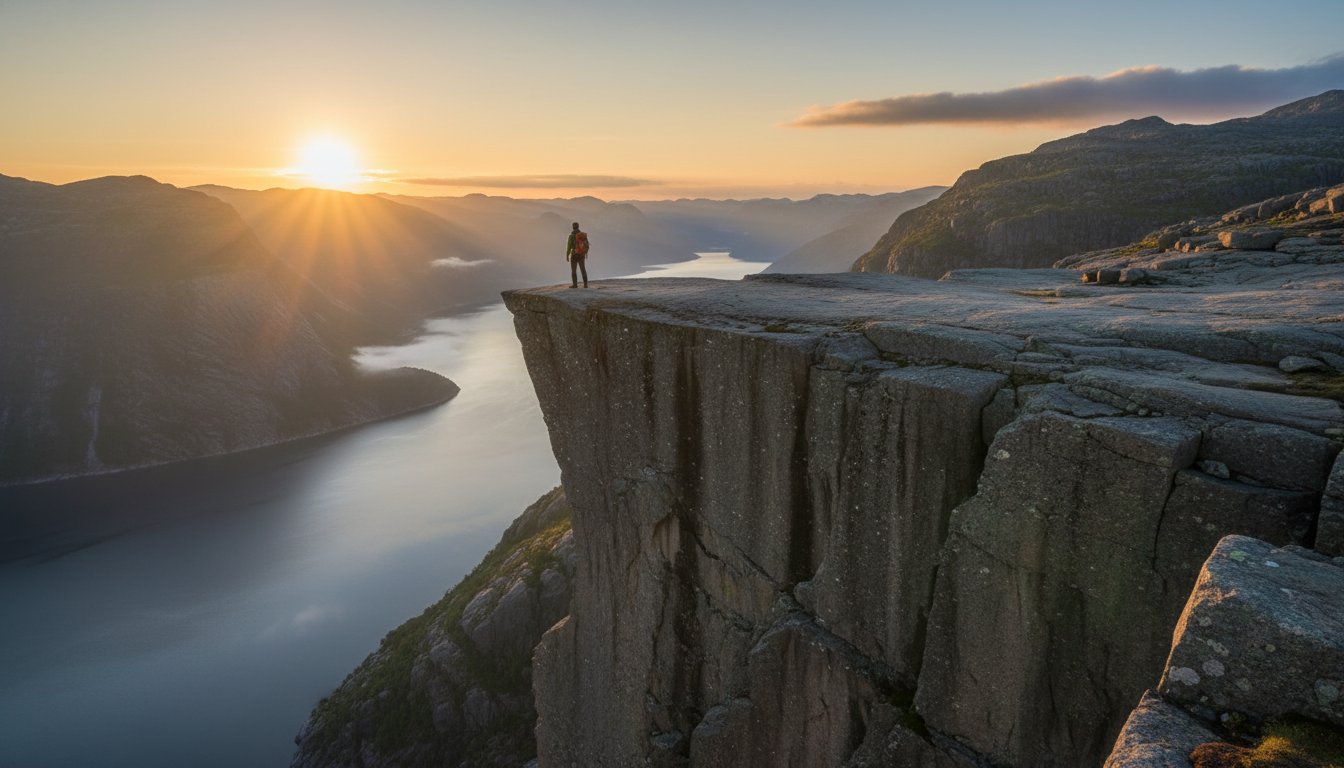
What if the most daunting ledge in the Norwegian wilderness was actually your most profound moment of stillness? You have likely seen the viral photos of Preikestolen and felt a familiar tug of both wonder and hesitation. It’s natural to worry about the 604 meter drop, the unpredictable Atlantic mist, or the 8 kilometer trek that tests your endurance. This curated guide ensures your pulpit rock hike in 2026 is a seamless journey of discovery rather than a struggle against the elements.
Standing on that ancient, flat plateau is a transformative experience that requires more than just physical effort; it demands a bespoke approach to the untamed landscape. We’ve handpicked the essential details to help you navigate the rugged path with confidence. You’ll discover the precise timing to bypass the 300,000 annual visitors, the necessary preparations for Norway’s shifting climate, and the secrets to capturing the pristine, ethereal beauty of the Lysefjord. It’s time to trade your anxiety for the quiet luxury of a perfectly planned adventure.
Key Takeaways
- Master the art of timing your ascent between late May and early September to witness the Lysefjord’s pristine beauty under the most favorable conditions.
- Navigate the 8km pulpit rock hike with confidence by understanding the transition from lush emerald forest paths to the iconic, hand-built stone Sherpa stairs.
- Ensure a seamless journey by adhering to the non-negotiable Mountain Safety Code and selecting rugged gear designed for the untamed Nordic elements.
- Discover how a bespoke private guide or a luxury electric catamaran tour can transform a standard excursion into a deeply personal storytelling experience.
- Learn to embrace the ethereal mist and sudden weather shifts that define the rugged, majestic character of this 604-metre granite plateau.
The Ethereal Allure of Preikestolen: Why Pulpit Rock is Norway’s Crown Jewel
The air at 604 metres carries a different weight. It’s crisp, thin, and tastes of ancient stone. Preikestolen isn’t just a destination; it’s a stark granite plateau that commands the Lysefjord with silent authority. For Norwegians, this “Pulpit” is a symbol of a national identity forged in the wild. Your pulpit rock hike is a journey through time and folklore. It’s a place where the untamed mountains finally meet the sky, offering an emotional reward that stays with you long after the descent. Standing on that edge, you feel the raw power of a landscape that refuses to be tamed.
The Geography of the Lysefjord
The Ryfylke region defines rugged beauty through its dramatic fjord architecture. Roughly 10,000 years ago, massive glacial movements carved these mountains with surgical precision. They left behind a 25×25 metre square plateau that looks like a hand-hewn monument. Below this altar lies the Lysefjord, a 42km-long “wide dagger” of deep blue water cutting through the earth. From this height, the perspective is dizzying. You can find more historical and geological details about Preikestolen (Pulpit Rock) to understand how this natural masterpiece was formed during the last ice age. The sheer scale of the vertical drops creates a sense of sheer grandeur that few places on earth can match.
Why 2026 is the Year to Visit
The 2026 season marks a definitive shift toward curated, low-impact exploration. New sustainability initiatives now protect the pristine trail environment, ensuring the path remains as rugged as nature intended. There’s a growing movement toward “slow travel” here. This means moving away from the rush and embracing handpicked, off-peak experiences that respect the local ecosystem. Accessibility has never been more seamless. The 14.4km Ryfylke tunnel (Ryfylketunnelen) provides a direct link from Stavanger, yet the 2026 focus is on the bespoke journey rather than the quick trip. You’ll find that the pulpit rock hike has evolved. It’s now an exclusive encounter with the elements, designed for those who
Planning Your Bespoke Journey: Timing, Weather, and Logistics
The pulpit rock hike isn’t merely a trek; it’s a curated encounter with Norway’s raw, untamed power. To experience its true majesty, timing is everything. The primary season spans from late May to early September. During these months, the path is typically clear, though the weather remains a fickle protagonist. One moment the Lysefjord is bathed in gold; the next, an ethereal mist swallows the plateau, transforming the landscape into a ghostly realm. Safety remains paramount in these shifting conditions. The Geological Survey of Norway monitors the rock’s structural integrity with precision instruments, ensuring this ancient monolith remains a secure stage for your journey even as the elements swirl around it.
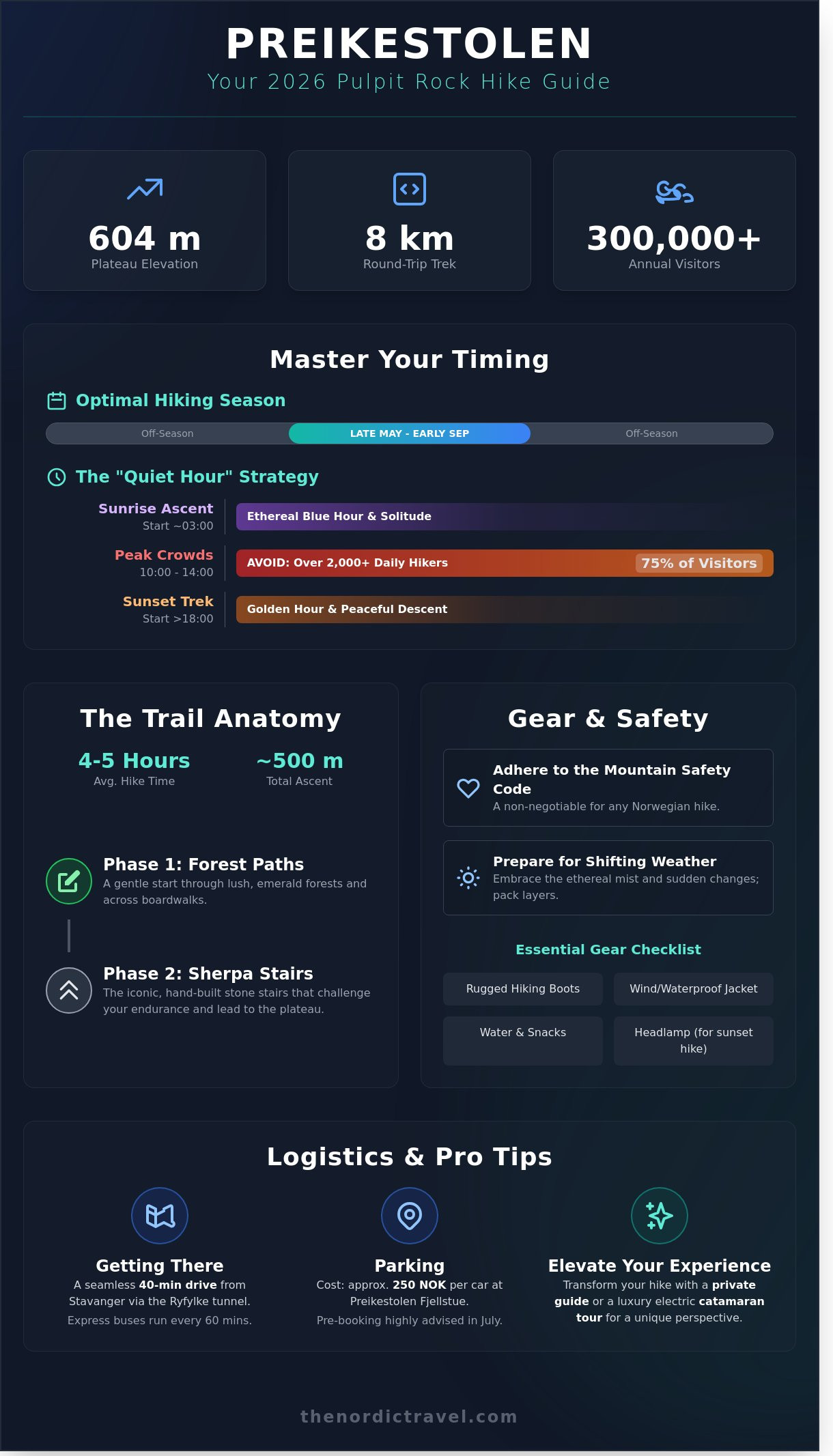
In 2026, avoiding the midday crush is the hallmark of a sophisticated traveller. Data from previous seasons shows that roughly 75% of visitors congregate on the trail between 10:00 and 14:00. To find the silence you seek, we recommend the “Quiet Hour” strategy. This involves starting your ascent either before the first light or late in the afternoon when the cruise ship crowds have retreated to their cabins. If you’d rather skip the logistics and focus on the views, consider a tailor-made Norwegian itinerary designed by our local experts.
The Best Time of Day to Hike
Sunrise hikes are for those who crave a private encounter with the rock. Starting at 03:00 during the June solstice grants you a front-row seat to the “ethereal” blue hour. Sunset treks offer a different magic; the “golden hour” paints the granite in deep ochre. While the descent requires a headlamp, the trail is significantly more peaceful after 18:00. Avoid the midday window to escape the heat and the 2,000-plus daily hikers who peak during lunch hours.
Navigating to the Trailhead
The journey from Stavanger is now a seamless 40-minute drive thanks to the Ryfylke tunnel. The Preikestolen Fjellstue serves as your gateway to the rugged wilderness. For the 2026 season, parking fees are set at approximately 250 NOK per car, and pre-booking is highly encouraged during July to guarantee a spot. Public transport remains efficient, with express buses departing Stavanger city centre every 60 minutes, providing a stress-free connection to the start of the pulpit rock hike.
The Trail Anatomy: A Step-by-Step Guide to the 8km Ascent
The pulpit rock hike unfolds like a carefully composed symphony, beginning with a steady, rhythmic climb through an emerald forest. This initial stretch challenges your pace with a mix of gravel and natural stone. The air here is thick with the scent of damp pine and ancient moss, offering a sensory introduction to the Ryfylke wilderness. It’s a curated transition from the civilized world into the heart of Norway’s untamed landscapes.
As the forest thins, you’ll encounter the “Sherpa stairs.” These hand-built granite steps are a testament to Nepalese craftsmanship, installed between 2013 and 2014 to protect the terrain from erosion. They provide a sturdy, architectural contrast to the rugged surroundings. Following this ascent, the trail levels out across high-altitude marshlands. Here, sustainable wooden boardwalks allow you to glide over the delicate peat and heather without disturbing the pristine ecosystem.
The final kilometer is where the drama heightens. You’ll navigate a cliff-side traverse where the path narrows, revealing the Lysefjord’s “wide dagger” shape far below. Upon reaching the 25-by-25-meter plateau, the experience becomes bespoke; you can find a quiet corner on the higher ridges or stand at the very edge of the 604-meter drop. The view is ethereal, a seamless blend of granite, sky, and deep blue water.
Difficulty and Fitness Expectations
While officially categorized as “Moderate,” this isn’t a casual stroll. You’ll gain 334 meters in elevation over a 4-kilometer path one way. Most hikers should budget 4 to 5 hours for the round trip to ensure a seamless, unhurried experience. If you’re faint-hearted, the final open-edge sections require focus. The trail’s popularity is undeniable; in 2019, a record number of tourists reached the summit, so we recommend an early start to preserve your sense of exclusive solitude.
Key Landmarks Along the Trail
- Tjødnane: These serene mountain lakes sit at roughly 500 meters above sea level. They’re perfect for a contemplative rest or even a bracing dip on a summer afternoon.
- The “Never-ending” Stairs: A grueling yet beautiful section of stone steps that showcases the incredible labor of the Sherpa teams.
- The Lysefjord Viewpoint: This is your first true glimpse of the fjord’s vastness before you reach the actual plateau. It’s a moment of pure, child-like rácsodálkozás (wonder) at the scale of the Nordic landscape.
Essential Gear and Safety: Preparing for the Rugged Nordic Elements
The wild Norwegian landscape demands deep respect. To master the pulpit rock hike, you must embrace the local philosophy of preparedness. Every year, over 300,000 adventurers traverse these granite paths; however, the untamed Atlantic weather can shift in seconds. Sturdy, waterproof hiking boots are non-negotiable for this terrain. The ancient stone becomes a slick mirror when wet, requiring the aggressive grip that only professional-grade soles provide. Don’t underestimate the 8-kilometer round trip, as the uneven surface tests even the most seasoned ankles. The pulpit rock hike is a journey through a landscape that is as fragile as it is powerful.
A truly curated trail experience includes a bespoke lunch that mirrors the surrounding beauty. Pack a slice of local culture with brunost (caramelized brown cheese) and handpicked cloudberry jam on sourdough. These local flavors provide the necessary glucose to reach the 604-meter summit while connecting you to the heritage of the Ryfylke region. Staying fueled is as much about the spirit as it is about the body.
The Nordic Layering System
Mastering the “Nordic style” means dressing for three seasons in a single afternoon. Start with the ethereal comfort of a high-quality merino wool base layer. It regulates temperature naturally, keeping you dry during the steep, 350-meter elevation gain. Add a breathable mid-layer to insulate against the cool fjord breezes that rise from the Lysefjord depths. Finally, a windproof outer shell is your shield against the rugged Atlantic weather systems. This seamless approach ensures you stay warm without sacrificing mobility or elegance.
Safety Protocols and Emergency Info
Safety is a hallmark of the Norwegian experience, where nature remains the ultimate authority. Follow the hand-painted red “T” trail markers religiously to stay on the designated path. If visibility drops below 50 meters or wind speeds exceed 15 meters per second, the local advice is to turn back immediately. In an emergency, dial 112 to reach professional rescue services. The Norwegian Mountain Code consists of nine curated rules, such as planning your trip and adapting your plans to the weather, which provide the essential framework for a safe and respectful encounter with the pristine wilderness.
Elevating Your Experience: Private Tours and Exclusive Perspectives
A standard journey becomes a legacy when shared with a master storyteller. Choosing a private guide for your pulpit rock hike isn’t just about finding the path; it’s about uncovering the 10,000-year-old secrets etched into the granite. While the main plateau draws over 300,000 annual visitors, your guide leads you to silent, untamed crags that offer the same ethereal views without the noise. They translate the rugged landscape of Rogaland into a narrative of glacial power and ancient folklore, ensuring your connection to the land is both intellectual and emotional.
True immersion requires seeing the monolith from every angle. A luxury electric catamaran glides through the Lysefjord below, offering a silent, emission-free perspective of the 604-meter cliff face. It’s a stark, humbling contrast to the summit experience. For those seeking the ultimate Ryfylke challenge, pairing this trek with the Kjeragbolten hike creates a three-day odyssey. You’ll stand on the famous wedged boulder and the flat plateau, witnessing the raw, pristine diversity of Norway’s most iconic fjords.
Your visit also contributes to the future of these landscapes. Sustainable travel initiatives in 2024 have focused on path restoration and waste management across Norway and the Faroe Islands. A portion of local tourism fees directly funds the Sherpa-built stone steps that protect the fragile alpine tundra from erosion, ensuring the wilderness remains as rugged and beautiful for the next generation of explorers as it’s today.
The Benefits of a Curated Private Tour
Bespoke tours grant you access to hidden viewpoints far from the main granite plateau. These secluded spots provide the perfect vantage point for photography or quiet reflection. Your expert guide provides deep dives into the ethereal history and geology of the region, making every step meaningful. Explore our Unforgettable Nordic Tours: Your 2026 Guide for handpicked itineraries that prioritize these exclusive, private moments in the wild.
Luxury Accommodations Near the Trail
Rest is an art form in the North. Staying at the Preikestolen BaseCamp allows for a seamless, early start before the crowds arrive. If you prefer the city, Stavanger’s boutique hotels offer a curated sanctuary with high-end Nordic design and local gastronomy. These handpicked stays provide a soft landing after the physical demands of the pulpit rock hike. Refer to our Nordic Trip Planning Checklist to ensure your packing essentials align with both the rugged trail and your sophisticated evening retreat.
Step Into the Ethereal Beauty of the Fjords
Standing 604 meters above the sapphire waters of the Lysefjord, Preikestolen remains an untamed masterpiece of the Nordic landscape. Your journey through the 8-kilometer trail requires more than just physical stamina; it demands a deep respect for the rugged terrain and a meticulously planned itinerary. By timing your visit for the 2026 season and securing technical gear for the unpredictable weather, you transform a challenging ascent into a seamless, soul-stirring experience. Whether you seek the first light of dawn or a private, exclusive perspective away from the midday crowds, the pulpit rock hike offers a rare connection to the earth’s raw power.
At The Nordic Travel, our local experts handpick every detail to ensure your journey is both sustainable and deeply personal. We believe in the art of expert storytelling, turning a simple trek into a bespoke narrative that resonates long after you return home. You don’t just visit the fjords; you experience them through a lens of quiet luxury and professional expertise. Discover our curated 2026 Nordic tour collections and begin your story in the heart of the fjords. The wild is calling, and it’s time you finally answered.
Frequently Asked Questions
How long does it take to hike to Pulpit Rock?
A round trip on the pulpit rock hike typically takes 4 to 5 hours of active walking. You’ll cover 8 kilometers of terrain with a 350-meter elevation gain. The path features rugged stone steps crafted by Nepalese Sherpas in 2014 to ensure a steady ascent. While the pace depends on your fitness, most travelers find this timeframe allows for a seamless experience through the Norwegian wilderness.
Is the Pulpit Rock hike dangerous for those with a fear of heights?
The 604-meter vertical drop from the plateau is intense, but the 25-by-25-meter flat surface provides ample space to stay away from the edge. There aren’t any safety railings on this untamed cliff. If you struggle with heights, stay toward the mountain side of the plateau. The ethereal view of Lysefjord is just as captivating from a few meters back from the granite rim.
Can children and seniors complete the Preikestolen hike?
Children as young as 6 and active seniors in their 70s frequently complete the journey to the summit. The trail was improved in 2014 with hand-laid stone stairs that make the rugged sections more manageable for different age groups. It’s a bespoke family adventure that requires steady footing and patience. We recommend allowing an extra 2 hours if you’re hiking with younger explorers to maintain a relaxed pace.
What should I wear for a hike in the Norwegian fjords in 2026?
Your 2026 fjord wardrobe should prioritize a three-layer system featuring sustainable, high-performance fabrics. Start with a 100% merino wool base layer to regulate temperature in the pristine mountain air. Add a recycled fleece mid-layer and a waterproof Gore-Tex ePE shell. This setup ensures you’re prepared for the 5-degree temperature shifts often recorded between the trailhead and the cliff top during the summer months.
Do I need a permit or a guide to hike Pulpit Rock?
You don’t need a permit or a mandatory guide for the pulpit rock hike between May and September. The trail is open to the public 365 days a year without entrance fees. For an exclusive experience, many guests choose a private guide to discover hidden viewpoints away from the main crowds. This ensures a seamless journey through the more rugged sections of the Lysefjord landscape while gaining local insights.
Is it possible to hike Pulpit Rock in the winter?
Hiking in winter is possible from November to April, though you should only attempt it with a professional guide. Daylight hours drop to just 6 hours in mid-December, and the path becomes a zord landscape of ice and snow. Crampons and headlamps are 100% mandatory for safety. The ethereal beauty of the snow-covered fjords offers a quiet luxury that few summer tourists ever get to witness.
How do I get from Stavanger to the Pulpit Rock trailhead?
You can reach the trailhead from Stavanger in approximately 40 minutes by driving through the 14.4-kilometer Ryfylke tunnel. This world-record subsea tunnel provides a seamless connection to the Ryfylke region. If you prefer public transport, the Pulpit Rock Tours bus operates hourly during the peak season. It’s a short, scenic journey that transitions quickly from urban comfort to the untamed Norwegian wilderness at the base camp.
Are there toilets or food facilities on the trail?
Facilities are located exclusively at the Preikestolen BaseCamp at the start of the trail. Once you begin the 4-kilometer ascent, there are zero toilets, shops, or waste bins available. We provide a curated packing list for our guests that includes lightweight snacks and a reusable water bottle. This approach protects the pristine nature of the site and ensures the environment remains as rugged as nature intended.