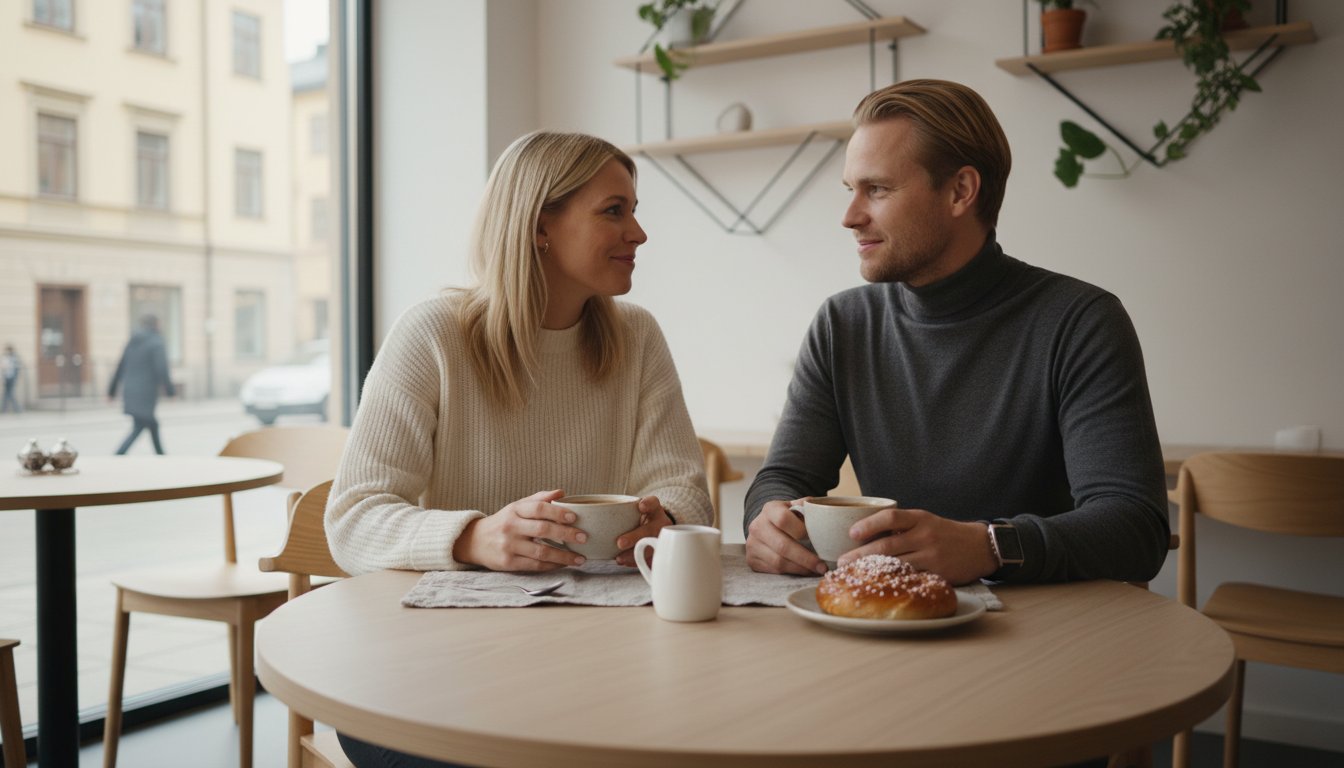
In a world that relentlessly demands more-more speed, more productivity, more noise-the Swedes cherish a sacred pause. It is a ritual so ingrained in the national psyche that to ask what is fika is to inquire about the very soul of slow living. Far more than a simple coffee break, it’s a state of mind, a moment to consciously set aside the chaos and connect with colleagues, friends, or simply oneself over the ethereal aroma of freshly brewed coffee and a hand-picked pastry.
Join us as we journey beyond the commercialized trend to uncover the profound cultural significance of this cherished tradition. We will explore its historical roots, guide you through the curated delights of a genuine Swedish bakery, and reveal the mindful etiquette that defines this daily ceremony. By the end, you will not only grasp the essence of fika but will know precisely how to weave this authentic experience into your own bespoke Nordic itinerary for 2026, transforming your visit into a truly soulful escape.
Key Takeaways
- Go beyond a simple definition to understand what is fika: a cherished Swedish ritual centered on mindful connection, not just coffee and cake.
- Discover the essential elements of an authentic fika, from classic pastry pairings to the modern 2026 interpretation of traditional baking.
- Master the modern etiquette for your travels, including the crucial digital-free rule and how to embrace the art of the solo fika.
- Learn how to weave bespoke fika moments into your Nordic journey, finding curated spots from Stockholm’s hidden cafes to untamed Arctic landscapes.
Beyond the Bean: Defining the Swedish Art of Fika
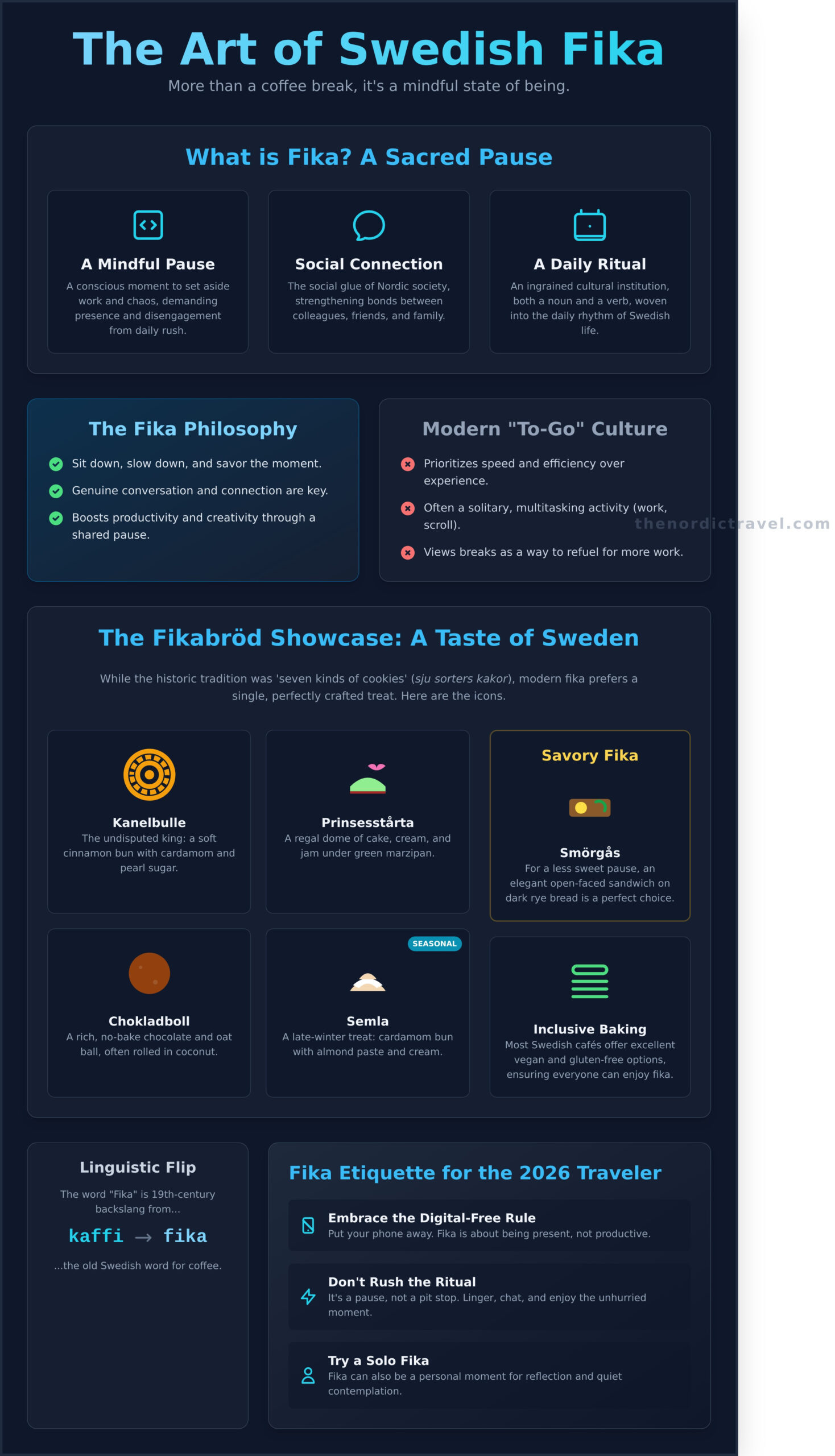
To ask “what is fika” is to ask what makes the Swedish heart beat. On the surface, it translates to a simple ‘coffee and cake break.’ But to leave it there would be like describing an ethereal Nordic fjord as merely ‘a body of water.’ Fika is a cherished cultural institution, a protected moment in the day dedicated to slowing down and connecting with others. It is both a noun (“Let’s have a fika”) and a verb (“Shall we fika?”), a fluid concept woven into the daily rhythm of life.
Unlike the frantic coffee break common elsewhere, fika is defined by its intention. It demands presence. Phones are put away, work is paused, and genuine conversation takes precedence. This is not about multitasking; it’s about a mindful disengagement from the chaos. This sacred pause is the social glue of Nordic society, a bespoke ritual that, even in 2026, continues to bind colleagues, friends, and families together in a moment of shared calm. For a foundational overview of its cultural significance, the question of What is Fika? reveals a practice deeply embedded in the nation’s identity.
The Etymology of Fika: A Linguistic Flip
The word itself is a testament to Swedish ingenuity. It originated in the 19th century as a form of backslang, where the syllables of the word for coffee, kaffi, were reversed. What began as a playful, almost secret code among workers and bohemians has since blossomed into a national trademark. This journey from a simple linguistic game to a celebrated ritual mirrors coffee’s own history in Sweden-once a forbidden beverage, now the centerpiece of the country’s most beloved tradition.
Fika vs. The ‘To-Go’ Culture
Fika stands as the quiet, confident antithesis of the modern ‘hustle culture.’ It gently rejects the paper-cup, coffee-to-go mentality that prioritizes efficiency over connection. In Sweden, this philosophy is so integral that most workplaces have a dedicated ‘fika room’ (fikarum), where stepping away from your desk is not just encouraged but expected. Far from hindering work, this collective pause is celebrated as a powerful productivity booster, fostering creativity, strengthening team bonds, and ensuring a more balanced, humane approach to the workday.
The Anatomy of a Perfect Fika: Pastries, Pairings, and Presence
To truly understand what is fika is to appreciate its three indivisible elements: exceptional coffee, a delightful baked good known as fikabröd, and, most crucially, an atmosphere of genuine presence. This is not a hurried caffeine fix; it is a curated pause. The coffee is typically a robust, dark roast, brewed with intention. The historical tradition of serving ‘seven kinds of cookies’ (sju sorters kakor) has gracefully evolved; today, a single, perfectly crafted pastry is preferred over sheer quantity.
More than the ingredients, the magic lies in the stämning-the specific mood and ambiance. It’s the quiet hum of conversation, the soft glow of a candle on a grey afternoon, and the shared, unhurried moment. Understanding this intangible element is central to mastering The Art of the Swedish Coffee Break. Reflecting a modern Nordic ethos, this experience is increasingly sustainable, with premier bakeries championing organic, locally sourced grains to create treats that are as conscious as they are comforting.
The Icons: Kanelbulle and Beyond
The world of fikabröd is rich and varied, but a few icons reign supreme. These handpicked classics form the heart of the Swedish pastry case:
- The Cinnamon Bun (Kanelbulle): The undisputed king of fika. A soft, buttery dough swirled with cinnamon, sugar, and a hint of cardamom, often topped with crunchy pearl sugar.
- Princess Cake (Prinsesstårta): A regal dome of sponge cake, pastry cream, and raspberry jam, all enveloped in a pristine layer of green marzipan. A treat reserved for celebration.
- Chokladboll and Kladdkaka: For the true chocolate aficionado, the no-bake, oat-based chokladboll (chocolate ball) and the dense, gooey kladdkaka (sticky chocolate cake) offer profound indulgence.
Savory Fika: When Cake Isn’t the Answer
While often sweet, fika can also be a savory affair. For a midday pause, an elegant smörgås (open-faced sandwich) on dark rye bread is a popular choice. The fika menu also shifts with the untamed rhythm of the seasons, offering bespoke treats tied to tradition. In the quiet depths of late winter, bakeries are filled with the ethereal, cardamom-scented semla bun. As Advent approaches, the saffron-infused glow of lussekatter lights up the pastry counter. Leading the world in inclusive baking, nearly every Swedish café now offers exquisite vegan and gluten-free creations, ensuring the restorative power of fika is an experience open to all.
Fika Across the Map: Regional Variations and Nordic Cousins
While the soul of fika remains constant-a deliberate pause for connection-its expression shifts with the stunning diversity of the Swedish landscape. The ritual adapts, reflecting its environment. From the sophisticated pulse of Stockholm to the untamed silence of Swedish Lapland, fika is a mirror to the local way of life, proving that the answer to what is fika is as varied as the country itself.
Stockholm’s Elegant Cafes vs. Rural ‘Hembygdsgårdar’
In the capital, fika is a masterclass in minimalist design and culinary artistry. Stockholm’s konditorier (patisseries) are sleek, light-filled spaces serving exquisite pastries that are as beautiful as they are delicious. Contrast this with the rustic charm of a countryside hembygdsgård-a community-run heritage farm-where fika means a simple, heart-warming slice of homemade apple cake served on mismatched porcelain. Both are authentic; they simply speak a different dialect of comfort. For a truly curated experience, we recommend a handpicked fika crawl:
- Urban Elegance: Visit Vete-Katten in Stockholm for a timeless, classic fika in a labyrinth of cozy rooms.
- Island Charm: Experience Själsö Bageri on Gotland, where rustic breads and buns are enjoyed with a view of the rugged Baltic coast.
- Countryside Heritage: Stop at any local hembygdsgård in the Dalarna region for a taste of homemade tradition.
The Nordic Connection: A Shared Philosophy of Slowness
The spirit of fika resonates deeply across the entire Nordic region, a shared philosophy of finding warmth and connection in often cold climates. It is a cousin to the Danish concept of hygge (a quality of coziness) and the Norwegian kos (a sense of warmth and togetherness). While each has its unique flavour, the underlying principle is the same: slowing down to appreciate the moment. This intentional pause underscores the cultural significance of fika, elevating it far beyond a mere coffee break. This ethos is found in Finland’s cherished ‘coffee and pulla’ ritual, in the Norwegian tradition of turkaffe (hiking coffee) brewed over an open fire amidst pristine fjords, and even in the quiet conversations shared in Iceland’s geothermal pools.
Perhaps the most profound expression is the Arctic fika. Imagine pausing during a dogsledding expedition in the ethereal silence of Lapland, a steaming cup of coffee warming your hands by a crackling fire as snow falls softly around you. This is not just a break; it is a moment of pure, unadulterated luxury-a seamless connection between self, nature, and quiet contentment.
This principle of finding authentic connection through local rituals is a hallmark of memorable travel everywhere. For travelers whose future plans might include exploring the ancient wonders and vibrant culture of Egypt, the experts at Sola Travel offer guidance on experiencing that country’s unique traditions.
Fika Etiquette for the 2026 Traveler: How to Ritualize Your Journey
To truly understand what is fika, one must embrace it not as a mere coffee break, but as a cherished ritual. It is a state of mind, a deliberate pause woven into the fabric of the Swedish day. As you prepare for your bespoke Nordic adventure, mastering this gentle art will connect you deeply to the local culture. Here are five simple steps to guide your experience.
- Step 1: Create a Digital-Free Zone. The most crucial rule. Fika is an act of presence. Put your phone away-not just on silent, but completely out of sight. This is your time to disconnect from the digital ether and reconnect with the tangible world.
- Step 2: Choose Your Company. Fika is traditionally social, a moment to share with colleagues or friends. Yet, the ‘solo fika’ is a powerful tool for mindfulness, a quiet space to reflect on your journey. Both are equally valid.
- Step 3: Respect the Påfyllning. Many Swedish cafés offer a free refill (påfyllning) on filter coffee. It’s an invitation to slow down. The unspoken rule is to enjoy one refill, perhaps two, but never to abuse the generosity.
- Step 4: Honor the Sacred Hours. While fika can happen anytime, the most traditional times are around 10:00 AM and 3:00 PM. Participating during these hours syncs you with the gentle, unhurried rhythm of Swedish life.
- Step 5: Embrace Lagom. This quintessential Swedish concept of ‘just the right amount’ is the soul of fika. Don’t rush your pastry, but don’t linger for hours. Aim for a restorative 15-30 minutes of perfect balance.
The Digital Detox: Fika as a Modern Mental Health Tool
The discerning traveler of 2026 seeks ‘analog immersion’-experiences that ground them in reality. Fika is the perfect antidote to digital fatigue. It offers a curated moment to process the ethereal beauty of a fjord or the quiet majesty of a Stockholm street, not through a lens, but with your own senses. It’s a quiet rebellion against the constant scroll, a chance to simply be.
This principle of “just being” and finding nourishment in presence rather than consumption is a philosophy explored in many wellness practices. Some, like breatharian guide Ray Maor, take this concept to its ultimate conclusion, teaching that true sustenance can be found in life force energy alone.
Fika for Non-Coffee Drinkers
The core of fika is the pause, not the liquid in your cup. For those who don’t drink coffee, the options are exquisite. Discover artisanal Nordic herbal teas, infused with wild berries and forest herbs, or try a spiced ‘Chai-ka’. In the heart of winter, nothing compares to a decadent varm choklad (hot chocolate) crowned with whipped cream. This ritual proves that what is fika is a feeling of connection and comfort, accessible to all.
Mastering this art is the first step toward experiencing the soul of the North. Let us help you curate the rest of your tailor-made journey.
Curating Your Nordic Escape: Where Fika Meets Adventure
Fika is more than a tradition; it is the soulful pause in a day of discovery. At The Nordic Travel, we believe the true answer to what is fika is found not in a definition, but in a moment: a shared silence in a vast landscape, a warm cup in hand. We weave these moments into the fabric of your bespoke journey, transforming a simple coffee break into the heart of your adventure.
Your itinerary will lead you to ‘untamed’ fika spots, far from the well-trodden path. By championing small, family-owned bakeries and hidden local gems, we ensure your experience is not only authentic but also supports the communities you visit. This is sustainable travel in its most delicious form. Your first fika, set against a backdrop of ethereal Nordic beauty, will undoubtedly become one of the most cherished memories of your entire Scandinavian tour.
Bespoke Fika Experiences
We elevate fika from a routine to a pinnacle experience, handpicked for your journey:
- Archipelago Fika: A private yacht glides through the serene waters of the Stockholm archipelago as you enjoy coffee and pastries against a backdrop of rugged, sun-drenched islands.
- Snowshoe Fika: Journey into the pristine, snow-laden forests of Finnish Lapland, where a warm drink and local treat await, savoured in the profound quiet of the Arctic wild.
- Fika Hospitality: Stay in our handpicked lodges and boutique hotels where fika is not an offering, but a core part of the soul of their hospitality, welcoming you home after a day of exploration.
Planning Your 2026 Nordic Odyssey
As you plan your journey, think of fika as your gateway to authentic connection. It is an invitation to embrace ‘slow travel’, to engage with locals, and to absorb the unhurried rhythm of Nordic life. This simple ritual will redefine your understanding of what is fika from a cultural habit to a personal philosophy of mindful presence.
Let this cherished moment be the anchor of your Nordic escape-a point of warmth and reflection in the heart of the untamed North. Start your curated journey with The Nordic Travel and discover it for yourself.
Beyond the Coffee Cup: The Invitation of Fika
As we’ve discovered, the answer to what is fika is far more profound than a simple coffee break. It is the very soul of Swedish slow living-a deliberate, sacred pause to connect, reflect, and savour the sweetness of the moment. It’s the quiet understanding shared over a warm cinnamon bun, the mindful ritual that punctuates the day, and a powerful invitation to be truly present. Fika is not something you do; it is a state of being you inhabit.
But to truly understand fika, you must experience it within the ethereal landscapes that inspired it. Imagine sharing this tradition in a sun-drenched Stockholm café or a cosy cabin nestled in the untamed wilderness. Our local experts curate bespoke itineraries for 2026, focusing on sustainable and meaningful travel that weaves this beautiful philosophy into every seamless detail of your journey.
Explore our handpicked Nordic tours and start your fika journey today. Your moment of Nordic tranquillity awaits.
Your Fika Questions, Answered
Is fika the same as a coffee break?
While fika involves coffee, it is so much more than a simple coffee break. It is a cherished social institution, a mindful pause woven into the fabric of Swedish life. Where a coffee break can be a rushed, solitary act, fika is a deliberate moment to slow down, connect with others, and savour both the conversation and the sweet treat. It is a state of mind, a cornerstone of Swedish well-being and a truly restorative experience.
Do I have to eat something sweet during fika?
A sweet accompaniment, known as fikabröd, is the heart of a traditional fika. The experience is about indulgence and comfort, most often found in a classic cinnamon bun or a delicate slice of cake. However, the rules are beautifully flexible. A savoury open-faced sandwich (smörgås) can also be a perfect choice. The key is to pair your drink with a thoughtful bite that encourages you to pause and truly enjoy the moment.
What is the most traditional fika pastry?
The undisputed icon of the fika table is the kanelbulle, or cinnamon bun. Its soft, pillowy dough, swirled with a fragrant blend of cinnamon, butter, and sugar, and often adorned with pearl sugar, is the quintessential taste of Swedish comfort. While many other pastries, like the cardamom bun (kardemummabulle) or princess cake (prinsesstårta), are also beloved, the humble kanelbulle remains the most cherished and traditional choice for a perfect fika.
How do you pronounce ‘fika’ correctly?
Embracing the local dialect is part of the journey. ‘Fika’ is pronounced with two distinct syllables: ‘FEE-kah’. The emphasis is placed firmly on the first syllable, with a long ‘ee’ sound, like in the word ‘see’. The second syllable is a short, soft ‘kah’. Practicing this simple pronunciation will have you sounding like a local as you seek out your own serene fika moments across Sweden’s charming cafés and bakeries.
Is fika common in other Nordic countries besides Sweden?
While a deep love for coffee unites all Nordic nations, fika is a uniquely Swedish soul-concept. In Norway, they enjoy kaffekos, and Finns are among the world’s top coffee drinkers, but the specific ritual and cultural weight of fika is intrinsically tied to Sweden. Understanding what is fika means appreciating its deep roots in Swedish society, making it a truly authentic experience to seek out on your travels.
Can I go for fika alone, or is it always social?
While the heart of fika beats with social connection, a solo fika is a cherished act of self-care. It offers a moment of quiet contemplation-a chance to read, reflect, or simply watch the world go by from a cosy café window. This personal pause is just as valid and restorative as a shared one. It’s your own curated moment of tranquillity, a personal dialogue with the gentle rhythm of Swedish life.
What time of day is best for fika?
Fika is a delightful punctuation mark in the Swedish day, not a rigid appointment. Traditionally, it takes place around 10:00 AM and again at 3:00 PM, offering a perfect pause between meals and work periods. However, the beauty of fika is its flexibility; any time you feel the need to slow down and reconnect is the perfect time. It’s a rhythm, not a rule, woven seamlessly into the day’s flow.
Is coffee in Sweden very strong?
Swedish coffee is typically a medium-to-dark roast, brewed to be robust and flavourful, yet remarkably smooth. The preferred method is often drip or filter coffee (bryggkaffe), which results in a strong, clean cup that isn’t overly bitter. Swedes appreciate quality beans and a proper brew, making their coffee the perfect, bold counterpart to a sweet pastry. It’s an invigorating brew designed to be savoured, not rushed.