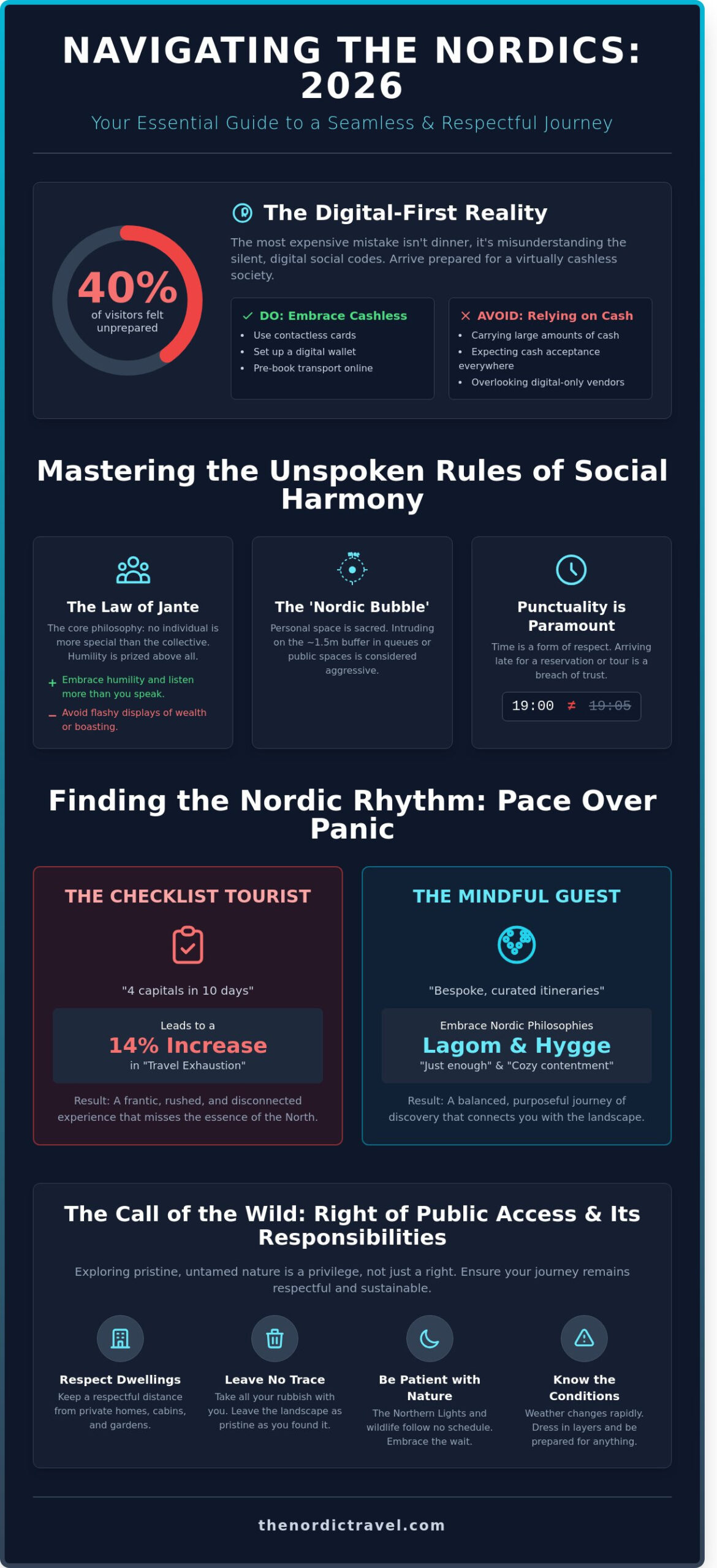
Your most expensive error in Stockholm or Oslo won’t be the price of a handpicked dinner, but rather a misunderstanding of the silent social codes that define the North. In 2024, data from the Nordic Council of Ministers suggested that nearly 40% of international visitors felt unprepared for the region’s digital-first expectations. It’s easy to feel overwhelmed by the untamed beauty of the fjords while simultaneously worrying about common scandinavian travel mistakes like hidden fees or appearing disrespectful in a quiet, minimalist culture. You deserve a journey that feels as pristine as the landscape itself.
This guide ensures you navigate the ethereal but rugged climate with the grace of a local expert. Discover how to master the cashless infrastructure and logistical realities for a truly seamless, respectful journey. We’ll explore the ten essential shifts you need to make for your 2026 expedition to ensure your experience remains bespoke and entirely free of social friction.
Key Takeaways
- Learn to embrace the “quiet luxury” of the North, moving beyond the tourist gaze to experience the region with the grace of a welcomed guest.
- Master the subtle art of social harmony by understanding the unspoken rules of the “Nordic bubble” and the humble philosophy of the Law of Jante.
- Navigate the logistical realities of 2026 by avoiding common scandinavian travel mistakes concerning cashless transactions and specific local alcohol regulations.
- Uncover the hidden responsibilities of the “Right of Public Access” to ensure your exploration of pristine, untamed nature remains respectful and sustainable.
- Discover why bespoke, curated itineraries outperform generic bucket lists, offering a more seamless and exclusive connection to the ethereal Nordic landscape.
The Subtle North: Why Travelers Often Misread the Nordic Rhythm
Scandinavia doesn’t shout. It invites you into a world where the air is crisp, the water is pristine, and the silence is a tangible, velvet presence. One of the most frequent common scandinavian travel mistakes is arriving with a frantic, checklist-driven energy that clashes with the local pulse. In 2026, the definition of luxury has shifted away from the loud and the crowded. It’s now found in the “quiet luxury” of a handpicked cabin in the fjords or a seamless, private transfer through the snow-dusted streets of Stockholm. To truly experience the North, you must transition from being a tourist to being a guest, respecting the unspoken rules of social harmony that keep these societies functioning so beautifully.
The “less is more” philosophy isn’t just a design aesthetic; it’s a survival strategy for the modern traveler. By 2025, tourism data showed a 14% increase in “travel exhaustion” among visitors attempting to see four capitals in ten days. The Nordic rhythm demands a curated approach. You cannot treat Denmark, Norway, and Sweden as a monolith of identical cultures. While they share a deep respect for nature, the rugged, untamed coastlines of Norway offer a vastly different emotional experience than the sophisticated, avant-garde design hubs of Sweden or the flat, pastoral charm of Denmark. A bespoke itinerary respects these boundaries, allowing the ethereal beauty of each landscape to breathe.
The Philosophy of Lagom and Hygge
In the North, balance is the ultimate currency. Travelers often mistake the slow pace of the Arctic for a lack of efficiency, yet it’s quite the opposite. Embracing this tempo allows you to notice the way light hits the birch trees or the scent of woodsmoke in the evening air. It’s about finding the exclusive joy in a single, perfectly brewed cup of coffee rather than rushing to the next landmark. Lagom is the art of “just enough” that transforms a frantic itinerary into a balanced journey of purposeful discovery. When you stop trying to “conquer” the landscape, the landscape begins to reveal its secrets to you.
Expectation vs. Reality in the Ethereal North
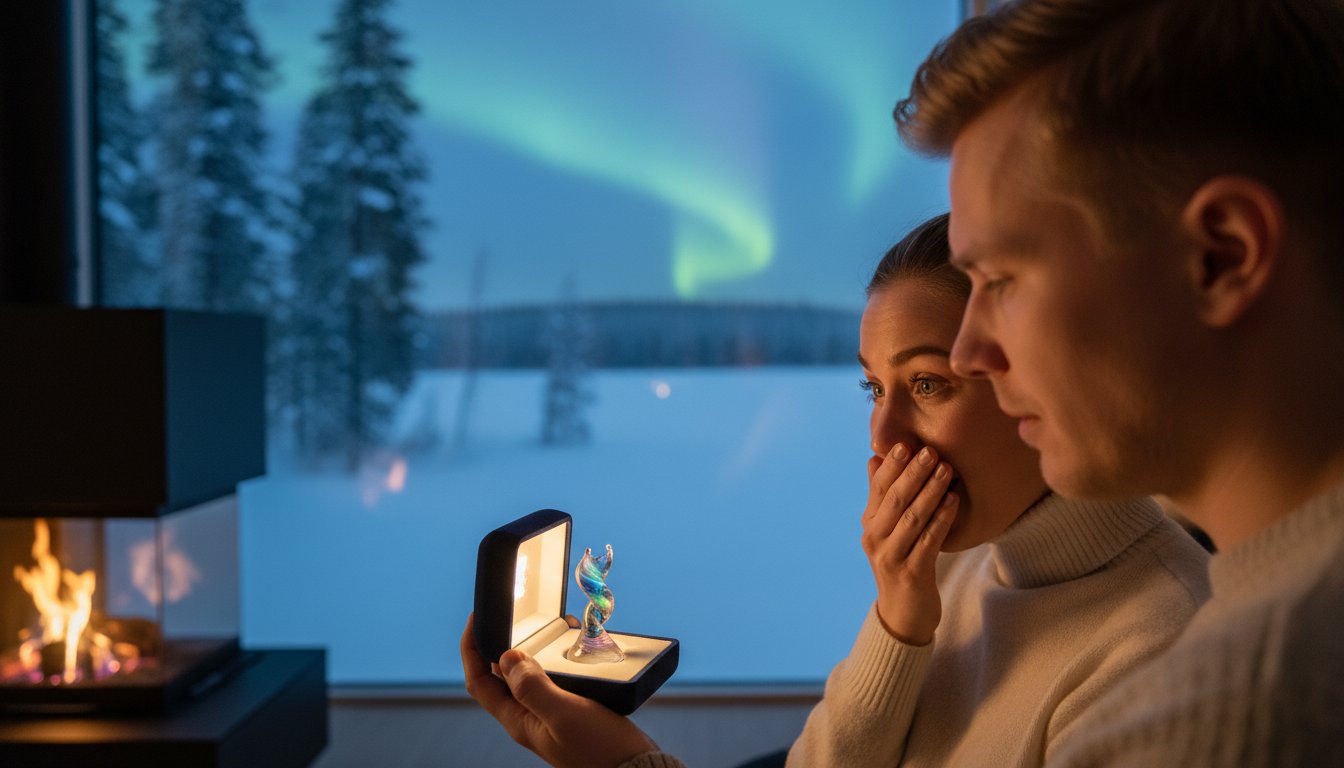
The ethereal allure of the Northern Lights often tops every bucket list, but nature rarely follows a schedule. Relying on luck is a gamble; instead, responsible travelers understand that the pristine environments of the North require patience and a deep sense of stewardship. Seasonal daylight can be disorienting, with the midnight sun of June offering 24 hours of energy and the polar nights of January demanding a cozy, inward focus. To bridge the gap between your dreams and the rugged reality of the Arctic, mastering the art of scandinavia trip planning is essential. This ensures your journey remains a series of handpicked moments rather than a collection of common scandinavian travel mistakes that leave you feeling disconnected from the very magic you came to find.
Cultural Faux Pas: Mastering the Unspoken Rules of Social Harmony
To step into the North is to enter a world of curated tranquility and deep, unspoken respect. One of the most common scandinavian travel mistakes involves bringing a loud, boastful energy into a culture that prizes humility above all else. This social fabric is held together by the Law of Jante, or Janteloven. Originating from Aksel Sandemose’s 1933 novel, these ten rules essentially suggest that no individual is more special or important than the collective. Flashy displays of wealth or vocal self-promotion feel jarring in these pristine, egalitarian societies. If you find yourself boasting about your professional success at a dinner party, you’ll likely meet a wall of polite but firm silence.
Personal space is the second pillar of Nordic harmony. Locals often maintain a “Nordic bubble” of at least 1.5 meters when waiting for public transport or standing in queues. Intruding on this physical boundary is seen as an aggressive act. This respect for space extends to time. Punctuality is the ultimate form of respect in the North. If a dinner reservation or a private tour is set for 19:00, arriving at 19:05 isn’t fashionably late; it’s considered a breach of trust. When planning your schedule, Navigating the Realities of Nordic Logistics means accounting for every minute to ensure you honor your local hosts’ time.
The Art of the Silent Conversation
Small talk isn’t the social currency here. In many Western cultures, silence is an awkward void that must be filled, but in Scandinavia, it’s a sign of comfort and maturity. Conversations are direct and purposeful. You don’t need to wrap your requests in layers of polite fluff; being clear is being kind. However, this directness must be delivered at a lower decibel. Whether you’re in a sleek Stockholm bistro or a remote cabin, keep your voice volume low. Loud laughter or shouting across a room disrupts the ethereal peace that locals work hard to maintain.
Respecting Local Boundaries
The transition from the rugged outdoors to the warm sanctuary of a home requires a specific ritual: removing your shoes. Walking through a private residence in outdoor boots is a significant faux pas that 95% of locals will find distressing. This tidiness extends to the sacred space of the sauna. In public baths and saunas across Finland and Norway, hygiene is paramount. Always shower thoroughly without a swimsuit before entering the water. While nudity is common and natural, staring is strictly prohibited.
“Silence isn’t an absence of connection; in the North, silence is a shared gift that allows the landscape and the soul to speak.”
Avoiding these common scandinavian travel mistakes allows you to blend into the scenery like a local. To ensure your journey is as seamless as the glass-like surface of a fjord, consider a tailor-made itinerary that honors these delicate cultural nuances while providing exclusive access to the region’s hidden treasures.
Practical Pitfalls: Navigating the Realities of Nordic Logistics and Finance
The 2026 reality of the North is one of absolute digital fluidity. Your physical wallet has become a secondary artifact, a memento of a previous era. Sweden’s Riksbank reports that cash transactions in retail have dwindled to less than 5% as of 2025. Relying on physical currency is one of the most common Scandinavian travel mistakes, as many boutiques and high-end cafes in Södermalm or Grünerløkka simply won’t accept it. They’ve embraced a future where every exchange is invisible and instantaneous.
Alcohol remains a sophisticated, state-governed affair. Monopolies like Norway’s Vinmonopolet offer handpicked selections of world-class vintages, yet their doors close as early as 3:00 PM on Saturdays. Planning your evening requires the same precision as a curated itinerary. While many perceive the region as prohibitively expensive, the true traveler understands the value of quality over quantity. A 500 NOK meal in Oslo isn’t just food; it’s a taste of the pristine, untamed environment, prepared with a level of craftsmanship that justifies every Krone. Tipping is never an obligation. It’s a quiet gesture of gratitude, usually a simple rounding up of the bill by 5% to 10% for exceptional service.
Digital-First Infrastructure
A credit card with a four-digit PIN is your most essential tool. Many automated kiosks for trains or parking won’t recognize cards without one. American Express often faces rejection in smaller, exclusive establishments due to higher merchant fees. Transit systems have evolved into seamless, app-based ecosystems. In cities like Copenhagen, 90% of commuters use digital platforms for ticketing. Buying a physical ticket on a bus is a relic of the past; you must have the local transit app pre-loaded and verified before you step onto the platform.
Timing and Seasonality
The ethereal beauty of the Polar Night or the relentless glow of the Midnight Sun can disrupt your internal rhythm if you’re unprepared. Bespoke accommodations, like the remote hideaways in the Lofoten Islands or the glass igloos of Finnish Lapland, often require a booking lead time of 8 to 12 months. Waiting until the last minute is a recipe for disappointment. To balance costs, embrace the “Dagens” or daily lunch specials. Many Michelin-recommended spots offer these curated midday menus for 40% less than their dinner counterparts, allowing you to experience the heights of Nordic gastronomy without the evening price tag.
The Call of the Wild: Avoiding Safety and Sustainability Errors in Nature
The North doesn’t negotiate. It invites you into an ethereal, untamed world, but it demands a deep, soul-level respect. One of the most common scandinavian travel mistakes is treating these rugged landscapes like a curated theme park rather than a living, breathing ecosystem. To experience the true magic of the Arctic, you must move with the grace of a guest, not the entitlement of a consumer. Understanding the delicate balance between human exploration and environmental preservation is the key to a seamless journey.
Understanding Allemansrätten
In Sweden, Norway, and Finland, the ancient philosophy of Allemansrätten grants you the right to roam. It’s a bespoke freedom to wander through pristine forests and camp under a canopy of stars. However, this privilege rests on a single, unbreakable mantra: “Don’t Disturb, Don’t Destroy.” This right to roam does not apply to private gardens, cultivated land, or areas immediately surrounding residential homes. In 2024, Swedish environmental agencies noted a 15% rise in trail erosion due to improper foot traffic, highlighting why staying on marked paths is essential for 2026 travelers who wish to protect the very beauty they seek.
Safety in the Rugged Landscapes
The Arctic sky is a canvas of shifting moods. Relying solely on Google Maps for mountain navigation is a dangerous error; it won’t tell you if a trail is washed out by sudden glacial melt or if a fog bank is rolling in from the fjords. You must check local northern lights forecasts and specialized mountain weather reports before venturing out. Even in peak summer, temperatures in places like the Lofoten Islands can plummet from 18°C to 6°C in less than sixty minutes. The “Three-Layer Rule” is a non-negotiable requirement for survival and comfort in these untamed spaces:
- Base layer: Moisture-wicking wool to keep skin dry and warm.
- Mid-layer: An insulating fleece or handpicked down to trap vital body heat.
- Outer layer: A windproof and waterproof shell to shield against the relentless elements.
Social media has turned fragile mosses and lichen into popular “Instagram spots,” yet these plants can take over 20 years to recover from a single heavy footstep. When you encounter reindeer or marine life, maintain a distance of at least 50 meters. These are not props for a photo; they are the true residents of this rugged wilderness. Respecting their space ensures your safety and their survival while avoiding common scandinavian travel mistakes that disrupt the delicate balance of the North.
Ready to discover the wilderness with expert guidance? Explore our curated Arctic expeditions and travel with purpose.
Crafting a Curated Escape: The Path to a Seamless Nordic Journey
Scandinavian travel in 2026 demands a departure from the predictable. One of the most common scandinavian travel mistakes involves chasing a generic bucket list that ignores the soul of the region. A bespoke journey transcends the ordinary; it replaces the frantic rush of the crowd with the quiet majesty of a private fjord cruise at dawn. For travelers seeking these refined maritime experiences, Crestwell Travel Services provides expert planning for luxury cruises and all-inclusive packages. Choosing handpicked experiences allows you to connect with the landscape on a primal level. It’s the difference between seeing a place and feeling its pulse. By selecting tailor-made encounters, you ensure every moment resonates with personal meaning rather than just ticking a box on a social media trend. This curated approach transforms a standard vacation into a seamless, exclusive narrative where the logistics vanish, leaving only the wonder of the North.
Moving Toward Meaningful Travel
Modern exploration requires a deep respect for the environments we inhabit. Meaningful travel isn’t just a trend; it’s a commitment to the land. In 2026, we see a shift toward tours that actively support local Sámi communities and wildlife conservation efforts in the rugged Swedish Lapland. Choosing off-the-beaten-path destinations like the Senja archipelago over crowded hubs like Bergen reduces the pressure on local infrastructure while providing a more intimate atmosphere. You’ll find that the most profound memories often occur in these pristine, quiet corners. To bridge the gap between planning and reality, savvy travelers utilize a comprehensive nordic travel guide to uncover hidden gems that remain untouched by mass tourism. This ensures your footprint is light but your impact is lasting.
Your Invitation to the North
The Arctic is a realm of ethereal beauty and untamed power. Transitioning from a checklist mindset to true mastery of the region means learning from the common scandinavian travel mistakes of the past. It means trading the “must-see” for the “must-feel.” As you prepare for your 2026 adventure, remember that the value of local expertise cannot be overstated. A trusted partner acts as a sophisticated storyteller, guiding you through the complexities of the landscape with the precision of a luxury concierge; similarly, for those planning urban adventures in North America, you can visit City Tours USA to discover professionally guided circuits. The North is calling you to witness the dance of the Aurora Borealis and the stillness of ancient glaciers. We encourage you to seek out arctic travel inspiration to begin visualizing your next chapter. Let your journey be a masterpiece of discovery, where every detail is curated to reflect the quiet luxury of the wild.
Begin Your Bespoke Journey into the Untamed North
Mastering the art of Nordic travel involves more than just packing the right layers. It requires a profound respect for the silent social harmonies and the rugged, pristine wilderness that defines this region. By sidestepping common scandinavian travel mistakes, you open the door to a world where the ethereal beauty of the Arctic meets the precision of modern logistics. Our 2026 planning focus emphasizes that sustainability is no longer an option but a core pillar of every seamless escape. You’ll find that understanding the local rhythm transforms a simple trip into a curated masterpiece of discovery.
Our team leverages deep local knowledge of the Arctic and Nordic regions to provide a perspective that’s both professional and filled with wonder. We specialize in expertly handpicked destinations that prioritize your privacy and the environment’s integrity. Every detail is crafted to ensure your experience remains exclusive and untamed. Don’t leave your 2026 memories to chance when you can rely on a partner who values the quiet luxury of a perfectly executed itinerary.
Explore our curated Nordic travel guides for your 2026 journey and start planning an adventure that resonates with the soul of the North. The pristine landscapes are waiting for you to arrive with intention and grace.
Frequently Asked Questions
Is it true that I don’t need any cash in Scandinavia in 2026?
You won’t need physical currency for 99 percent of your journey through the Nordics. Sweden’s central bank, the Riksbank, reported that cash transactions dropped to 8 percent in 2023, and this trend has only accelerated. From remote mountain boutiques to artisanal coffee stalls in Copenhagen, digital payments are the absolute standard. It’s a seamless experience that allows you to focus on the ethereal beauty of the landscape rather than counting coins.
Can I see the Northern Lights from any location in the Nordics?
No, you’ll need to travel above the Arctic Circle, specifically to latitudes higher than 66°N, for a reliable view of the Aurora Borealis. While the lights occasionally dance further south, locations like Tromsø, Norway, offer over 250 nights of viewing potential annually due to their geographical position. We recommend booking a curated excursion away from city lights to witness the untamed, shimmering ribbons of green and violet in their most pristine form.
What is the most common social mistake Americans make in the Nordics?
One of the most common scandinavian travel mistakes is speaking too loudly in public spaces or being overly exuberant with strangers. Nordic culture deeply values personal space and a concept known as Janteloven, which emphasizes humility and collective well-being. A 2024 cultural study by the Nordic Council highlights that low-volume communication is a core social norm. Adopting a quieter, more reflective tone will help you blend into the serene, sophisticated atmosphere of the region.
Do I really need to tip at restaurants in Norway or Sweden?
Tipping isn’t required or expected because service charges are already integrated into your bill. The Norwegian Ministry of Labour confirms that fair wages are legally mandated for hospitality staff, making the American style of tipping unnecessary. If you’ve received truly exceptional, bespoke service, rounding up the bill is a kind gesture, but it’s never a requirement for a seamless dining experience in these high-end establishments.
Is it safe to drive in the Arctic regions during the winter?
Driving is safe only if you’re prepared for rugged, unpredictable conditions and use vehicles equipped with studded tires. Norwegian law requires a minimum tread depth of 3 mm on winter tires from November 1 through mid-April to ensure traction on icy fjordside roads. While the scenery is ethereal, the weather can turn in seconds. We often suggest a private chauffeur to allow you to gaze at the snow-dusted peaks without the stress of navigating the untamed terrain.
What exactly does the “Right to Roam” mean for international tourists?
The Right to Roam, or Allemannsretten, grants you the freedom to hike and camp on uncultivated land, provided you show deep respect for nature. Established by the Norwegian Outdoor Recreation Act of 1957, this law allows you to immerse yourself in the pristine wilderness. You can pitch a tent for up to two nights in the same spot, as long as you’re at least 150 meters from the nearest inhabited house or cabin.
How far in advance should I book my Nordic tour for 2026?
You should book your journey 9 to 12 months in advance to avoid the most common scandinavian travel mistakes regarding availability. Statistics Norway showed a 15 percent increase in luxury lodge bookings recently, proving that exclusive, handpicked accommodations fill up rapidly. Securing your tailor-made itinerary early ensures you don’t miss out on the most sought-after glass igloos or private fjord cruises during the peak seasons of 2026.
Is English widely spoken throughout the Nordic and Arctic regions?
English proficiency is remarkably high, so you’ll find communication effortless even in the most remote villages. The 2024 EF English Proficiency Index ranks Sweden, Norway, and Denmark in the top 10 countries globally for non-native speakers. Whether you’re discussing the history of a rugged Viking ruin or ordering a handpicked local vintage, the locals will likely respond in fluent, sophisticated English. It makes your exploration of the North feel incredibly welcoming and accessible.