What if the most profound moments in the North aren’t found behind a 50,000 ISK entrance fee, but in the silent, silver mist of a waterfall you have entirely to yourself? It’s a common fear that Iceland’s rugged beauty is gatekept by astronomical costs, and finding reliable iceland on a budget tips can feel like searching for a needle in a volcanic desert. You’ve likely braced yourself for the sting of expensive fuel and those notorious $120-per-day car rentals that defined many 2025 travel stories. It’s natural to worry that a dream of the Arctic might remain just that: a dream.
We believe the most authentic experiences are often the ones that cost nothing but your time and wonder. You can experience the raw, untamed beauty of the highlands without compromising on the magic or your bank account. This guide provides a seamless, high-value itinerary for 2026 that prioritizes handpicked, free natural wonders and practical ways to save on essentials. From secret hot springs to smarter ways to fuel your journey, we’ll show you how to embrace the ethereal Nordic spirit while keeping your finances pristine.
Key Takeaways
- Master the “Value-First” mindset to distinguish between mere expense and the true worth of ethereal Icelandic moments.
- Uncover the logistical secrets of the shoulder months and bespoke transport options that ensure a seamless, cost-effective adventure.
- Discover essential iceland on a budget tips by adopting a “Picnic Philosophy” with handpicked local ingredients from curated supermarket finds.
- Experience the raw, untamed power of pristine waterfalls and secluded hot springs where nature’s bounty remains free and uncrowded.
- Adopt a slow, sustainable travel rhythm that deepens your emotional connection to the landscape while naturally preserving your resources.
The Reality of Iceland Travel Costs in 2026
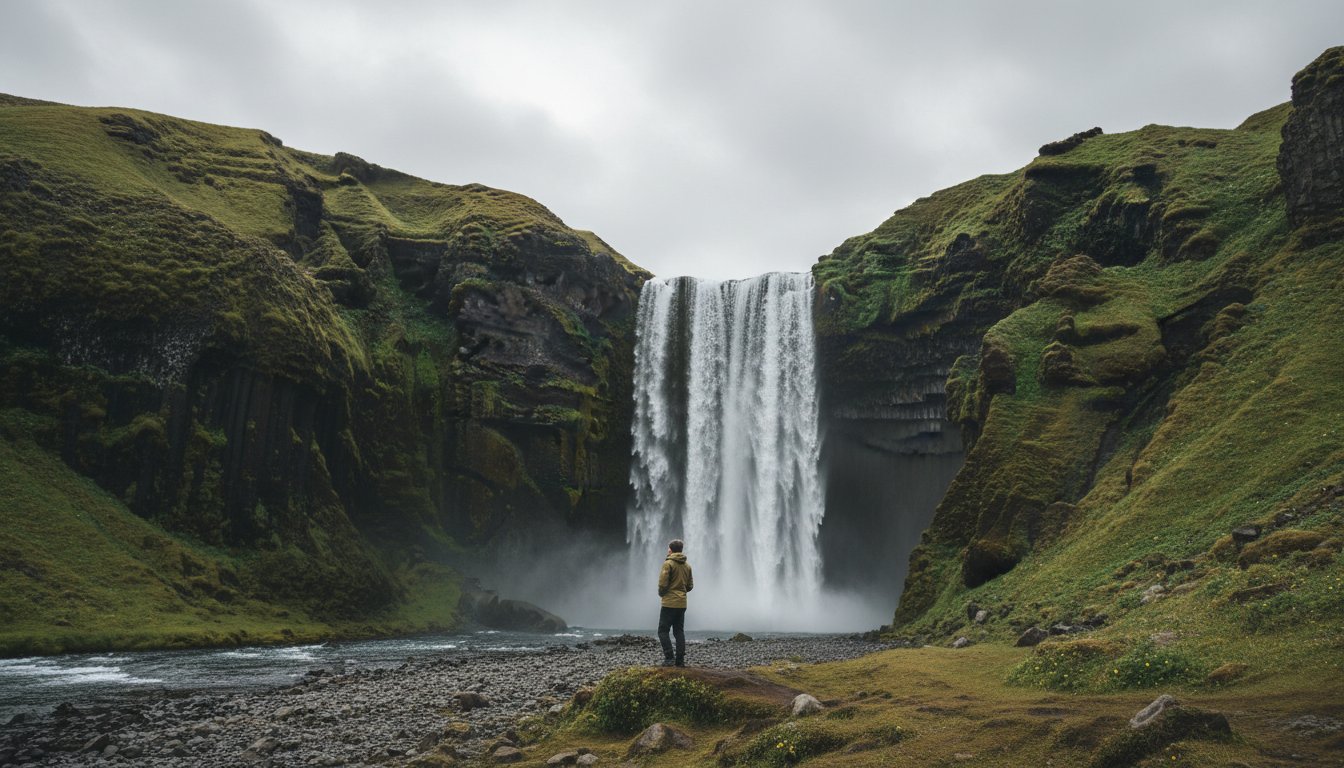
Iceland isn’t a destination you conquer with a thin wallet; it’s a landscape you navigate with intention. In 2026, the cost of living in the North Atlantic remains high, but the price of admission to its soul hasn’t changed. You’ll find that the most profound moments, like watching the sun dip behind the Westfjords or feeling the spray of Skógafoss, require no ticket. To master iceland on a budget tips, you must shift from a “lowest price” to a “highest value” perspective. This value-first mindset distinguishes between a high price tag and the deep worth of a handpicked experience.
Recent data from the Icelandic Central Bank shows a 3.8 percent rise in hospitality costs compared to 2025. This shift reflects a move toward sustainable, low-impact travel. As the history of tourism in Iceland demonstrates, the nation prioritizes preserving its pristine environment over mass-market volume. This means prices are stable but premium. However, the ethereal beauty of the Highlands and the rugged coastline remain entirely free for those willing to drive the distance.
The Hidden Costs of Convenience
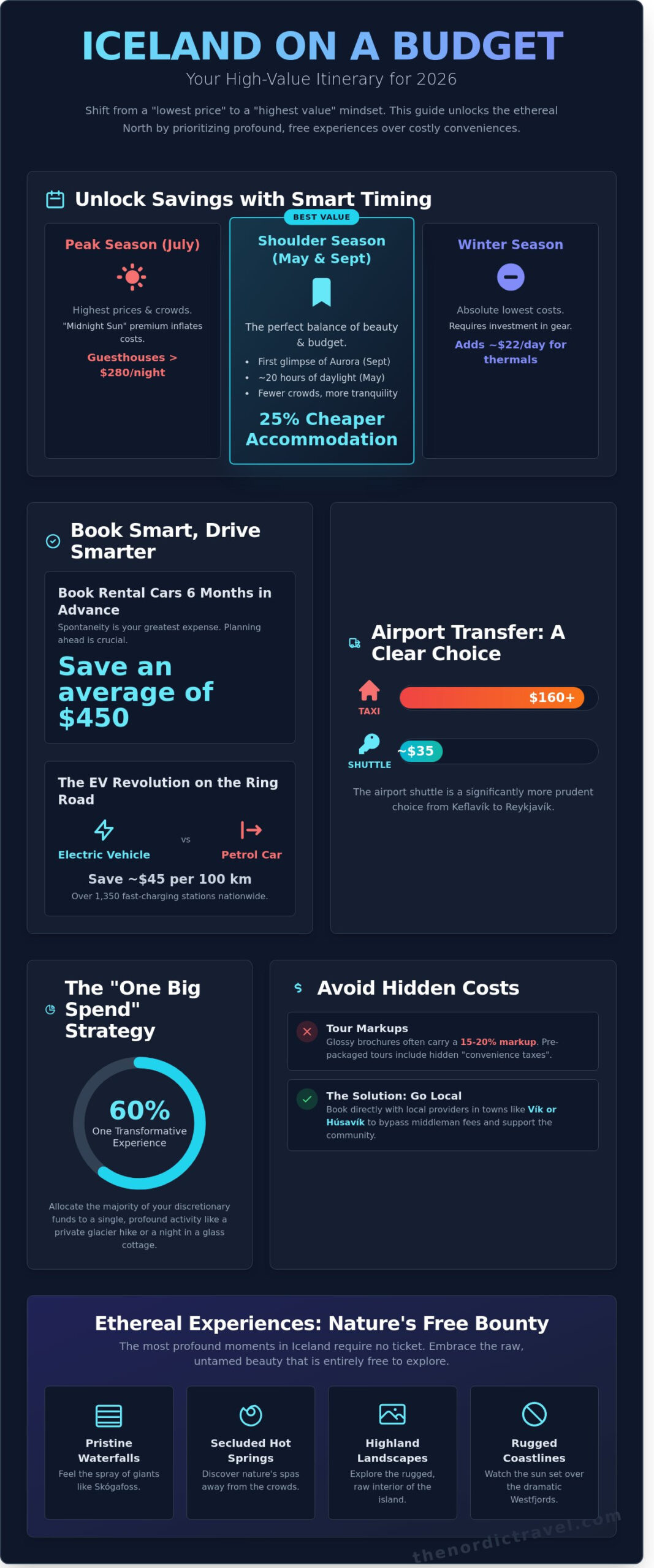
Excursions sold in glossy brochures often carry a 15 to 20 percent markup. By booking directly with local providers in Vík or Husavík, you bypass these middleman fees and ensure your money stays within the community. Spontaneity is your greatest expense in 2026. Booking a rental car 6 months in advance saves an average of 450 USD compared to a last-minute reservation. Pre-packaged tours often include “convenience taxes” hidden in the logistics; avoid them by curating your own path through the untamed wild.
Defining Your Personal Budget Pillar
The secret to a bespoke journey lies in the “one big spend” strategy. Allocate 60 percent of your discretionary funds to a single, transformative experience, perhaps a private glacier hike or a night in a handpicked glass cottage. For the rest of your stay, embrace the rugged. Choose a fuel-efficient 4×4 to unlock the Highlands rather than a luxury sedan that limits you to the Ring Road. Use real-time apps like Revolut or XE to monitor the Icelandic Króna (ISK). Even a 2 percent fluctuation can cover the cost of a traditional lamb stew in a remote fishing village. These iceland on a budget tips ensure your funds support the experiences that actually resonate, creating a seamless bridge between your dreams and the Arctic reality.
Strategic Planning: Timing and Transport
Mastering these iceland on a budget tips begins with the calendar. Iceland’s ethereal beauty remains constant, yet the cost of witnessing it fluctuates wildly based on the sun’s position. True explorers know that luxury isn’t found in the crowds of July, but in the quiet, crisp air of the transitional months. By shifting your perspective on timing and movement, you unlock a version of the island that’s both more affordable and more intimate.
The Shoulder Season Advantage
Late September and early May offer the most sophisticated price-to-beauty ratio for the modern traveler. During these windows, accommodation rates in 2026 are frequently 25% lower than the mid-summer peak. You avoid the “Midnight Sun” premium, a seasonal price hike where even modest guesthouses can exceed $280 per night. Late September provides the first glimpses of the Aurora Borealis against a backdrop of autumnal gold, while May offers nearly 20 hours of light without the July congestion. Winter travel presents the absolute lowest costs, though it demands a higher investment in technical gear; renting high-performance thermal layers typically adds $22 to your daily budget.
Transport Hacks for the Modern Explorer
The 2026 EV revolution has fundamentally altered the economics of Icelandic road trips. With over 1,350 fast-charging stations now integrated into the Ring Road infrastructure, electric rentals allow you to save approximately $45 per 100 kilometers compared to traditional petrol vehicles. For those navigating the rugged terrain without a private driver, the Strætó national bus system provides a reliable method for long-distance hops between major hubs. It’s essential to consult the official travel advice for Iceland to stay informed on road conditions and safety protocols before setting out. Solo adventurers can leverage updated carpooling platforms, where a shared journey from Reykjavík to the South Coast averages 4,500 ISK, a fraction of the cost of a private taxi. A taxi from Keflavík to the city center now costs upwards of $160, making the scheduled airport shuttle a far more prudent choice at roughly $35.
The Campervan Lifestyle
A campervan represents a curated approach to travel, merging your transport and sanctuary into one seamless expense. This method grants you the freedom to wake up to the sound of crashing waterfalls or the silence of a pristine fjord. However, the true cost includes more than just the daily rental. You must account for campsite fees, which in 2026 average 2,700 ISK per person, and the essential cost of heater fuel for the untamed Icelandic nights. In 2026, a standard two-person campervan rental during the shoulder season averages $148 per day. For those who seek a more refined, stationary experience, our bespoke travel arrangements offer a different kind of value.
- EV Savings: Electric vehicles reduce fuel costs by nearly 60% compared to 2024 petrol prices.
- Strategic Booking: Reserving your vehicle at least 180 days in advance can secure rates 15% lower than last-minute bookings.
- Bus Passes: Multi-day Strætó passes offer significant discounts for those focusing on specific regions like the Westfjords.
Curated Dining: Eating Well Without the Premium
Iceland’s culinary landscape is a direct extension of its rugged, untamed soul. You don’t need a Michelin-sized budget to taste the essence of the North. The “Picnic Philosophy” transforms a simple meal into a bespoke event, allowing you to connect with the landscape rather than sitting behind a glass window. Sourcing handpicked local ingredients from a coastal village market creates a deeper connection to the land than any overpriced tourist bistro. One golden rule stands above all: never buy bottled water. Icelandic tap water is some of the most pristine on Earth, filtered naturally through volcanic rock for decades. Buying plastic is a cardinal sin against both the environment and your finances. These iceland on a budget tips ensure your journey remains ethereal and authentic without the unnecessary financial weight.
Mastering the Icelandic Grocery Run
Shopping at Bónus or Krónan is the foundation of a curated trip. Bónus remains the undisputed king of value, easily identified by its iconic pink pig logo. To maximize savings, focus on the yellow discount stickers for fresh produce nearing its peak; these often slash prices by 50% or more. A week’s worth of staples at Bónus should include:
- Skyr: The protein-rich, traditional Icelandic yogurt.
- Flatkökur: Dense, smoky rye flatbread.
- Harðfiskur: Dried fish found in the snack aisles, a true local delicacy.
- Smjör: Rich, creamy Icelandic butter that elevates any meal.
While Bónus is cheaper, Krónan offers a wider selection of organic, handpicked items. Look for Arctic char or smoked lamb in their deli sections to experience high-end flavors at grocery store prices.
The Art of the Lunch Special
Lunch is the secret window into Iceland’s sophisticated dining scene. Many Reykjavik establishments offer the same dinner-quality ingredients for 30% to 40% less between 11:30 and 14:00. In the countryside, seek out the “unlimited soup and bread” deals. Establishments like the Soup Company in Vík or various farm-to-table stops along the Ring Road offer hearty Icelandic lamb soup for roughly 2,500 ISK. It’s a warm, soulful experience that fuels long hikes. Tipping remains non-existent in 2026. The price on the menu is the final price, as service charges are legally included in the total.
Alcohol and the Duty-Free Strategy
Alcohol prices in Iceland carry heavy state taxes. Your first stop must be the Duty-Free Iceland shop at Keflavík Airport immediately upon arrival. You’ll save approximately 30% to 50% compared to Vínbúðin, the state-run liquor store which is the only place to buy off-licence alcohol. If you want to explore the capital’s nightlife, download the “Appy Hour” app. It tracks real-time discounts across Reykjavík bars, where a standard pint can drop from 1,600 ISK to 950 ISK. This is the most effective way to utilize iceland on a budget tips while still enjoying the local social culture.
Ethereal Experiences: Nature’s Free Bounty
Iceland’s most profound treasures require no admission fee. The island’s soul isn’t found in a ticket office; it resides in the mist of a nameless waterfall or the rhythmic crunch of black sand underfoot. While luxury travelers pay for exclusivity, the budget-conscious traveler finds a different kind of luxury: the untamed solitude of the Highlands and the rugged Westfjords. These regions offer a bespoke experience defined by silence rather than service. Following these iceland on a budget tips allows you to trade expensive excursions for authentic connection with the landscape.
The Best Free Geothermal Soaks
The geothermal debate often pits the 8,900 ISK Sky Lagoon entry against the zero-cost reality of the wild. For a truly curated experience, hike three kilometers into the Reykjadalur Valley near Hveragerði. Here, a thermal river flows through a verdant canyon, offering a soak that feels far more exclusive than any man-made pool. If you prefer facilities, skip the lagoons and visit local municipal pools like Laugardalslaug for approximately 1,300 ISK. These hubs offer a window into local life while maintaining the highest standards of cleanliness. Always follow the “leave no trace” ethos; 95 percent of environmental damage in wild springs is preventable by staying on marked paths and carrying out all waste.
DIY Northern Lights Chasing
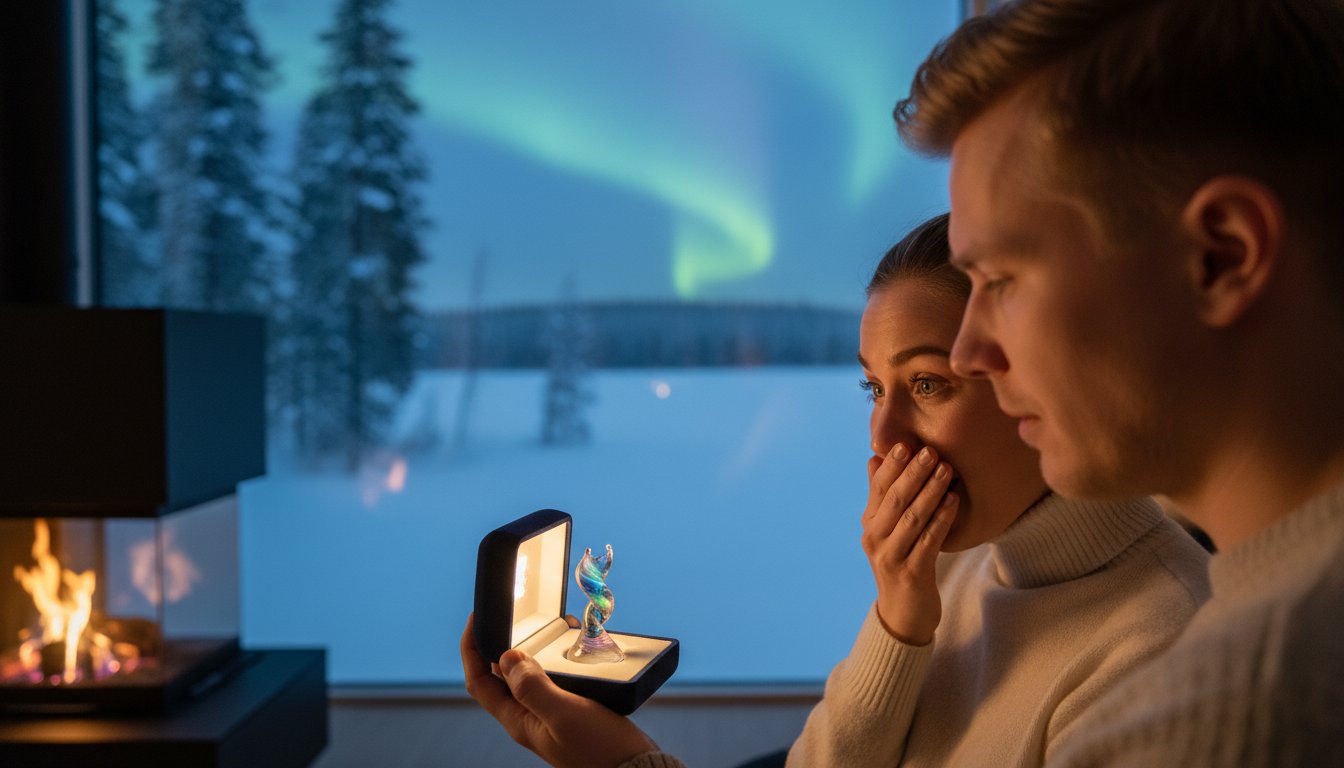
You don’t need a 25,000 ISK guided tour to witness the celestial dance of the Aurora Borealis. Armed with a standard rental car and a sense of timing, the night sky is yours. Download the Hello Aurora app to track real-time sightings from other travelers. Drive to dark sky spots like the Kleifarvatn lake or the Grótta Lighthouse, where light pollution is minimal. To succeed, consult the 2026 Icelandic Met Office digital interface to cross-reference high-altitude cloud transparency with real-time solar wind density for a precise visibility forecast. Patience is your only currency here; the most vibrant displays often occur in the quiet hours between midnight and 2:00 AM.
National Parks and Public Access
National parks like Thingvellir and Vatnajökull remain free to enter, though they utilize a modest parking fee system to maintain infrastructure. In 2026, standard passenger vehicles pay 1,000 ISK for a day pass at Thingvellir’s P1 or P5 lots. Hiking remains the ultimate budget activity, offering access to “pristine” hidden gems like the Glymur waterfall or the basalt columns of Stuðlagíal Canyon. By venturing beyond the Golden Circle, you find the rugged, uncrowded beauty that defines the Nordic spirit. These iceland on a budget tips ensure your journey remains focused on the landscape’s raw power rather than its price tag.
Discover how to weave these raw experiences into a perfectly planned itinerary with our curated Icelandic travel guides.
The Nordic Travel Philosophy: Meaningful Savings
True luxury in the North isn’t defined by the price of a hotel room. It’s found in the stillness of a pristine morning and the raw power of an untamed waterfall. Choosing to travel with intention allows you to allocate resources toward experiences that resonate with your personal narrative. These iceland on a budget tips focus on value rather than sacrifice. By prioritizing depth, you transform a standard holiday into a bespoke journey through an ethereal landscape. Investing in a single, high impact experience, like a private glacier hike or a handpicked farm to table dinner, creates a lasting memory that far outweighs the fleeting satisfaction of a dozen souvenir shops.
Slow Travel as a Budget Strategy
Staying for at least three nights in a single region, such as the rugged Westfjords or the South Coast, drastically alters your financial and environmental footprint. Moving to a new hotel every day increases fuel costs, which reached 315 ISK per liter in 2024. A stationary approach reduces these expenses by approximately 25 percent. It also opens doors to local community events. Attending a village’s “Sundlaug” evening or a local harvest festival provides authentic connection for less than 1,200 ISK. These moments offer a glimpse into the Icelandic soul that no crowded tour bus can replicate. You’ll find that the silence of the fjords becomes more profound when you aren’t rushing to the next GPS coordinate.
Your Seamless Next Steps
A curated journey requires a balance of spontaneity and meticulous planning. To ensure your 2026 adventure remains both exclusive and affordable, follow this final checklist for your bespoke itinerary:
- Secure handpicked accommodation: Book your stays at least 180 days in advance to lock in 2025 rates and ensure availability in boutique guesthouses.
- Embrace the “Quality over Quantity” mindset: Choose three key regions to explore deeply rather than attempting the entire Ring Road in a week.
- Connect with the culture: Visit local community centers for event listings. These gatherings are often free or low cost and offer genuine insight into the Nordic lifestyle.
- Prepare for the elements: Invest in high quality gear before you arrive to avoid the 30 percent markup at airport retail shops.
Your 2026 journey is an opportunity to witness the ethereal beauty of the North without the noise of mass tourism. For more inspiration on how to build your perfect path through the fire and ice, read our Iceland travel guide. This resource helps you integrate our iceland on a budget tips into a seamless, high end experience.
Ready to plan your journey? Explore our curated Nordic tours.
Embrace the Untamed Spirit of the North
Traveling through Iceland in 2026 doesn’t require a king’s ransom, it just needs a shift in perspective. You’ve discovered that booking your 4×4 rental at least 215 days in advance can slash transport costs by 30 percent. We’ve explored how prioritizing the 0-ISK wonders of the Westfjords offers a more profound connection to the earth than any crowded tourist trap. These iceland on a budget tips aren’t about cutting corners; they’re about choosing depth over distraction. Our approach combines 12 years of local expertise with a commitment to sustainable, meaningful exploration. You’ll find that the true luxury of the North lies in a pristine sunset over a rugged fjord. This is an experience that remains entirely free for those who know where to look. We’ve handpicked every recommendation to ensure your journey feels bespoke and seamless. The ethereal beauty of the island is waiting for your footprint. It’s time to turn your Arctic dreams into a reality that respects both the land and your resources.
Begin your curated journey with our 2026 Iceland guide
Your path to the extraordinary is clear. The Icelandic wind is calling, and the 2026 season promises a rare, quiet magic for those ready to embrace it.
Frequently Asked Questions
Is Iceland really as expensive as everyone says in 2026?
Iceland remains one of the world’s most expensive destinations in 2026, ranking 4th on the global cost of living index. A standard restaurant meal typically costs between $35 and $50 per person. You can still experience the ethereal beauty of the island by focusing on curated, value-driven choices. Budgeting for $120 per day allows for a comfortable, self-catered journey through the untamed landscape without sacrificing the quality of your experience.
What is the cheapest month to visit Iceland for budget travellers?
November and February offer the most significant savings for travelers seeking the pristine Icelandic winter. During these months, accommodation prices often drop by 40 percent compared to the peak July season. These months provide a seamless blend of lower costs and the high probability of witnessing the Aurora Borealis. Choosing these quieter periods ensures an exclusive feel at a fraction of the usual price while the landscape wears its rugged, snowy coat.
Can I see the Northern Lights in Iceland without a tour?
You can absolutely witness the ethereal dance of the Northern Lights without booking an expensive tour. Simply monitor the Vedur.is aurora forecast and drive to a location with zero light pollution outside the capital. Most sightings occur between September and April when the sky is dark and clear. This self-guided approach saves you roughly $100 per person while providing a private, bespoke experience under the vast Arctic stars.
How much should I budget per day for food in Iceland?
A daily food budget of $35 is achievable if you prepare your own meals using handpicked ingredients from local markets. A single hot dog at a gas station costs about $5; however, a sit-down dinner often exceeds $45 per plate. Following these iceland on a budget tips helps you allocate your resources toward once-in-a-lifetime experiences rather than overpriced tourist menus. It’s about finding the balance between simple sustenance and the occasional local delicacy.
Is it cheaper to rent a car or take the bus in Iceland?
Renting a small, fuel-efficient vehicle is more cost-effective than relying on public transport or private transfers for two or more people. Daily rentals in 2026 start at approximately $65, while a single airport shuttle ticket costs $35. A car grants you the freedom to explore rugged, off-the-beaten-path locations at your own pace. This independence is essential for a seamless and affordable exploration of the island’s untamed and pristine beauty.
Are there free hot springs in Iceland that are actually good?
Reykjadalur Steam Valley offers a pristine, free geothermal bathing experience just 45 minutes from Reykjavik. You’ll need to hike for about 3.5 kilometers to reach the warm river where the water temperature stays a perfect 38 degrees Celsius. Unlike the commercial spas, this natural wonder provides a raw connection to the earth’s heat. It’s a curated alternative for those who prefer the rugged charm of the wild over manicured tourist facilities.
Is the Blue Lagoon worth the money on a tight budget?
The Blue Lagoon’s $95 entry fee is often difficult to justify when you’re traveling on a strict budget. Local geothermal pools like Laugardalslaug cost only $10 and offer an authentic glimpse into Icelandic culture. If you desire a more exclusive atmosphere, the Sky Lagoon provides a similar luxury for $30 less than its more famous counterpart. These iceland on a budget tips ensure you enjoy the island’s warmth without the premium price tag.
What are the best discount supermarkets in Iceland?
Bónus and Krónan are the most reliable supermarkets for travelers looking to keep their expenses low. Prices at these stores are typically 25 percent lower than at smaller convenience shops like 10-11 or Kvikk. Look for the yellow pig logo of Bónus for the best deals on staples like skyr and rye bread. Shopping here allows you to maintain a bespoke diet while preserving your funds for unforgettable adventures in the wild.