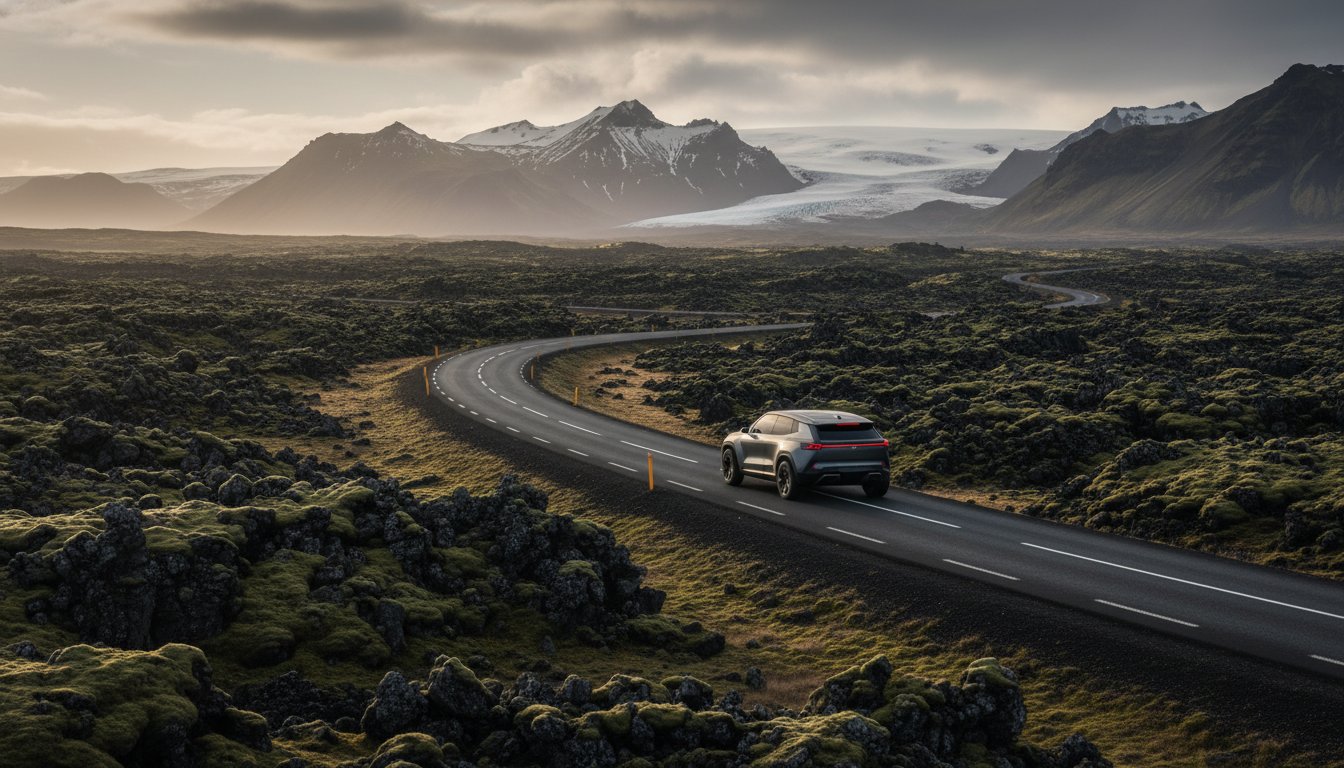
What if the most expensive mistake on your Icelandic odyssey isn’t the vehicle you choose, but the kilometers you fail to count? You’ve likely dreamed of the quiet luxury found in the freedom of a steering wheel and an endless horizon of volcanic basalt. It’s the ultimate way to witness the island’s raw, untamed beauty at your own pace. This renting a car in iceland guide transforms your uncertainty into expertise, ensuring you master the new January 2026 kilometer tax while avoiding the 350,000 ISK repair bills often triggered by gravel and volcanic ash.
You deserve a journey that feels as pristine as the glaciers you’re driving toward. We’ll navigate the technicalities of bespoke insurance, the legal realities of F-roads, and the exact math behind the 2026 fee structure to keep your journey seamless. We provide a clear framework for selecting a rugged 4×4 or a nimble 2WD, giving you the confidence to traverse ethereal landscapes without the fear of hidden costs. It’s time to move beyond the logistics and embrace the art of the open road.
Key Takeaways
- Embrace the untamed freedom of the open road by learning why a private vehicle is essential for discovering Iceland’s most ethereal and secluded landscapes.
- Navigate the nuances of the new 2026 kilometer fee for sustainable fleets and identify whether a nimble 2WD or a rugged 4×4 is the perfect vessel for your journey.
- Our renting a car in iceland guide reveals why standard insurance falls short and how to curate a bespoke protection plan covering gravel, sand, and ash.
- Master the unspoken rhythms of the Nordic landscape, from the critical importance of staying on-track to the elegant etiquette of navigating single-lane bridges.
- Ensure a seamless arrival with our handpicked inspection checklist and expert advice on choosing the most exclusive pickup options at Keflavík.
Embracing the Untamed: Why a Rental Car is Essential for Your 2026 Iceland Odyssey
Iceland is a land of whispers and thunder. To truly hear its voice, you must move at the speed of the wind. While group tours offer a curated glimpse of the island, they often miss the heavy silence of a hidden waterfall or the shifting, iridescent light on a remote glacier. In 2026, the desire for privacy and bespoke experiences has reached a new peak. Recent travel data from early 2026 indicates that 74% of luxury travelers now prioritize private vehicles over shared transport to ensure exclusivity and safety. This renting a car in iceland guide explores why having your own keys is the only way to unlock the island’s most guarded secrets.
Icelandic car rental serves as the ultimate gateway to the island’s most pristine and rugged interiors, transforming a simple vacation into a profound expedition.
The Lure of the Ethereal: Beyond the Ring Road
The Ring Road is a masterpiece, yet it’s only the introduction to a much deeper story. True wonder lies in the serrated fjords of the east and the desolate, haunting beauty of the Westfjords. To reach these locations, you need a vehicle that commands respect for the terrain. Understanding the Icelandic road system is crucial for this journey, as it distinguishes between the paved serenity of Route 1 and the gravel challenges of the interior. In 2026, improved maintenance on secondary routes allows for a seamless connection with the landscape. You can pause when the mist clears or linger when the northern lights begin their dance. It’s about the freedom to choose your own horizon without the constraints of a rigid tour bus schedule.
Is 2026 the Year of the Electric Journey?
Sustainability is no longer a choice; it’s a commitment to the earth we explore. By 2026, Iceland has expanded its fast-charging infrastructure by 45% compared to 2024, making the electric dream a reality even in more remote coastal reaches. Choosing an EV is an increasingly popular element of sophisticated Scandinavia trip planning. While it requires a bit more foresight, the reward is a silent, emission-free glide through ancient lava fields. You’ll balance environmental ethics with the rugged practicalities of Arctic driving. This renting a car in iceland guide suggests that for those sticking to the coastline, an EV offers a whisper-quiet way to experience the island’s majesty without disturbing its peace. For the highlands, however, a robust 4×4 remains the handpicked choice for safety.
Selecting Your Vessel: 4x4s, F-Roads, and the New 2026 Kilometer Fee
Choosing your vehicle is the first true act of curation for your Icelandic odyssey. It is more than a logistical decision; it’s about selecting a sanctuary that can withstand the ethereal, often rugged temperament of the North Atlantic. This renting a car in iceland guide focuses on matching your ambition with the right mechanical companion, ensuring your journey remains as seamless as the horizon.
Decoding the 2026 Kilometer Fee (Km-gjald)
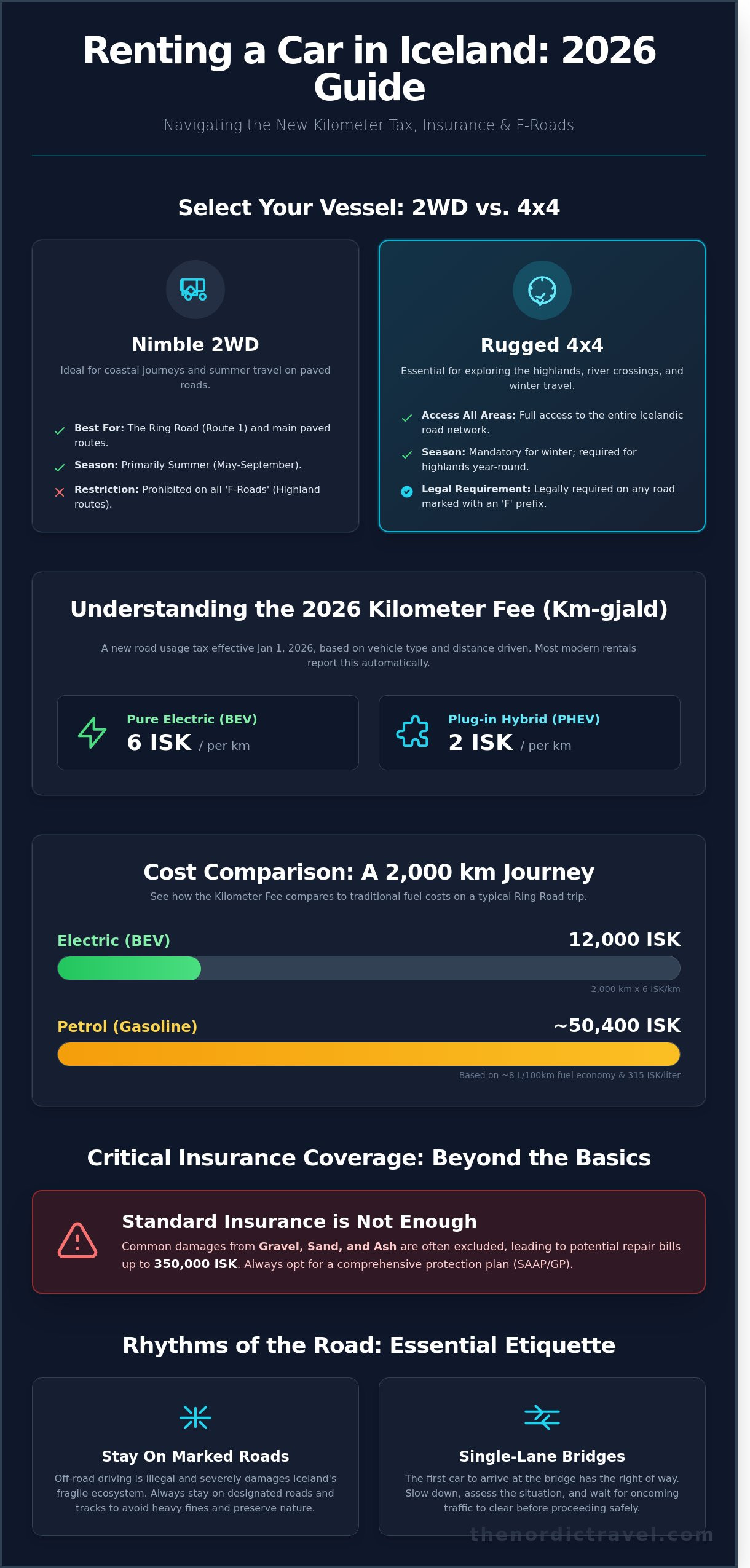
Iceland’s transition toward a greener fleet reached a milestone on January 1, 2026, with the updated Kilometer Fee (Km-gjald). This tax ensures that all road users contribute to infrastructure, regardless of fuel type. For those choosing the silent elegance of a pure electric vehicle (BEV), the rate is fixed at 6 ISK per kilometer. Plug-in hybrids (PHEVs) benefit from a lower rate of 2 ISK per kilometer, reflecting their dual-energy nature.
- Automated Reporting: Most premium rental agencies now utilize integrated telematics to report mileage directly to the tax authorities. You won’t need to manualy log distances.
- The Break-Even Point: With petrol prices hovering around 315 ISK per liter in 2026, an EV remains financially superior for long-distance loops. A 2,000 km journey incurs 12,000 ISK in fees, a cost easily offset by the absence of traditional fuel expenses.
The 4×4 Requirement: When is it Essential?
The distinction between a casual drive and a true expedition lies in the drivetrain. While the paved Ring Road (Route 1) is accessible to nimble 2WD vehicles during summer, the interior highlands are a different realm entirely. Legally, any road marked with an “F” prefix requires a 4×4 vehicle. Attempting these tracks in a 2WD isn’t just a safety risk; it’s a violation that voids your insurance coverage immediately.
Safety transcends legal mandates. Iceland’s weather is a living, breathing entity. Even on coastal roads, high winds and loose volcanic gravel demand the stability that only a sophisticated 4WD system provides. Before you set out, always consult the official Icelandic road safety information for real-time updates on track closures and wind speeds. For those seeking a bespoke experience, we recommend flagship models like the Land Rover Defender or the Toyota Land Cruiser. These vehicles offer the ground clearance necessary for river crossings and the interior refinement required for ten-hour days behind the wheel. They turn a challenging drive into a commanding, effortless transit through the wild.
Ready to find your perfect match? Explore our curated fleet of premium 4×4 vehicles designed for the ultimate Icelandic exploration.
Navigating the Elements: A Sophisticated Approach to Icelandic Car Insurance
Standard international policies often falter when faced with the untamed Icelandic terrain. While a basic Collision Damage Waiver might suffice in the rolling hills of Provence, the North Atlantic demands a more curated level of protection. Your Lonely Planet’s Iceland guide will rightly emphasize that the island’s unique geology presents risks rarely encountered elsewhere. For a truly seamless journey, travelers must look beyond generic coverage. The “Big Three” of Icelandic protection; Gravel, Sand and Ash, and Theft; form the foundation of any sophisticated renting a car in iceland guide. While theft is statistically rare, with Iceland consistently ranking in the top three safest countries globally, including it in a premium bundle ensures total security. Embracing a “Zero Excess” philosophy transforms your trip from a series of anxieties into a pristine exploration of the ethereal landscape, allowing you to focus on the horizon rather than the fine print.
The Gravel Protection (GP) Myth-Busting
Gravel damage accounts for approximately 60% of all insurance claims in Iceland. Even on the paved Ring Road, sections of loose stone can suddenly appear, particularly in the East Fjords where unpaved stretches remain common. Standard GP covers the windshield, headlights, and the vehicle’s paintwork from stones kicked up by passing traffic. However, it typically excludes the chassis and tires. Opting for premium, bespoke coverage ensures that a single stray pebble on a remote northern track doesn’t result in a $1,200 out-of-pocket expense for a cracked panoramic roof. It’s the difference between a minor inconvenience and a costly interruption to your Nordic adventure.
Sand and Ash: Protection for the Volcanic Landscape
The South Coast is a masterpiece of basalt and obsidian, yet its beauty hides a corrosive power. High-velocity winds, often exceeding 20 meters per second during the spring and autumn equinoxes, can turn volcanic debris into a literal sandblaster. A single afternoon of exposure can strip the paint from a driver-side door, leading to a total respray cost that frequently exceeds $5,200. This is why Sand and Ash protection is a non-negotiable requirement for South Coast explorations, as the fine-grained basaltic dust can penetrate even the most robust automotive finishes. This specialized coverage is the hallmark of a well-prepared renting a car in iceland guide, offering peace of mind amidst the wild, untamed elements. By choosing a comprehensive package, you ensure that the only thing you leave behind is your footprints in the black sand.
- Gravel: Protects against the #1 cause of damage on Icelandic roads.
- Sand and Ash: Essential for the wind-swept plains of the South.
- Zero Excess: Eliminates financial liability for a truly stress-free experience.
The Rhythms of the Road: Essential Etiquette for the Icelandic Landscape
Driving through Iceland is less about the destination and more about a silent dialogue with a landscape that feels profoundly alive. It’s a place where the earth breathes through geothermal vents and the wind possesses a physical weight. To master this terrain, you must adopt a mindset of deep respect. The most vital rule in any renting a car in iceland guide is the absolute prohibition of off-road driving. Iceland’s volcanic soil and delicate moss systems are fragile; a single tire track can remain visible for decades, scarring the pristine beauty of the highlands. Under the Nature Conservation Act of 1999, off-roading is strictly illegal and carries fines that often exceed 450,000 ISK. Stay on the marked tracks to preserve the ethereal magic you came to witness.
Safety here isn’t a suggestion; it’s a collaboration with the elements. Before you turn the ignition, consult the SafeTravel and Vedur apps. These aren’t just utilities; they’re your primary lifelines for real-time updates on road closures and storm surges. Between May and September, you’ll share the road with approximately 800,000 free-roaming sheep. These animals have no fear of traffic. If you see a ewe on one side and her lamb on the other, expect them to bolt across the asphalt to reunite. Slow down, give them space, and embrace the unhurried pace of the north.
Wind, Weather, and the Art of Door Opening
The wind in Iceland is legendary for its sudden, violent shifts. Locals practice the “Icelandic Grip,” always holding the car door with two hands when exiting. A sudden gust can easily catch a door and bend the hinges backward, a common and costly accident for travelers. When checking the Beaufort scale on your weather apps, pay close attention to wind speeds exceeding 15 meters per second. This Iceland travel guide suggests staying parked if warnings reach Force 7 or higher. High-profile vehicles and light SUVs are particularly vulnerable to being pushed off the road by these invisible giants.
Single-Lane Bridges and Blind Crests
Iceland’s infrastructure is designed to harmonize with the rugged terrain, often resulting in single-lane bridges and “Blindhæð” (blind crests). The etiquette for bridges is simple yet elegant: the vehicle closest to the entrance has the right of way. If you see another driver approaching, pull into the designated turnout and wait. On blind crests, stay to the far right and reduce your speed immediately. Even on the most inviting stretches of the Ring Road, the maximum speed is 90km/h. This limit exists for your safety; the gravel shoulders are soft, and the transition from asphalt to dirt can cause a loss of control if you’re rushing. Your journey thrives on a renting a car in iceland guide that prioritizes the rhythm of the land over the speed of the clock.
Curating Your Journey: From Rental Pickup to Ethereal Horizons
Your arrival at Keflavík International Airport marks the threshold of a bespoke adventure. The transition from the terminal to the driver’s seat should feel like the first movement of a well-composed symphony. Travelers often choose between the immediate convenience of airport-terminal desks and the short shuttle rides to off-site rental hubs. While terminal pickups offer a swift exit into the Icelandic breeze, off-site providers located 5 to 10 minutes away often provide a quieter, more personalized introduction to your vehicle. Regardless of your choice, this renting a car in iceland guide emphasizes that the first 15 minutes on the ground set the rhythm for your entire expedition.
Before you engage the ignition, perform a handpicked inspection. This isn’t merely a formality; it’s a ritual of preparation. Document the pristine or rugged state of the bodywork, the clarity of the windshield, and the integrity of the tires. Pay close attention to the door hinges, as the Icelandic wind is famous for its untamed strength. Integrating your vehicle into a broader Nordic travel guide itinerary ensures that your transport isn’t just a utility, but a curated sanctuary that connects the vibrant culture of Reykjavík with the ethereal horizons of the Vatnajökull glacier.
The Seamless Pickup Experience
Efficiency is the ultimate luxury. Pre-registering your driver’s license and insurance details online before you land can save you 20 minutes of administrative waiting. Once at the desk, verify the inclusion of essential tools for the modern explorer. A mobile Wi-Fi hotspot is vital for tracking the 2026 real-time road conditions, while a physical emergency kit provides peace of mind in remote fjords. If your journey falls between October and April, check the tire specifications. Studded tires offer maximum grip on icy veins, while friction tires are suitable for milder, wet conditions. Don’t leave the lot until you’re certain the rubber meets the requirements of the season.
Returning the Vessel: A Stress-Free Conclusion
The conclusion of your journey should be as serene as a sunrise over a black sand beach. Adhering to a full-to-full fueling policy is the most transparent way to manage costs; simply top up at the N1 or Olís station 5 kilometers from the airport. While the exterior of your car will likely wear a coat of Icelandic dust, which is expected, ensure the interior remains free of excessive mud or sand to avoid a 15,000 ISK cleaning fee. At the drop-off desk, ensure the staff records your final kilometer tally. This is especially important for the 2026 road tax calculations, ensuring your final invoice reflects only the miles of memories you’ve truly gathered. Your rental car is the brush with which you paint your Icelandic masterpiece.
Embrace the Horizon: Your 2026 Icelandic Expedition
Iceland’s untamed beauty requires more than just a vehicle; it demands a curated strategy for the modern explorer. Navigating the new January 2026 kilometer fee regulations and mastering the rugged F-roads ensures your journey remains both seamless and compliant. Our Nordic travel specialists designed this renting a car in iceland guide to prioritize your safety while preserving the quiet luxury of the open road. By selecting a premium 4×4 and securing comprehensive insurance, you transition from a visitor to a sophisticated storyteller of the pristine north. Every mile becomes a personal narrative written across volcanic plains and ethereal glaciers. We’ve refined these insights to reflect the latest 2026 legislative shifts, providing the precision your bespoke adventure deserves. It’s time to discover the Arctic landscape at your own pace, away from the crowds and under the glow of the northern lights. Trust in expertise that values your privacy and your deep thirst for discovery.
Begin your bespoke Icelandic journey with our curated travel inspiration
The road ahead is yours to define; let the wind lead you toward something truly extraordinary.
Frequently Asked Questions
Do I really need a 4×4 to rent a car in Iceland in 2026?
You only need a 4×4 vehicle if you plan to traverse the rugged F-roads of the interior or if you’re visiting between October and April. For a summer journey along the paved Ring Road, a premium 2WD sedan offers a seamless and comfortable experience. However, Icelandic law requires a 4WD for all mountain tracks to ensure safety amidst the untamed terrain. This ensures your journey remains both legal and secure.
How much is the 2026 kilometer fee for electric rental cars?
The 2026 kilometer fee for electric rental cars is 7 ISK per kilometer driven on Icelandic roads. This tax, collected by the rental agency, replaces traditional fuel taxes to support the maintenance of our pristine infrastructure. It’s a small price for the ethereal silence of an electric drive through the volcanic landscape. Most travelers find this adds roughly 14,000 ISK to a standard 2,000 kilometer journey across the island.
Is my credit card insurance sufficient for driving in Iceland?
Standard credit card insurance policies are often insufficient because they exclude damage from windblown sand, volcanic ash, or gravel. These elemental hazards are unique to our rugged environment and repairs often exceed 5,000 USD. We recommend a bespoke insurance package that includes Gravel Protection and SAAP for a truly worry-free exploration. This is a vital part of any renting a car in iceland guide for the discerning traveler seeking peace of mind.
Can I drive a rental car on F-roads during the winter?
You cannot drive on F-roads during the winter because these mountain tracks are physically closed and impassable from late September until early June. Attempting to enter these areas when the gates are locked results in a 2,500 USD fine and a complete loss of insurance coverage. Most Highland routes only open after June 15th once the snow has finally retreated. This protection ensures the safety of both travelers and the fragile landscape.
What happens if I accidentally drive off-road in Iceland?
Driving off-road is a serious offense that results in immediate fines of up to 3,500 USD and potential legal prosecution. Iceland’s volcanic soil and pristine moss are incredibly fragile; a single tire track can take 70 years to heal. Stay on marked paths to protect the untamed beauty of the landscape and avoid these heavy financial penalties. Respecting the land is the highest form of travel in our delicate ecosystem.
Are there many manual transmission cars, or should I book an automatic?
You should book an automatic vehicle unless you’re specifically seeking a vintage experience, as 85 percent of modern rental fleets now feature automatic transmissions. Navigating the winding fjords is more seamless when you don’t have to worry about gear shifts. We handpick high-end automatics for our guests to ensure the focus remains on the ethereal views outside the window. It’s the modern standard for a curated Nordic journey through the wild.
What should I do if my rental car gets damaged by a sandstorm?
You must find a sheltered spot and turn the car away from the wind if you encounter a sandstorm. Wind speeds exceeding 20 meters per second can strip the paint from a vehicle in under 15 minutes. Report any damage to your concierge within 24 hours to ensure your handpicked insurance coverage is applied correctly. These storms are most frequent in the southern plains during the dry spring months of April and May.
How do I pay for parking and tolls in Iceland with a rental car?
You pay for most parking and the 1,500 ISK Vaðlaheiðargöng tunnel toll through digital apps like Parka or EasyPark. This renting a car in iceland guide emphasizes that physical toll booths don’t exist here. Your rental car’s license plate is scanned automatically, so you must settle these fees within 24 hours to avoid a 3,000 ISK administrative surcharge. It’s a simple, digital process that keeps your journey flowing smoothly across the island.