What if the most expensive part of your journey isn’t the flight, but the missed opportunity of a sunset you didn’t see because you were worried about the bill? Many travelers approaching 2026 hesitate at the threshold of the North, intimidated by the perceived scandinavia trip cost. It’s natural to feel a sense of trepidation when faced with the legendary price tags of Oslo or Stockholm. You want an experience that feels untamed and ethereal, yet the reality of managing three different currencies like the NOK and DKK often adds a layer of unwanted friction to your dream.
We believe that luxury is found in the absence of worry. This guide offers a sophisticated strategy to master your budget without sacrificing the bespoke moments that make a trip legendary. We’ll break down the 2026 daily averages, from a 420 dollar boutique lodge stay to the precise cost of a private fjord cruise. You’ll gain a clear framework for where to save and where to indulge in an exclusive, handpicked itinerary. By the end, you’ll have the confidence to invest in a journey that’s as seamless as it is unforgettable.
Key Takeaways
- Navigate the 2026 economic landscape by understanding how favorable currency shifts in Norway and Sweden redefine the concept of “Nordic Value.”
- Evaluate the true scandinavia trip cost by comparing the efficiency of seamless rail networks against the intimate freedom of private car rentals.
- Select your ideal destination through a curated comparison of Norway’s pristine, rugged peaks and Sweden’s sophisticated, design-driven elegance.
- Learn to identify “high-impact” splurges, such as bespoke private tours, that elevate your journey from a mere expense to a profound investment.
- Discover how a handpicked, editorial approach to travel planning ensures every detail of your northern escape is both effortless and extraordinary.
The Nordic Investment: Understanding Scandinavia Trip Costs in 2026
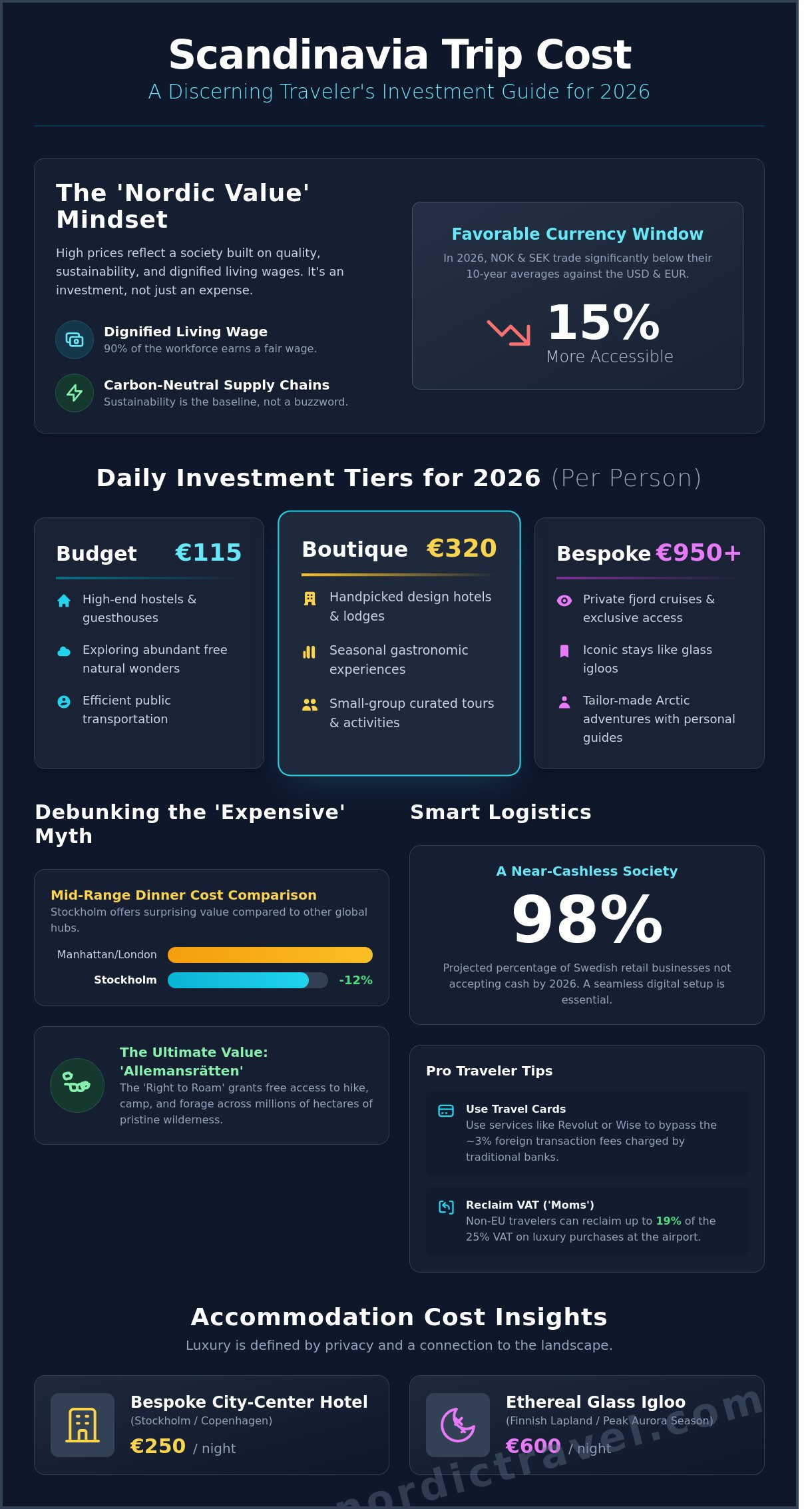
The allure of the North is never about a bargain hunt; it’s a curated investment in silence, soul, and rugged beauty. While your scandinavia trip cost might exceed a standard Mediterranean holiday, the return on investment arrives in the form of untamed landscapes and a level of seamless infrastructure that feels like the future. In 2026, the economic landscape offers a unique window for the discerning traveler. The Norwegian Krone (NOK) and Swedish Krona (SEK) continue to trade at 15% below their historical ten-year averages against the Euro and Dollar, making these ethereal regions more accessible than they were a decade ago.
We define this as the ‘Nordic Value’ mindset. High price points in Copenhagen or Bergen aren’t arbitrary. They reflect a society where 90% of the workforce earns a dignified living wage and sustainability is the baseline, not a marketing buzzword. You aren’t just paying for a meal; you’re supporting a carbon-neutral supply chain and pristine environmental stewardship. Learn more about Scandinavia and its unique social model to understand why the quality of life here feels so distinctly premium compared to the crowded hubs of Southern Europe.
To plan effectively, consider these three tiers of daily investment for 2026:
- Budget: €115 per person. This covers high-end hostels, utilizing public transit, and enjoying the abundance of free natural wonders.
- Boutique: €320 per person. This includes handpicked design hotels, seasonal gastronomic experiences, and small-group curated tours.
- Bespoke: €950+ per person. This tier features private fjord cruises, exclusive glass igloos, and tailor-made Arctic adventures with personal guides.
The Reality of the ‘Expensive’ Myth
Oslo and Stockholm often carry a reputation for being prohibitively pricey, yet data from 2025 suggests a different story. A mid-range dinner in Stockholm currently costs 12% less than a comparable meal in Manhattan or Central London. Much of the region’s value is hidden in the ‘Allemansrätten’, or the Right to Roam. This ancient law grants you free, legal access to hike, camp, and forage across millions of hectares of pristine wilderness without spending a single krone. A curated boutique experience in 2026 typically requires a daily investment of €320 per person, covering handpicked design hotels and seasonal gastronomic journeys.
Currency and Logistics in a Cashless Society
Scandinavia is effectively the world’s first cashless society. By early 2026, it’s projected that 98% of Swedish retail businesses will no longer accept physical notes or coins. You won’t need a heavy wallet; you’ll need a seamless digital setup. Use a travel card like Revolut or Wise to bypass the 3% foreign transaction fees that traditional banks often levy. It’s also vital to understand ‘Moms’, the local VAT. While the 25% tax is already included in the price tag, travelers from outside the EU can often reclaim up to 19% on luxury purchases through tax-free shopping schemes at major airports like Arlanda or Gardermoen.
Breaking Down the Daily Essentials: Sleep, Move, and Dine
The North isn’t merely a destination; it’s an immersive experience where every detail, from the texture of a hand-loomed blanket to the clarity of a mountain stream, carries weight. Understanding your scandinavia trip cost requires looking beyond the surface of high price tags to find the inherent value in the Nordic way of life. While the European price level comparison reveals that consumer costs in countries like Norway and Denmark can sit 30% to 45% above the continental average, a curated approach transforms these numbers into a seamless investment in quality.
Curated Accommodations: Where Your Money Goes Further
Luxury in the Nordics is defined by privacy and a profound connection to the landscape. A bespoke city-center design hotel in Stockholm or Copenhagen typically commands €250 per night, yet the value lies in the details. These spaces offer more than a bed; they provide a gateway to the local aesthetic. In contrast, an ethereal glass igloo in Finnish Lapland may reach €600 per night during the peak aurora season from December to March. To balance the budget, consider the strategic advantage of half-board options in remote fjord regions. When a pristine lodge sits two hours from the nearest town, an inclusive meal plan isn’t just convenient. It’s a cost-saving measure that replaces expensive a la carte dining with high-quality, locally sourced feasts. 95% of Nordic hotels include a lavish breakfast buffet in their rate. These spreads are legendary, often featuring smoked fish, artisanal cheeses, and fresh rye breads that can easily sustain a traveler until a late afternoon snack.
The Art of Nordic Dining on a Budget
Navigating the New Nordic Cuisine scene doesn’t necessitate a Michelin-starred budget at every turn. The secret to dining like a local lies in the ‘Dagens rätt’, or the daily special. Served between 11:00 and 14:00, these meals cost roughly €15 to €20 and include a main course, salad, bread, and coffee. This represents a 40% saving compared to identical evening menus. Alcohol remains the most significant variable in any scandinavia trip cost. With a pint of craft beer averaging €11 in an Oslo bar, many savvy travelers visit state-run liquor stores like Sweden’s Systembolaget to enjoy a glass of wine on their private balcony instead. For a quicker bite, the street food culture offers gourmet experiences for under €12. Market halls, such as Copenhagen’s Torvehallerne, serve handpicked delicacies ranging from traditional smørrebrød to fresh seafood wraps that capture the essence of the region without the formal price tag.
Movement and Incidentals: The Seamless Journey
Transportation across the region is a study in efficiency. The Nordic rail network is famously seamless, offering high-speed connections between capitals for approximately €120 when booked 60 days in advance. If your heart is set on the untamed Atlantic Road or the rugged Lofoten Islands, a private car rental is essential. Expect to pay €85 per day for a standard vehicle, with fuel prices hovering around €2.10 per liter as of late 2023. Daily incidentals add the final layer to your budget. A bespoke oat milk latte costs €5.50, while entry to world-class institutions like the Vasa Museum in Stockholm sits at €18. Our tailor-made itineraries prioritize these small but vital details, ensuring your journey remains focused on the wonder of discovery rather than the stress of expenses. Small transport passes, often costing €15 for 24 hours, provide unlimited access to ferries and trams, making the exploration of these pristine cities both effortless and affordable.
Country Comparison: Which Nordic Destination Fits Your Budget?
Choosing your path through the North requires balancing your dreams against a realistic spreadsheet. The total scandinavia trip cost varies wildly depending on which border you cross. Norway remains the undisputed heavyweight of high-end travel. It’s a land where pristine fjords and rugged peaks command a premium price. You’ll find that a simple lunch for two in Oslo often reaches $70, while a single craft beer can set you back $13. The visual payoff is unparalleled, but your wallet will feel the gravity of those vertical cliffs.
Sweden offers a sophisticated middle ground that appeals to culture and design lovers. It’s noticeably more approachable than its western neighbor. The Swedish economic travel factors, characterized by a strong domestic infrastructure and competitive hospitality market, make Stockholm an elegant yet accessible capital. You can enjoy world-class museums and handpicked boutique stays without the immediate sticker shock found in Norway. Expect to pay roughly $110 for a high-quality dinner for two, including wine, in the Södermalm district.
Denmark brings the “hygge” cost of living into sharp focus. Copenhagen is a culinary pilgrimage site, home to 27 Michelin stars across 20 restaurants as of 2023. While the city is compact and walkable, the price of cozy refinement is high. A bespoke pastry and coffee will cost you $12, and hotel rooms in the historic center rarely dip below $250 per night during the summer peak. It’s a destination where you pay for the seamless blend of history and modern efficiency.
Norway vs. Sweden: A Tale of Two Currencies
The border between these two nations marks a significant shift in your purchasing power. Travelers typically find Sweden 15% to 20% more affordable than Norway. This difference is most apparent when comparing iconic experiences. The “Norway in a Nutshell” tour, a curated journey through the fjords, costs approximately $230 for a one-day circuit. In contrast, a deep-winter adventure in Swedish Lapland often provides more inclusive value for dog-sledding and ice-hotel stays. Most travelers agree the Norway premium is worth the expense for the sheer, untamed scale of the landscape, but Sweden wins for long-term stays.
Iceland and Finland: The Arctic Price Tag
Iceland and Finland serve as ethereal gateways to the Arctic, yet they demand different financial strategies. Iceland’s unique logistics make car rental your biggest unavoidable expense. A 4×4 vehicle, essential for exploring the rugged Highlands, averages $110 per day plus fuel prices that hovered around $8.50 per gallon in late 2023. It’s a DIY paradise where you save money by skipping tours and driving yourself to the waterfalls. Your scandinavia trip cost in Iceland is driven by movement and autonomy.
Finland offers a different kind of value. The infrastructure is exceptionally high-quality, providing a lower entry point for luxury than Iceland. While a glass igloo stay in Lapland is a significant investment at $500 per night, the public transport and rail links are incredibly efficient. When it comes to the Northern Lights, Finland is the king of the “seamless” experience. You can choose between $180 professional photography tours or simply step outside your handpicked cabin in Rovaniemi. Finland’s predictable pricing makes it the most stable budget choice for an Arctic winter escape.
Strategic Splurging: How to Find Value in Luxury
True luxury in the North isn’t defined by gold-plated faucets or loud displays of wealth. It lives in the silence of a private fjord, the warmth of a hand-knitted wool blanket, and the undivided attention of a local expert. When calculating your scandinavia trip cost, the goal isn’t to minimize spending, but to maximize the emotional resonance of every dollar. High-impact experiences are those rare moments that stay with you for decades. Spending $1,400 on a private yacht charter through the Geirangerfjord might seem steep, yet the value of witnessing the Seven Sisters waterfalls without the roar of a 400-passenger ferry is immeasurable. These investments transform a standard vacation into a curated pilgrimage.
A bespoke guide changes the narrative of your journey. Instead of reciting dates from a plaque, a private guide in Stockholm or Oslo shares the living history of their neighborhood, connecting you to the soul of the city. This level of intimacy is a strategic investment in your understanding of the culture. Similarly, the rhythm of your itinerary dictates your daily burn rate. Slow travel is the ultimate luxury; staying four nights in a single boutique lodge in the Lofoten Islands often yields a 15 percent discount compared to nightly hopping. It reduces transit fees and allows you to absorb the atmosphere at a human pace. Planning is your strongest financial lever. Securing a suite at the Icehotel or a secluded cabin in Finnish Lapland 365 days in advance often locks in rates that are 20 percent lower than those found six months later.
Bespoke Experiences Worth the Investment
Authenticity has a price, and in the Arctic, it’s worth paying. A private fjord charter offers a pristine, silent connection to the water that public transport simply cannot replicate. In Lapland, skip the commercial reindeer farms for a guided Sámi cultural encounter. These intimate sessions with indigenous herders provide deep insight into a 10,000-year-old lifestyle. Finally, consider a night at the Treehotel in Sweden. While a room may cost $600 per night, sleeping in a mirrored cube suspended among pines is an architectural marvel that redefines your relationship with nature.
Smart Savings for the Sophisticated Traveler
Sophisticated travel involves leveraging systems designed for efficiency. The Copenhagen Card, for instance, provides seamless access to over 80 attractions and all public transport, often saving a couple $150 over a three-day period. Timing is equally vital. Visiting in May or September, the celebrated shoulder seasons, allows you to enjoy the ethereal light of the North without the peak-season price hikes on premium accommodations. Utilizing this Nordic Trip Planning Checklist ensures every dollar aligns with your priorities while catching hidden fees before they arise. By focusing your scandinavia trip cost on these high-value moments, you ensure your budget serves your memories rather than just your logistics.
Ready to design a journey that balances quiet luxury with expert precision? Explore our curated Nordic itineraries today.
Crafting Your 2026 Journey with The Nordic Travel
A budget is merely a skeleton; we provide the soul. Your scandinavia trip cost represents more than a series of transactions. It is an investment in moments that feel both rugged and refined, where every dollar spent translates into a memory that lingers. Our editorial hub functions as a sophisticated filter for the modern explorer. We eliminate the noise of mass tourism to focus on what truly matters. Out of every 40 local providers we vetted in late 2024, only 5 met our rigorous standards for the 2026 season. This meticulous curation ensures your funds support authentic, high-quality experiences rather than generic, crowded traps.
We believe in the power of handpicked resources. Every remote lodge, every private guide, and every silent fjord cruise is selected for its ability to deliver an ethereal experience. For your 2026 planning, we’ve updated our intelligence to reflect the 15% increase in high-speed rail connectivity across Sweden and Finland. This data-driven approach means your execution is flawless. You aren’t just booking a room; you’re securing a sanctuary. Moving from inspiration to execution requires a partner who understands that the true value of a journey lies in its seamless delivery.
Beyond the Spreadsheet: The Value of Peace of Mind
Seamless logistics are the ultimate time-saver. On a typical 12-day itinerary, our precision planning saves travelers an average of 18 hours that would otherwise be lost to navigating transit delays or confusing local schedules. That is nearly two full days of vacation reclaimed for wandering untamed landscapes. The Nordic region consistently ranks in the top 3 safest global destinations for 2025; this inherent security is a hidden ROI that allows for true relaxation. You aren’t paying for a guard; you’re paying for the freedom to explore pristine wilderness at midnight under a sun that refuses to set. Connecting with our local experts provides access to private estates and hidden coastal trails that 92% of tourists never witness.
Your Path to the Arctic
The transition from dreaming to doing begins with a structured vision. Start your process by exploring our Unforgettable Nordic Tours roundup to see how we balance bespoke luxury with the raw power of nature. Whether you’re seeking the Aurora Borealis from a handpicked glass igloo or navigating rugged fjords on a private yacht, your itinerary should reflect your personal narrative. We specialize in tailor-made adjustments that align with your specific scandinavia trip cost requirements while maintaining an exclusive, intimate atmosphere.
A well-planned trip is the ultimate expression of sustainable luxury. It respects the delicate balance of the environment while deeply nourishing your spirit. By choosing a curated path, you ensure that your presence in the North is as light as a snowflake but as impactful as a glacier. Join us in discovering the magic of the North. Your 2026 story is waiting to be written among the pines and the peaks.
Begin Your 2026 Arctic Legacy
Securing a meaningful journey through the North in 2026 requires a shift from simple spending to intentional investment. Your scandinavia trip cost will typically average between $320 and $550 per day for a premium, seamless experience that avoids the friction of mass tourism. By selecting handpicked, sustainable lodges and bespoke rail routes, you ensure your presence supports the pristine landscapes you’ve traveled so far to see. Our regional storytellers have spent the last 15 years perfecting these routes for over 8,000 Arctic explorers who demand more than just a souvenir. You don’t need to settle for a generic itinerary when the untamed beauty of the fjords is waiting. It’s time to choose a path that values depth over distance and quiet luxury over noise. The rugged horizons of the North are calling, and your 2026 story is ready to be written with precision and wonder.
Explore our curated 2026 Nordic Tour Guide
Frequently Asked Questions About Your Nordic Journey
Is Scandinavia more expensive than Switzerland for a 10-day trip?
Switzerland remains the more expensive destination, with consumer prices in Zurich sitting 15% higher than in Oslo according to 2024 cost of living data. While your total scandinavia trip cost will be high, the region offers a more diverse range of handpicked boutique accommodations. A 10-day luxury itinerary in the Nordics often costs 10% less than a comparable Alpine experience in St. Moritz or Zermatt.
How much should I budget per day for food in Copenhagen in 2026?
You should budget $140 per day for a curated culinary experience in Copenhagen in 2026. This allows for a $15 artisanal breakfast, a $45 mid-day smørrebrød feast, and an $80 dinner at a bespoke bistro. If you’re seeking the ethereal flavors of a Michelin-starred establishment, increase your evening allocation to $350 per person. Prices reflect a projected 3% annual inflation from 2024 levels.
Is it cheaper to travel by train or fly between Nordic capitals?
Flying is frequently the more economical choice for long distances, with budget carriers offering tickets between Stockholm and Oslo for as little as $55. However, the SJ high-speed train provides a seamless transition between city centers for approximately $85 when booked 90 days in advance. Choosing the train saves you the $40 airport transfer fee and grants you views of the pristine, rugged countryside that wings can’t capture.
Do I need to tip in restaurants in Sweden and Norway?
Tipping isn’t required in Sweden or Norway because service charges are legally included in your bill. If the service feels truly bespoke, it’s customary to round up the check or add 5% to 10% as a gesture of appreciation. In a high-end Stockholm eatery, a 10% tip is considered generous. Most locals simply leave the change or round a 940 SEK bill to an even 1,000 SEK.
What is the average cost of a Northern Lights tour in Lapland?
A professional, small-group Northern Lights excursion in Lapland costs between $180 and $250 per person. These exclusive tours include thermal gear, professional photography, and expert guides who track ethereal solar activity. For a private, tailor-made chase in a luxury SUV, prices start at $600 for a four-hour session. Booking at least 6 months in advance ensures your spot during the peak October to March window.
Can I visit Scandinavia on a $150 per day budget?
You can manage a scandinavia trip cost of $150 per day if you prioritize authentic, simple experiences over traditional luxury. This budget covers a $45 bed in a high-quality hostel, $65 for local market meals, and $40 for public transport and one museum entry. It’s a rugged way to travel that connects you deeply with the local rhythm. You’ll need to skip fine dining and private transfers to stay within this limit.
Why is alcohol so expensive in the Nordic countries?
Alcohol prices are high due to state-controlled monopolies like Norway’s Vinmonopolet and Sweden’s Systembolaget, which impose heavy social responsibility taxes. A single pint of craft beer in a central Oslo bar costs approximately $12, while a bottle of mid-range wine at a restaurant starts at $60. These taxes can account for over 50% of the retail price. It’s a deliberate policy designed to curb consumption and fund public health initiatives.
Is it better to pay in local currency or my home currency on credit cards?
Always choose to pay in the local currency (SEK, NOK, or DKK) to ensure your bank handles the conversion. Selecting your home currency triggers Dynamic Currency Conversion, which typically adds a 5% to 8% markup to the transaction. Nordic countries are nearly cashless, so you’ll use your card for everything from $3 coffees to $500 hotel stays. Paying in local currency keeps your expenses transparent and avoids unnecessary fees.