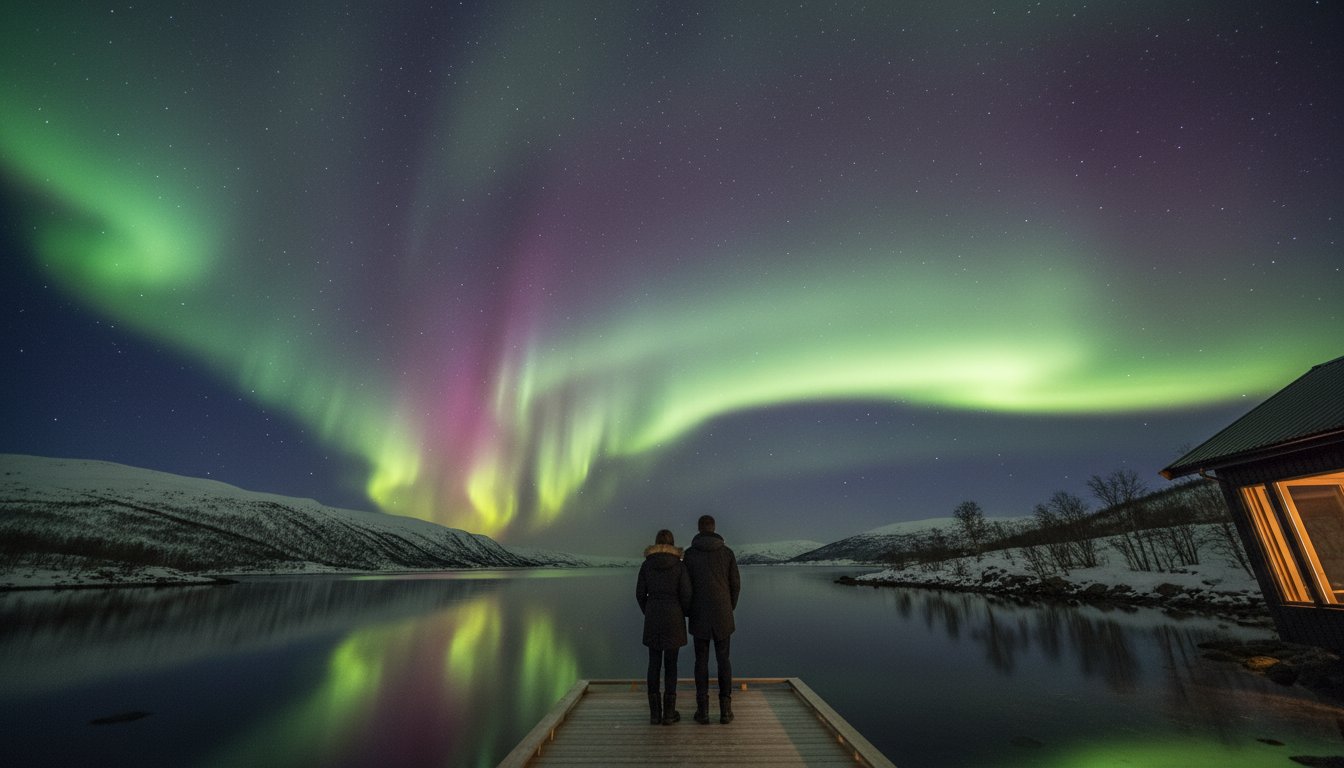
Scientists at the NOAA Space Weather Prediction Center confirm that 2026 marks the definitive peak of Solar Cycle 25, offering the most vibrant Aurora Borealis displays witnessed in over 11 years. You’ve likely dreamt of this moment but fear the reality of generic, low-quality tours that turn a spiritual event into a crowded chore. It’s a valid concern; the difference between a transformative experience and a missed opportunity often lies in the precision of the planning. This Tromsø northern lights guide shows you how to orchestrate a sophisticated, bespoke chase during this rare celestial window. We promise a journey that replaces the noise of mass tourism with the quiet luxury of a curated Arctic expedition. You’ll learn the best dates to witness the 2026 Solar Maximum, the techniques for high-end photography, and the handpicked details that ensure a seamless, ethereal holiday. We’ll guide you from the initial spark of desire to the final, breathtaking glow on the horizon.
Key Takeaways
- Understand why the 2026 Solar Maximum represents a rare, once-in-a-decade peak for witnessing the most intense and frequent celestial displays in the Arctic.
- Utilize this Tromsø northern lights guide to master the region’s unique microclimates and secure your place directly beneath the vibrant Aurora Oval.
- Evaluate the benefits of a bespoke private chase versus the stillness of a luxury wilderness camp to find your perfect balance of mobility and comfort.
- Discover how to curate a functional yet sophisticated Arctic wardrobe using handpicked layers that honor both technical performance and Nordic style.
- Design a seamless five-day journey that artfully integrates ethereal night-time sightings with daytime adventures like dog sledding and whale watching.
The Ethereal Call of the North: Why Tromsø is the Premier Aurora Destination
The search for the celestial dance often leads travelers to the edge of the world. Tromsø stands as the undisputed “Capital of the Arctic,” a title earned by its strategic position at 69 degrees north. For those seeking a Tromsø northern lights guide, the 2026 season represents a once-in-a-decade opportunity. We are currently witnessing the peak of Solar Cycle 25, which solar physicists at NOAA predict will reach its maximum intensity through early 2026. This cycle ensures the lights are not just visible, but vibrant, frequent, and powerful enough to pierce the dark Arctic nights with unparalleled brilliance.
The draw of this region is deeply emotional. It’s a place where the untamed Arctic landscape meets a sense of profound stillness. Travelers don’t just come to see a light show; they come to experience the spiritual weight of the pristine north. This journey is about the intersection of human curiosity and the raw, rugged power of the cosmos. It’s an invitation to stand under a sky that feels alive, witnessing a spectacle that has inspired folklore for millennia.
The Science of the Aurora Oval
Sitting directly within the Aurora Oval, Tromsø offers a statistically higher chance of sightings than almost any other inhabited place. To truly appreciate the spectacle, it helps to understand the science of the aurora, which explains how solar winds collide with our atmosphere to create these glowing curtains. The Aurora Oval is a permanent ring of light around Earth’s magnetic poles. Tromsø’s coastal position creates unique “weather windows” that benefit savvy explorers. While the city harbor might be shrouded in coastal mist, the inland microclimates, often just a 60-minute drive toward the mountains, provide clear, dark skies that act as a perfect canvas for the emerald ribbons.
Tromsø: Where Urban Sophistication Meets Wild Nature
Tromsø balances the rugged beauty of the Arctic with a level of quiet luxury that is rare at this latitude. You can enjoy a handpicked, five-course meal featuring local Arctic char, then find yourself in total wilderness within thirty minutes. For anyone following a Tromsø northern lights guide, this duality is the city’s greatest strength. This is the heart of “The Nordic” lifestyle, where the transition from exclusive comfort to the ethereal north is entirely seamless. As a gateway to the Arctic, the city offers a curated blend of modern amenities and ancient natural wonders. Every detail of the experience is tailor-made to foster a deep connection with the environment, ensuring the wild surroundings feel like a private sanctuary.
The 2026 Solar Maximum: A Once-in-a-Decade Celestial Event
The sky above the Arctic Circle is preparing for its most dramatic performance in over a decade. Every 11 years, the sun follows a rhythmic heartbeat of activity, culminating in a period known as the Solar Maximum. For travelers seeking a definitive Tromsø northern lights guide, 2026 represents the absolute pinnacle of this cycle. It’s a rare window where the sun’s magnetic field reaches its highest state of tension, resulting in a surge of energy directed toward our planet. This isn’t a subtle shift; it’s a profound transformation of the night sky.
During this peak, the frequency of “substorms” increases significantly. These events create explosive movements where the lights dance with a frantic, mesmerizing energy. While typical years might offer steady glows, 2026 promises the kind of intense, overhead coronas that leave even seasoned explorers in silent awe. This is the essential year for bucket-list travelers to commit to their journey. The window of such high-intensity activity is narrow, and the opportunity to witness the sun at its most untamed won’t return until the late 2030s.
Understanding Solar Cycle 25
The current Solar Cycle 25 forecast indicates that solar activity is ramping up faster and stronger than initially predicted by scientists. When solar flares and coronal mass ejections (CMEs) launch charged particles toward Earth, they collide with gases in our atmosphere to create the aurora. In 2026, these collisions will be more frequent and more powerful. This extra energy allows the lights to penetrate deeper into the atmosphere or reach higher altitudes, revealing vibrant reds and rare purples that are often invisible during solar minimums.
Many visitors fixate on the Kp-index, a scale from 0 to 9 that measures geomagnetic storms. However, Tromsø sits directly beneath the auroral oval. This geographic advantage means you don’t need a massive solar storm to see a spectacular show. During the Solar Maximum, even nights with a low Kp-index can produce brilliant displays because the “baseline” of solar wind is much more active. The ethereal glow is often present; you simply need the right conditions to see it.
Predicting the Unpredictable: Forecasting Tools
Chasing the lights is an art supported by science. We recommend guests utilize real-time northern lights alerts to track solar wind speed and density. These digital tools provide a technical edge, but they cannot replace the intuition of a local expert. In the rugged terrain around Tromsø, weather can change in minutes. A professional guide interprets satellite cloud imagery alongside solar data, often finding a pristine, clear pocket of sky just a few kilometers away from a snowstorm.
- Stay Duration: We strongly encourage a stay of at least 4 to 5 nights to maximize your sighting chances.
- Local Insight: Experts monitor “ground magnetometers” which provide more immediate data than satellite-based apps.
- Flexibility: Be prepared to travel toward the Finnish border or the outer islands depending on the wind direction.
Planning your journey during this celestial peak ensures that your experience is as vivid as the legends describe. To make the most of this once-in-a-decade event, consider a curated Arctic itinerary designed to place you in the heart of the action.
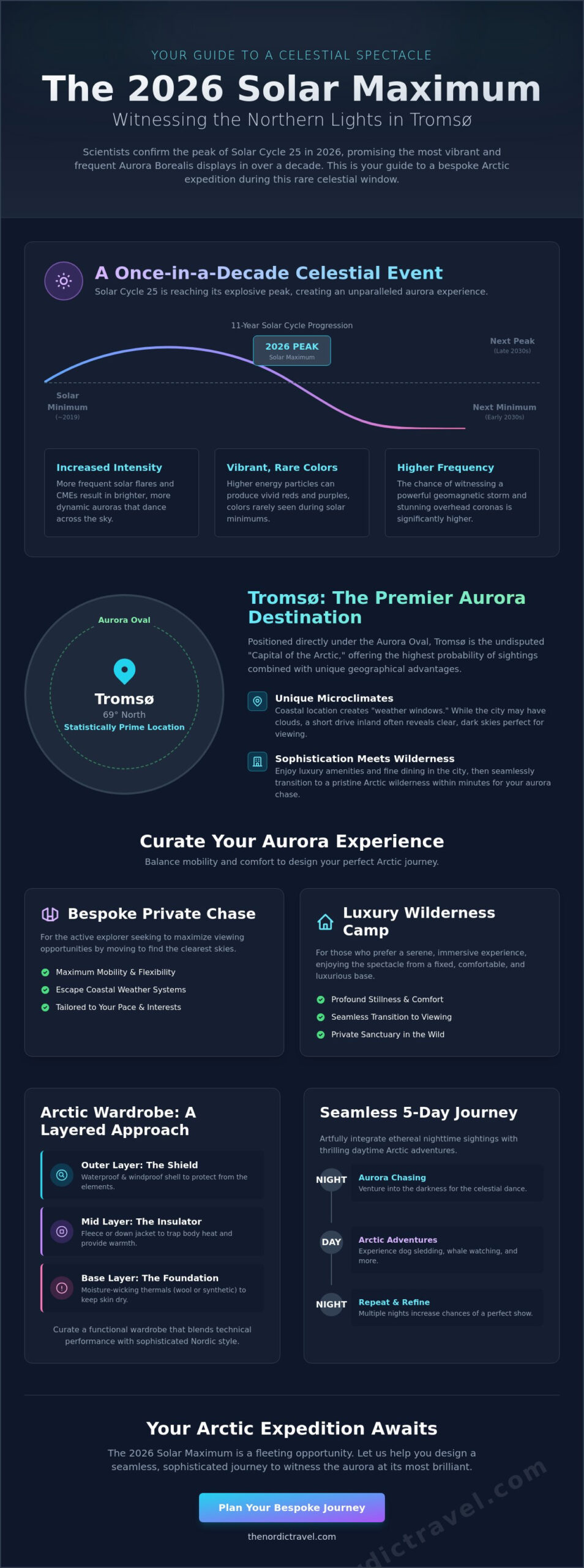
Curating Your Aurora Experience: Private Chases vs. Immersive Camps
Choosing how to witness the celestial dance is a deeply personal decision that defines your Arctic memory. Every Tromsø northern lights guide worth its weight in stardust will tell you that the experience hinges on a single choice: the thrill of the pursuit or the luxury of presence. Both paths offer a handpicked connection to the ethereal North, yet they cater to different rhythms of discovery. These aren’t merely tours; they’re curated journeys led by expert storytellers who interpret the whispers of the solar wind for the modern explorer.
In 2026, as we reside within the peak of the solar maximum, the intensity of the displays is unprecedented. Understanding the science behind this phenomenon adds a layer of wonder to the visual spectacle. For those curious about the physics of the glow, NASA’s explanation of the aurora details how charged particles collide with our atmosphere to create these vibrant greens and purples. Whether you’re moving across the landscape or nestled in a valley, this scientific miracle remains the undisputed protagonist of your night.
The Private Chase: Ultimate Mobility
The bespoke private chase is designed for those who value results and agility above all else. In the rugged terrain surrounding Tromsø, weather patterns shift with a sudden, untamed intensity. A private chase allows your guide to act as a celestial navigator, monitoring real-time satellite data to find pockets of pristine, clear sky. It’s not uncommon for these journeys to cross the border into Finland or Sweden, traveling hundreds of kilometers to outrun a stubborn coastal cloud layer.
- Exclusivity: These small-group experiences ensure a seamless, intimate connection with the landscape, far from the crowds of larger bus tours.
- Bespoke Amenities: Expect flexible itineraries that adapt to your pace, often featuring private chefs preparing local delicacies over a wilderness campfire.
- Expert Portraiture: Your guide often doubles as a professional photographer, capturing high-end portraits of you beneath the ribbons of light.
Luxury Basecamps: Comfort in the Wild
If the chase feels too restless, the luxury wilderness basecamp offers a more meditative alternative. Here, the focus shifts to a quiet vigil in a fixed, high-probability location. You might find yourself in a heated Sami lavvu or a modern glass-roofed cabin, where the comfort of a crackling fire complements the frozen world outside. This approach prioritizes the “hygge” of the North, allowing the lights to come to you while you’re immersed in local culture.
Many of these camps integrate traditional activities like reindeer sledding or storytelling sessions with local heritage keepers. This provides a rich, multi-sensory experience that continues even if the clouds momentarily drift across the moon. For those seeking more Arctic travel inspiration, these fixed locations often represent the pinnacle of sustainable, high-end northern hospitality. It’s a chance to slow down, breathe the crisp Arctic air, and wait for the sky to ignite in its own time.
Preparing for the Arctic: A Sophisticated Guide to Gear and Rituals
To witness the aurora in 2026, you must first embrace the Arctic’s rugged character. This Tromsø northern lights guide prioritizes your comfort, as the true magic of the North reveals itself only when you’re shielded from the bite of a -15°C night. Preparation is a ritual, a transition from the bustle of daily life into the quiet luxury of the untamed wilderness.
Mastering the Art of Layering
The three-layer rule is your foundation for a seamless experience. Start with a bespoke base layer of 200gsm merino wool. It wicks moisture and retains heat while feeling soft against the skin. Never wear cotton; it traps dampness and saps your warmth within minutes. Your mid-layer should be a handpicked wool sweater or a light down jacket, topped with a windproof, waterproof shell to deflect the coastal gusts.
Professional-grade thermal boots, rated for temperatures as low as -30°C, are non-negotiable for standing on frozen fjords for hours. Don’t forget high-quality silk liner gloves paired with heavy mittens. This combination allows photographers to make precise adjustments without exposing bare skin to the freezing air. Tucking a pair of chemical hand-warmers into your gloves provides that extra touch of warmth during long periods of stillness.
Capturing the Ethereal: Photography Tips
Your gear must be as resilient as you are. While modern smartphones with advanced Night Mode can capture the glow, a DSLR or mirrorless camera remains the gold standard for those seeking professional results. Set your aperture to f/2.8 or wider and push your ISO to 1600 or 3200 to let in the faint light. A sturdy tripod is the single most important piece of equipment because even the slightest tremor ruins a long-exposure shot.
Long-exposure settings act as a bridge between the seen and unseen, transforming a faint green mist into a vibrant photograph that captures the sky’s hidden energy.
Beyond the gear lies the mindset. Chasing the lights isn’t a race. It’s a slow, immersive experience. This Tromsø northern lights guide encourages you to find joy in the wait. It involves the warmth of a crackling fire, the steam rising from a cup of local berry juice, and the shared silence of anticipation. This patience is rewarded when the first emerald ribbon finally dances across the pristine sky, turning a cold night into a lifelong memory.
Designing Your Seamless Arctic Itinerary with The Nordic Travel
Designing a journey to the Arctic Circle requires a delicate touch. It’s not just about the destination; it’s about the rhythm of the experience. A well-crafted 5-day itinerary allows you to breathe in the crisp air while ensuring you’re positioned for the best celestial displays. Your Tromsø northern lights guide isn’t complete without a balance of rest and high-octane exploration. We believe in a flow that respects the power of the landscape.
- Day 1: Arrival and First Light. Settle into your boutique lodge. As the sun dips below the horizon, begin your first evening chase with a professional guide.
- Day 2: The Rush of the Tundra. Harness the energy of a team of huskies. Dog sledding through the rugged Lyngen Alps offers a raw, visceral connection to the land.
- Day 3: Marine Giants. Embark on a silent electric cruise. Between November and late January, orcas and humpback whales frequent these nutrient-rich waters.
- Day 4: Cultural Immersion. Spend the morning on a fjord excursion before a private culinary workshop. This is the time to reflect on the untamed beauty surrounding you.
- Day 5: Departure. A final slow morning in the city, perhaps visiting the Arctic Cathedral, before your seamless transfer to the airport.
Mastering the art of Scandinavia trip planning ensures that every logistical detail, from heated transport to expert photography advice, is handled with precision. When you remove the stress of logistics, you leave room for genuine wonder.
Beyond the Lights: Daytime Arctic Magic
The Arctic landscape doesn’t sleep when the sun stays hidden. During the polar night, usually between November 27 and January 15, Tromsø is bathed in the “Blue Hour.” This ethereal glow turns the fjords into a pristine gallery of cobalt and violet. It’s the perfect time to explore the local food scene. Indulge in freshly caught King Crab, tender Reindeer steaks, and the “Arctic Gold” known as Cloudberries. These flavors provide a sensory anchor to your journey, connecting you to the traditions of the North.
Final Preparations and Booking
The 2026 Solar Maximum represents a peak in solar activity not seen for 11 years. Because of this, demand for handpicked accommodations and exclusive tours is exceptionally high. We recommend securing your bespoke arrangements at least 6 months in advance. In the current travel environment, we prioritize flexible bookings to give you peace of mind. Every detail of our Tromsø northern lights guide is curated to reflect the quiet luxury you deserve. Discover our curated Nordic travel guide to start your journey. Let The Nordic Travel guide your handpicked adventure through the untamed North.
Begin Your 2026 Arctic Legacy
The 2026 Solar Maximum marks the peak of the 11-year solar cycle, promising the most vibrant aurora displays seen in a decade. This Tromsø northern lights guide provides the foundation for a journey where the ethereal meets the absolute. By choosing between the focused pursuit of a private chase or the stillness of an immersive camp, you’re not just watching the sky; you’re participating in a celestial event that won’t repeat with this intensity for years. Our team of Arctic experts ensures every itinerary is curated with a deep respect for the environment and a commitment to meaningful, story-driven travel.
We believe the discerning traveller seeks more than a simple sighting. It’s about the seamless flow from a rugged landscape to a refined retreat. Every detail is handpicked to reflect the quiet luxury of the North, ensuring your expedition is as sustainable as it is breathtaking. The lights are waiting to tell their story, and we’re here to make sure you’re there to hear it. Explore our handpicked Nordic tours for 2026 and claim your place under the dancing sky.
Frequently Asked Questions
When is the absolute best month to see the Northern Lights in Tromsø in 2026?
March 2026 is the premier month for your Arctic expedition. The spring equinox on March 20 triggers the Russell-McPherron effect, which statistically increases geomagnetic activity and creates more vibrant displays. You’ll enjoy a seamless balance of 12 hours of daylight for exploring rugged fjords and dark, pristine nights for aurora hunting.
Do I really need a guided tour to see the Aurora Borealis?
You don’t strictly need a guide, but a curated tour increases your success rate to over 90 percent. Tromsø’s coastal weather is untamed; clouds often shroud the city while inland skies remain clear. Expert guides monitor real-time satellite data and drive up to 200 kilometers to find a break in the clouds. This Tromsø northern lights guide recommends professional chases for a stress-free, exclusive experience.
What is the “Solar Maximum” and how does it affect my trip?
Solar Maximum is the peak of the Sun’s 11-year magnetic cycle, which scientists predict will plateau through 2026. During this phase, the Sun releases frequent solar flares and coronal mass ejections. These events create more intense, ethereal, and frequent displays across the sky. It’s a rare window where even low-activity nights can produce dancing ribbons of light.
How cold does it actually get during a Northern Lights chase?
Temperatures during a night chase typically range between -5°C and -15°C. While the coast stays milder due to the Gulf Stream, inland locations near the Finnish border can plummet to -25°C. The air is crisp and pristine, but the stillness makes the cold feel biting. Proper preparation ensures you focus on the celestial dance rather than the rugged Arctic chill.
Can I see the Northern Lights from the centre of Tromsø?
You can see the lights from the city centre during intense solar storms, but light pollution often mutes their ethereal glow. For a better experience, walk 20 minutes to Lake Prestvannet or take the Fjellheisen cable car to Mount Storsteinen. These handpicked spots offer darker skies. To witness the truly untamed beauty of the aurora, escaping the city’s 77,000 residents is essential.
What should I wear for an Arctic night outside?
Dress in three distinct layers to master the Arctic environment. Start with a 100 percent merino wool base layer to trap heat against your skin. Add a thick fleece or wool sweater as a mid-layer for insulation. Finally, wear a windproof and waterproof outer shell. Don’t forget insulated boots rated for -30°C and hand warmers to keep your bespoke journey comfortable.
Is Tromsø or Rovaniemi better for seeing the Northern Lights?
Tromsø is superior for sightings because it sits at 69 degrees north, directly under the Aurora Oval. Rovaniemi is located further south at 66 degrees north and requires stronger solar activity to produce the same visual impact. This Tromsø northern lights guide favors the Norwegian coast for its higher statistical probability of success and its dramatic backdrop of mountains and sea.
How many days should I stay in Tromsø to guarantee a sighting?
Stay for at least 5 nights to virtually guarantee a successful sighting. Arctic weather is unpredictable, and a single night of heavy cloud cover can obscure the sky. Data shows that a 3-night stay offers an 85 percent chance of seeing the lights. Extending your visit to 5 nights accounts for weather shifts and ensures a relaxed, tailor-made experience in the North.