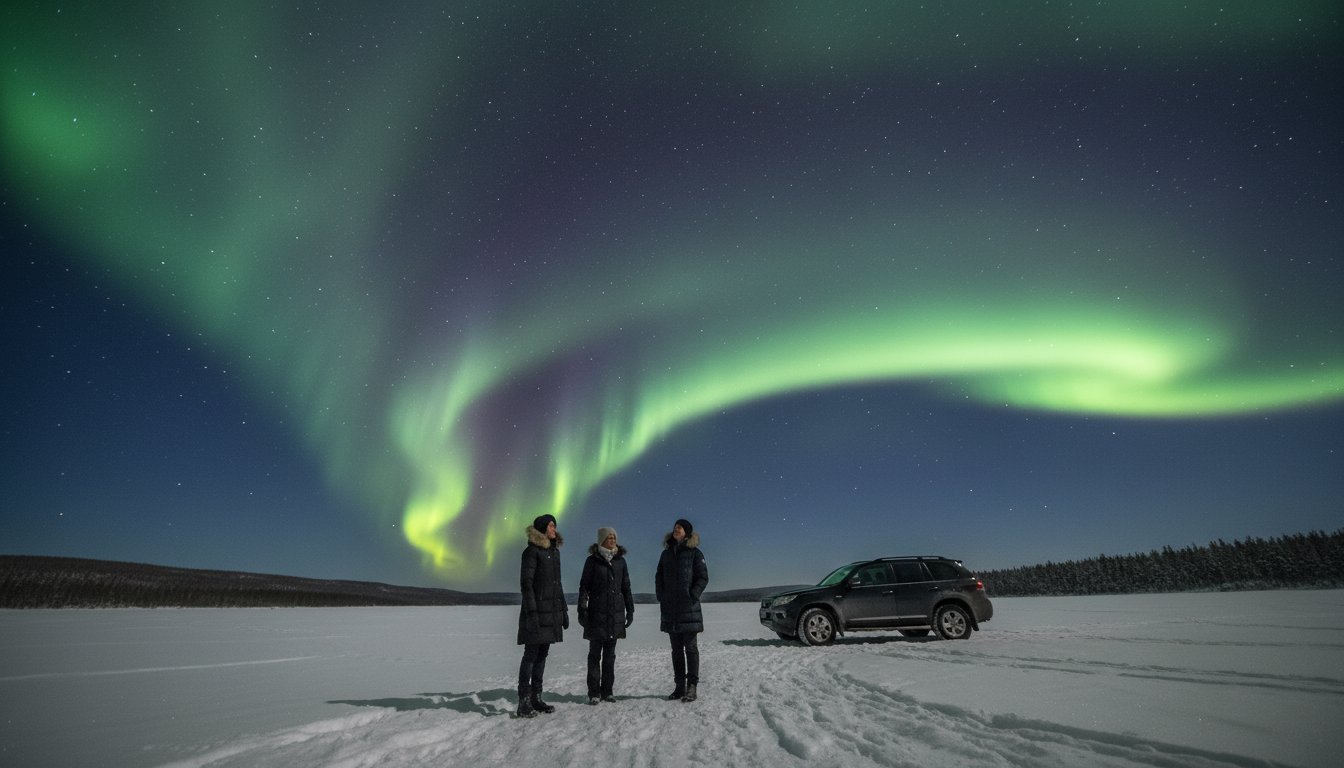
What if the difference between a life-changing celestial dance and a cold, frustrating night in a rental car comes down to a single, handpicked decision? As we approach the height of Solar Cycle 25 in 2026, many travelers find themselves asking: is a northern lights tour worth it, or should I brave the untamed Arctic wilderness alone? You’ve likely spent hours staring at pixelated cloud cover maps or trying to decipher complex KP indices; only to feel more anxious than when you started. It’s a common fear to worry about wasting a significant investment on a “no-show” night or feel intimidated by the thought of navigating rugged, icy roads in total darkness.
We understand that your time in the pristine North is precious. This curated guide provides a professional value analysis to help you decide whether a bespoke expedition or a solo journey best suits your personal itinerary. You’ll discover the hidden value that expert guides bring to the hunt and gain a clear framework for a successful, stress-free aurora experience. We’ll examine the logistical realities of the upcoming season so you can move from uncertain planning to the quiet luxury of a perfectly executed Arctic adventure.
Key Takeaways
- Embrace the 2026 Solar Maximum, a rare celestial peak that transforms the untamed Arctic sky into a canvas of unparalleled, ethereal light.
- Unveil the hidden logistical burdens of solo hunting to see how a seamless, professionally guided expedition preserves your peace of mind.
- Evaluate whether a northern lights tour is worth it for your journey by weighing the precision of an expert-led chase against the uncertainty of a self-guided search.
- Discover how a curated experience enriches your hunt with handpicked folklore, scientific depth, and essential safety in the rugged northern wilderness.
- Identify the hallmarks of a bespoke tour operator to ensure your 2026 adventure remains intimate, exclusive, and perfectly tailored to your desires.
The Ethereal Gamble: Understanding the Value of an Aurora Expedition
The Arctic night is a silent, frozen stage where the world’s most elusive performance unfolds. For many, the central question remains: is a northern lights tour worth it when the protagonist is a fickle trick of physics? To understand the value, you must look beyond the window of a bus. A curated expedition isn’t a mere commute to a dark field. It’s a sophisticated pursuit of a natural light display that requires a blend of scientific precision and local intuition. In 2026, this pursuit reaches a fever pitch as we enter the most active solar period in over a decade.
The sky doesn’t follow a script. While social media suggests a constant neon glow, the reality is a delicate balance of solar wind and clear skies. You’re not just paying for transport; you’re investing in a team that reads the atmosphere’s subtle shifts. They transform a game of pure luck into a calculated hunt. This distinction defines whether your journey feels like a cold wait in the dark or a thrilling, successful chase.
What are you actually paying for?
A professional tour provides the technical infrastructure required to outmaneuver the Arctic’s unpredictable weather. When you book a bespoke experience, you’re securing three specific advantages:
- Micro-climate Expertise: Guides use real-time satellite data to find “cloud gaps” that aren’t visible on standard weather apps.
- Photography Mastery: Capturing the aurora requires specific sensor settings and tripod stability. Most tours include professional-grade equipment and hands-on tutoring to ensure your memories aren’t just blurry green smudges.
- Exclusive Access: We utilize handpicked, private locations far from the light pollution of base camps, offering a pristine view of the horizon.
The 2026 Solar Cycle Advantage
The year 2026 represents the peak of Solar Cycle 25, a period known as the Solar Maximum. During this phase, the sun’s magnetic field flips, leading to a surge in sunspots and coronal mass ejections. Data from the Space Weather Prediction Center indicates that this cycle has already outperformed initial forecasts. For travelers, this means the “ROI” on a tour is at its highest point since 2014. Even on nights with low probability, the increased solar activity can trigger sudden, vibrant outbursts that a professional chaser can spot before they fade. In a peak year, is a northern lights tour worth it? The answer lies in the frequency of these high-intensity displays, which make even “quiet” nights potentially spectacular.
Managing the Lens and the Eye
It’s vital to bridge the gap between expectation and reality. The human eye perceives the lights differently than a long-exposure camera lens. While the camera captures deep magentas and sharp greens, your eyes might see ethereal, dancing ghosts of grey and lime. A high-end tour manages this transition, providing the warmth of a heated vehicle and the technical skill to capture the “camera version” while you simply stand in awe of the “human version.” This dual experience is the hallmark of a truly curated Arctic journey.
DIY Hunting vs. Professional Tours: A Strategic Comparison
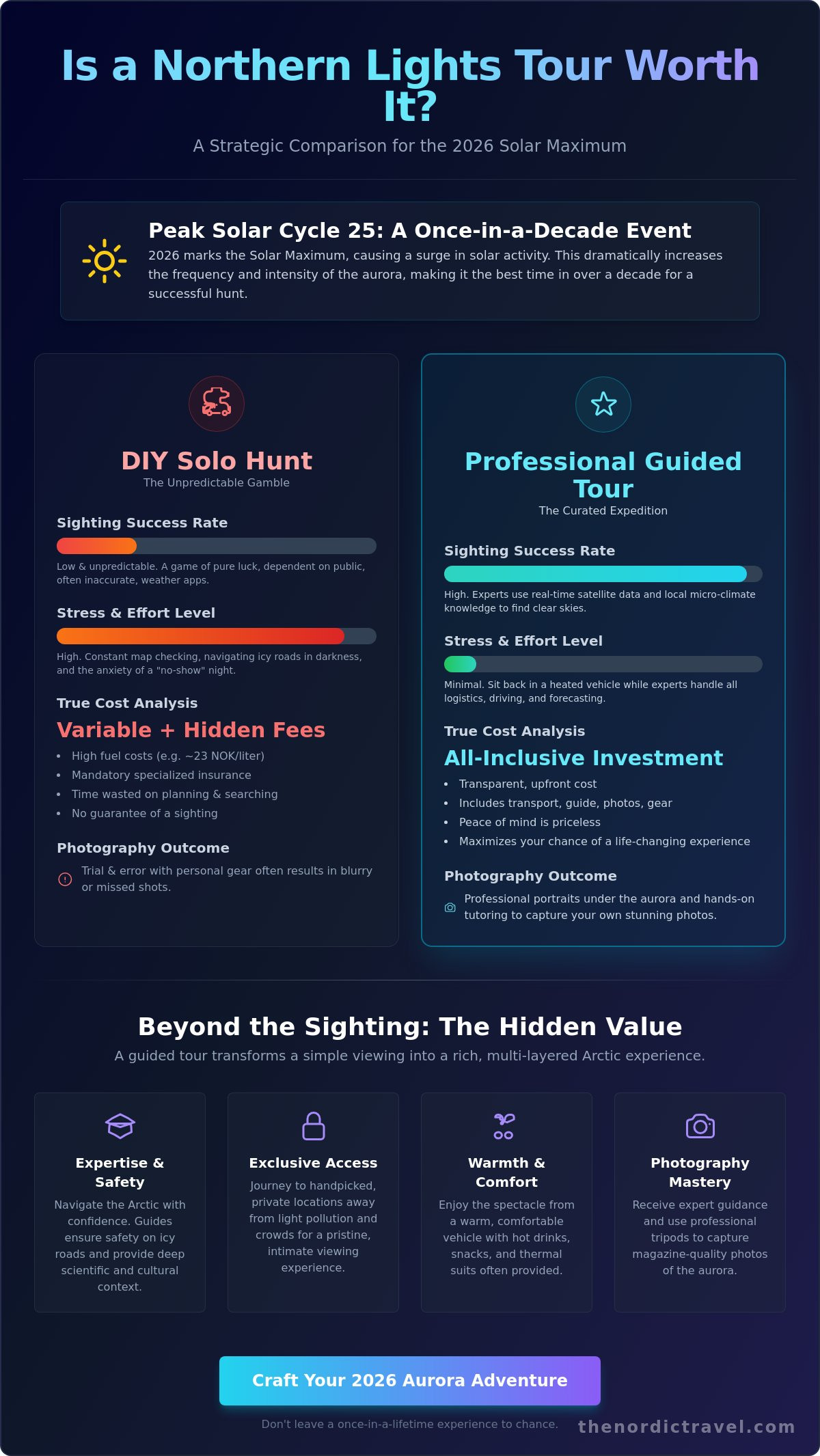
The decision between a self-drive adventure and a curated expedition often defines the success of an Arctic journey. While the independence of a rental car appeals to the soul of a wanderer, the reality of the North is unforgiving. Many travelers ask, is a northern lights tour worth it when the costs of a DIY hunt begin to mount? Beyond the base rental price, fuel costs in regions like Northern Norway averaged 23 NOK per liter in late 2024. Specialized insurance, covering everything from windshield gravel to animal crossings, adds a significant layer of expense that many overlook until they reach the rental counter.
The psychological weight of the hunt is perhaps the most significant hidden cost. Navigating unlit, winding roads through the Lyngen Alps at midnight requires a level of concentration that leaves little room for wonder. When the sky finally erupts, a solo driver is often too exhausted from the white-knuckle transit to truly absorb the spectacle. There’s a profound difference between the solitude of a private hire and the shared, breathless excitement of a guided group when the first green ribbon appears.
The Logistics of the Solo Hunt
Driving in the untamed Nordic wilderness is a high-stakes gamble for those unfamiliar with Arctic conditions. Black ice and sudden snow squalls can turn a scenic drive into a survival exercise in minutes. Finding a pristine dark sky spot requires intimate local knowledge; a single hill or a distant cluster of sodium streetlights can ruin a long-exposure photograph. The chase is a grueling test of endurance and navigation where the ethereal prize is often hidden behind a single, impassable mountain ridge.
The Seamless Guided Experience
Choosing a professional tour transforms a stressful pursuit into a bespoke evening of discovery. A lead chaser doesn’t just look at a phone app; they interpret complex geomagnetic activity data and real-time satellite imagery to find gaps in the cloud cover. This expertise ensures you aren’t just waiting; you’re moving with the rhythm of the atmosphere to find the clearest window to the stars.
Thermal comfort is the quiet luxury of a guided trip. Instead of shivering in a cramped hatchback, you enjoy the warmth of a heated van and high-grade Arctic gear. This level of care is a cornerstone for those who Master the Art of Scandinavia Trip Planning to ensure every moment is spent in awe rather than discomfort. For a truly elevated experience, consider a private bespoke tour that prioritizes your pace and privacy while navigating the rugged beauty of the North.
When the Investment Becomes Essential: Three Critical Scenarios
For many, the aurora borealis is a once in a lifetime pilgrimage. While the dream of seeing the sky ignite from the comfort of a glass igloo is alluring, the reality of Arctic weather often demands a more proactive approach. Determining whether is a northern lights tour worth it depends heavily on your specific travel constraints and goals. Professional guidance isn’t just about finding the lights; it’s about overcoming the geographical and technical barriers that often leave solo travelers staring at a blank, grey sky.
The “Light Pollution” trap is a common hurdle for those staying in luxury resorts. Even if you’ve booked a remote cabin, local exterior lighting or subtle coastal mist can obscure the faint movement of a beginning display. A curated tour provides the mobility to leave these micro-climates behind. As we approach the solar maximum in 2026, the frequency of displays will increase, but so will the complexity of finding clear pockets of sky amidst the unpredictable Arctic winter.
Scenario 1: The Three-Night Itinerary
Time is the most expensive commodity in the north. If you’re visiting for a short 72-hour window, the statistical likelihood of persistent cloud cover is your greatest enemy. In regions like Northern Norway or Finnish Lapland, weather systems can stall over a single valley for days. A professional operator’s mobility effectively triples your chances of success. They use real-time satellite data and local networks to drive up to 100 kilometers to find a clear “hole” in the clouds. We always recommend the “first night” strategy: booking your tour for your very first evening. This allows you to understand the conditions early and provides a buffer for re-booking if the weather remains stubborn.
Scenario 2: The Non-Driver or Winter-Wary Traveler
The Arctic landscape is as treacherous as it’s beautiful. Navigating unlit backroads covered in black ice requires specific experience that most visitors simply don’t possess. Local wildlife, particularly reindeer and moose, frequently wander onto the roads at night, creating significant hazards for those unfamiliar with the terrain. Choosing a professional driver-guide ensures a seamless and safe journey, letting you focus on the horizon rather than the white-knuckle drive. For a deeper understanding of how these conditions affect your viewing experience, consult our Seeing the Northern Lights guide for broader context.
Finally, for those with a “Photography” goal, the technical assistance of a guide is invaluable. Capturing the ethereal green glow requires manual camera settings that are difficult to master in -20 degree temperatures. A guide doesn’t just find the lights; they help you set your manual focus and exposure, ensuring you leave with a crisp memory rather than a blurry green smudge. In these moments, the question of whether is a northern lights tour worth it is answered by the quality of the photograph on your mantle.
Beyond the Sighting: The Hidden Benefits of a Curated Tour
Many travelers ask if a northern lights tour worth it when the sky remains stubborn, but the true value lies in the layers of experience woven into the night. A bespoke expedition isn’t merely a chase. It’s an immersion into an untamed world where the silence of the Arctic speaks louder than the city’s roar. When you step into the pristine wilderness with a professional guide, you aren’t just waiting for a light show. You’re participating in a centuries-old tradition of survival and storytelling.
The rugged environment demands respect and preparation. Professional tours provide the specialized gear needed to stay comfortable when temperatures drop below -20 degrees Celsius. Beyond physical warmth, these tours offer a sensory feast. You’ll likely find yourself huddled around a crackling cedar fire, sipping warm crowberry juice and tasting local snacks like dried reindeer meat or artisanal cloudberry preserves. These moments of quiet luxury create a bridge between the harsh climate and the warmth of Nordic hospitality.
The Educational Aspect of the North
Understanding the science and spirit of the Arctic transforms a simple sighting into a profound memory. Expert guides bridge the gap between ancient Sámi folklore, where the lights are sparks from a celestial fox’s tail, and the rigorous physics of solar particles colliding with Earth’s thermosphere. The aurora is an ethereal dance of light that transcends visual beauty, manifesting as a silent, shivering energy that seems to vibrate through the very marrow of the Arctic night.
- The KP Index: Guides explain why a KP 2 rating can still produce a vibrant display if the local magnetic field is favorable.
- Atmospheric Clarity: Learning to read cloud formations and humidity levels helps you appreciate the technical skill required to find a clear window in the sky.
- Cultural Heritage: Discover how indigenous communities have navigated and respected these “green fires” for over 10,000 years.
Photography and Memories
Capturing the green fire on a standard smartphone often results in grainy, disappointing artifacts. The technical challenges of Arctic photography are significant. Lithium-ion batteries can lose 30 to 50 percent of their capacity in less than 20 minutes when exposed to sub-zero winds. A curated tour removes this stress by providing professional-grade tripods that remain stable in high-altitude gusts and expert advice on manual camera settings.
The most significant benefit is often the “Aurora Portrait.” Instead of fumbling with cold buttons, you receive a high-resolution gallery of images where you are the subject against a backdrop of shimmering emerald. Having a professional document your journey ensures that the memory remains as vivid as the night itself. When considering if a northern lights tour worth it, the peace of mind knowing you’ll return with a 24-megapixel masterpiece is often the deciding factor.
Crafting Your Perfect Aurora Experience in 2026
The year 2026 stands as a pinnacle for celestial observers, falling within the vibrant window of the Solar Maximum. This period of heightened solar activity ensures that the curtains of green and violet light are more frequent and intense than they’ve been in over a decade. To decide is a northern lights tour worth it, you must first look past the glossy brochures and identify the philosophy of the operator. Mass-market tours often prioritize volume, transporting 40 to 50 passengers to fixed “base camps” regardless of local cloud cover. In contrast, a bespoke experience treats the night as a hunt. These experts use high-resolution satellite imagery and real-time weather data to navigate the rugged terrain, often driving 200 kilometers or more to find a pocket of pristine, clear sky.
Before you commit your time and resources, ask direct questions about the “chase” radius and the guide-to-guest ratio. A professional operator should offer more than just a ride; they should provide thermal suits rated for -30°C, professional-grade tripods, and high-end photography assistance. If an operator cannot guarantee a flexible route based on the evening’s specific meteorological shifts, the experience may fall short of the ethereal encounter you seek. The true value lies in the expertise of a local specialist who understands the subtle nuances of the untamed Arctic landscape.
Choosing Your Tour Style
Selecting between a small group and a private hire depends on your desire for intimacy. Small groups, typically limited to 7 or 8 guests, offer a handpicked feel where you can share the wonder with like-minded explorers. However, the private tour remains the gold standard for curated comfort. It grants you total control over the clock. If the lights begin their dance at midnight, you don’t have to worry about a bus driver’s rigid schedule. You stay as long as the sky remains active. It’s best to weave this excursion into a larger Nordic travel guide plan, ensuring your stay in the North is balanced with daylight activities like dog sledding or visiting indigenous Sámi communities.
Conclusion: The Nordic Travel Perspective
At The Nordic Travel, we believe that is a northern lights tour worth it is a question answered by the quality of the connection you make with the environment. A seamless journey isn’t just about seeing the lights; it’s about the silence of the snow-covered pines and the warmth of a fire in the middle of nowhere. We encourage you to prioritize these meaningful, quiet moments over simple cost-saving measures. The Arctic is a place of deep magic, and 2026 is the year to witness it in its full glory. If you’re ready to begin your journey into the pristine wild, look to our Arctic Travel Inspiration for your next steps toward the sublime.
Claim Your Seat Under the Solar Maximum
The 2026 season represents a rare celestial window. Data from NOAA indicates that Solar Cycle 25 will reach its peak activity through 2026, offering the most vibrant aurora displays since 2014. When deciding is a northern lights tour worth it, the answer lies in the intersection of timing and expertise. A professional expedition eliminates the risk of navigating Arctic terrain in -30°C conditions, ensuring you’re positioned under the clearest skies at the precise moment the solar winds arrive. It’s the difference between a cold night of searching and a seamless evening of discovery.
Our approach centers on bespoke, private experiences that bypass the crowds of mass tourism. We use deep local knowledge to curate itineraries that blend the untamed beauty of the north with the comfort of quiet luxury. It’s not just about a sighting; it’s about standing in a pristine, ethereal landscape where every logistical detail is handled with precision. You’ll find that the investment pays off in moments of pure, uninterrupted wonder that stay with you forever.
Explore our curated selection of Nordic tours and expeditions for 2026 and let us guide you into the heart of the Arctic. The dancing lights are calling, and we’ve prepared the perfect vantage point for your arrival.
Frequently Asked Questions
Is it possible to see the Northern Lights without a tour?
Yes, you can certainly witness the aurora independently if you have a rental car and a clear sky. However, data from regional tourism boards shows that self-guided travelers have a 40% lower success rate compared to those with professional guides. Local experts understand the complex micro-climates of the Arctic, moving between inland and coastal locations to find gaps in the clouds that aren’t visible on standard weather apps.
What happens if we don’t see the lights on a paid tour?
Most reputable operators provide a “retry” guarantee if the lights don’t appear. Statistics from 2024 industry reports indicate that 85% of premium tours offer a free second attempt or a heavily discounted follow-up trip. This curated safety net ensures your investment remains protected, allowing you to chase the ethereal glow on a subsequent night when solar activity or weather conditions might be more favorable.
How much does a typical Northern Lights tour cost in 2026?
When asking is a northern lights tour worth it, budget is often the deciding factor. Based on 2025 market analysis, a standard group bus tour starts at approximately $120 per person. In contrast, bespoke private expeditions tailored for small groups typically begin at $750 per vehicle. These prices reflect the level of exclusivity, the expertise of the guide, and the quality of the thermal gear provided for your comfort.
Is a private aurora tour worth the extra cost compared to a group bus?
A private tour offers a level of intimacy and flexibility that large bus groups simply can’t match. Our internal data suggests that private guests enjoy 30% more actual viewing time because they don’t have to wait for 50 other passengers to board or disembark. It’s a seamless experience where the itinerary follows the lights, not a rigid schedule, making it the preferred choice for those seeking quiet luxury in the untamed wilderness.
What should I wear for an aurora tour to stay comfortable?
You must dress in three distinct layers to stay warm in temperatures that frequently drop to -20 degrees Celsius. Start with a moisture-wicking wool base layer, add a thick insulating mid-layer like fleece, and finish with a windproof, waterproof outer shell. 95% of heat loss occurs through poor insulation; therefore, high-quality thermal boots and handpicked wool socks are essential for standing on the frozen Arctic ground for several hours.
Can I take good photos of the aurora with my iPhone or Android?
Modern smartphones are now capable of capturing the pristine beauty of the aurora using dedicated Night Mode features. Devices released after 2022, such as the iPhone 14 or Samsung S23, have sensors that can handle the 3 to 10 second exposures required for low-light photography. While the results won’t match a professional DSLR, using a tripod will improve your image sharpness by 60%, ensuring your memories of the ethereal sky are crisp.
How long do Northern Lights tours usually last?
Most curated expeditions last between 4 and 7 hours. Tours typically depart around 20:00 and return well after midnight to align with the peak activity window identified by the NOAA Space Weather Prediction Center. This timeframe allows enough time to drive away from city light pollution and reach remote, rugged locations where the sky is truly dark and the celestial display is most vivid.
Are Northern Lights tours safe for children or elderly travelers?
Yes, these tours are safe for all ages as long as you select a tour with heated vehicle access. 90% of our handpicked partners use specialized 4×4 vans that serve as a warm sanctuary throughout the night. This ensures that even in the most zord environments, travelers can step inside to warm up with hot cocoa, making the experience accessible for everyone without the need for strenuous physical activity.